Showing posts with label Salad Fork Review. Show all posts

Saturday, February 25, 2017

Lego Batman Movie review


Phil Lord and Chris Miller’s “The Lego Movie” conceptualized a meta world where many characters from different pop culture entities could collide and collaborate in support of the same comedic context. “The Lego Batman Movie,” takes this premise and explores the world of DC’s Gotham City. Here, the characters are aware that they are in a spoof, and the long-standing comic book lore is only used a basis for something broader, while also taking specific jabs at previous iterations of the caped crusader.

In this blocky, hyper-stylized universe, Batman (Voiced by Will Arnett) is an ego-maniacal loner who saves the city for attention at night, so he can enjoy the privacy to watch rom-coms and eat lobster in his mansion during the day.  His butler Alfred (Ralph Fiennes) is concerned that he’s walled away his emotions and isn’t reaching out to others for support. Even The Joker (Zach Galifianakis) doesn’t understand why Batman can’t appreciate their unique hero/villain relationship, so he takes it upon himself to prove that he’s Batman’s greatest foe, by releasing the world’s greatest supervillains on the city. This forces the stubborn Bat to save Lego Gotham from certain destruction by collaborating with his newly adopted ward Robin (Michael Cera) and the city’s new Commissioner Barbara Gordon (Roserio Dawson).

Obviously, much of this is supposed to be silly. The humor is tossed off as scenes quickly jump from reference to reference and joke to joke. The speedy pace of the film keeps things from drowning in its own absurdity but it also keeps things rather light and surface-oriented as well. Whereas the first Lego Movie had a statement to make about commercialization and the corporate nature of its own existence, there’s nothing quite as lofty or as subversive attempted in this straight-forward style parody.

Visually, the Lego novelty is used to good effect. The production design is stylish and appealing and many of the action scenes, while sometimes over-crowding the frame and edited too quickly to fully register, are creative and exceptional within the world of family-oriented entertainment.

Director and co-writer Chris McKay comes from the world of Cartoon Network’s Adult Swim, having directed many episodes of “Moral Orel” and “Robot Chicken.” Though “The Lego Batman Movie” is painted on a much larger canvass, it has the same disposable, premise-oriented frivolity of something like a “Robot Chicken” sketch, especially as characters from “Harry Potter,” “Lord of the Rings” and “Jaws” are roped into the final act of the feature for meta-comedic effect.  

The approach here is to throw everything at the wall and see what sticks. Given the sheer volume and variety of jokes, there’s enough laughs to justify the other bits that thud, but this scattershot, writers-room approach occasionally dilutes the overall vision of the project. Nevertheless, there was an attempt to create an actual story-arc with Arnett’s Batman and his adopted family.  Because that arc is never dropped amidst the joke-a-minute riffing and the visually cluttered Lego action sequences, the movie is allowed some amount of sloppiness so long as the story’s foundation can support it, and, for the most part, it does.

Grade: B- 

Originally Published in the Idaho State Journal/Feb-2017

Listen to this week's episode of Jabber and the Drone to hear more conversation about "The Lego Batman Movie"

Sunday, February 12, 2017

Split review


M. Knight Shyamalan’s latest film “Split” combines his love of Hitchcockian thrills and with his predilection for high-concept myth-making and fuses these obsessions in a way that’s surprisingly energetic and captivating. I have to say surprising because since the heights of his career in early 2000 Shyamalan has only recently come off a long losing-streak s. After big budget genre-flops such as “Lady in the Water” and “The Last Airbender” he lost of lot of credibility as a coherent storyteller with both audiences and critics alike. Halving his costs under the pop-horror banner of Blumhouse Productions, it seems that he’s now able to make smaller, more efficient work without the pretenses of prestige. 

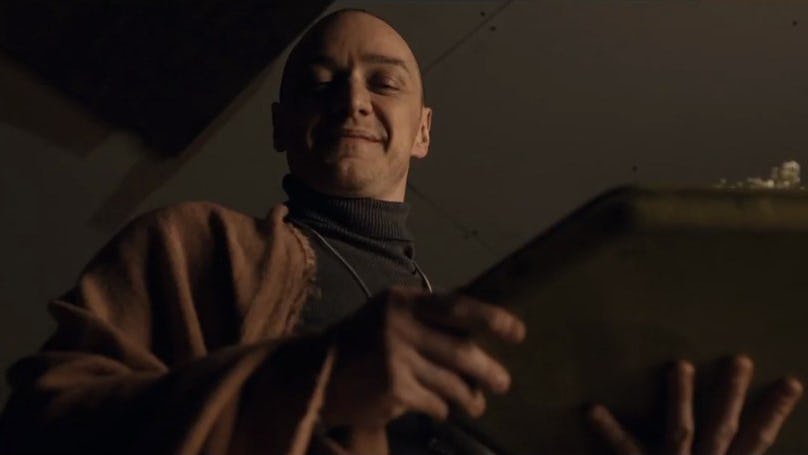
James McAvoy is given the spotlight playing a troubled man named Kevin who constantly switches between multiple personalities. After a complicated battle of dominance between the personalities inside of his mind, he kidnaps three teenage girls in the hopes to appease a brooding darkness growing from within. Anya Taylor-Joy plays Casey Cook, the most introverted and ostracized of these women, and through this kidnapping experience she's forced to relive her past abuse. Haley Lu Richardson and Jessica Sula portray the other two girls who can’t understand why Casey has no will to fight. As they try to come up with clever ways to escape McAvoy’s underground lair, Casey tries to get to know and manipulate Kevin’s separate personalities.

We get to know McAvoy as a brutish clean-freak and fetishist named Dennis, a passive-aggressive English woman named Patricia, a nine-year-old attention-seeker named Hedwig, a nervous fashionista named Barry and a demonic force of nature known only as The Beast. While Dennis and Patricia--the personalities responsible for the kidnapping--have the most control over their host, the others have sought the help of a psychiatrist named Dr. Karen Fletcher (Betty Buckley), who's beginning to notice that her patient has something to hide.

Like any Shyamalan film, there’s a lot of plot here and his characters are subservient to the whims of the director’s set-ups and reveals. His depiction of mental illness has less to do with diagnose-able science and more with pulp mythology that’s rooted in past psychodramas and paranormal science-fiction.  If you’re willing to suspend your disbelief and give in to the script’s wacky concepts, as a thriller, the movie works well enough. The ticking-clock set up at the beginning of the film allows for constant tension that keeps everything on a track, even as scenes digresses into long-winded explanations of the movie rules through clunky, expository dialogue.

McAvoy’s having a lot of fun with these multiple roles and approaches the film’s goofy plot with just the right amount on whit and sarcasm to aid in its occasional black comedy. Anya Taylor-Joy is more informed by her character’s flashbacks than by her performance, but her emotional stillness helps to ground the movie’s themes and dramatic stakes.

“Split” is a mixed bag; it’s overwritten, it’s a bit hokey and Shyamalan has some problematic and concerning ideas about abuse-survival as a means of martyrdom, but the film is never boring and it managed to keep me engaged with the story as it moved along.  Thrill rides don’t necessarily have to be realistic, and though I wish this ride hadn’t stopped every ten minute to explain something that didn’t need explaining, despite it's failings, I appreciated the end-result.

Grade: B-

Originally Published in the Idaho State Journal/Feb-2017

Listen to this week's episode of Jabber and the Drone to hear more conversation about "Split."

Sunday, February 5, 2017

XOXO review

Netflix has created a seismic shift the world of film and television distribution. Not only are they producing several movies and series on their own, they are now releasing several projects bought from the festival circuit. Their platform has become so popular that its becoming less and less necessary to house older material, which would be a shame, considering they helped destroy video-store culture all around the country. 

Whatever. Netflix recently released a garbage dump of a movie about CW-looking ravers called “XOXO” and it’s barely a movie and it’s really stupid and I just can’t even.

This is supposed to be a portmanteau-structured narrative, which features Graham Phillips as Ethan, a laptop DJ who’s blowing up on youtube and whose best friend Tariq (Brett DelBuono) has booked him a slot on a desert EDM festival called XOXO. Attending the fest is Modern Family’s Sarah Hyland as an innocent suburban girl hoping to finally meet her online boyfriend for the first time, Hayley Kiyoko and Colin Woodell as a couple looking to cut loose before Kiyoko’s character Shannie moves away, and comedian Chris D’Elia plays aged hipster named Neil who can barely stand being in this movie as much I can barely stand watching it.

The plot is structured so that Ethan’s big debut at XOXO ties together these shifting story threads and all the characters are supposed to overcome their petty life complications through the power of thumping dance music and recreational drug use. I’ll be the first to admit that this isn’t a culture that I’m a part of or know much about, but the movie never gives me a reason to be interested in the dance music scene or to invest in any of these competing character dilemmas. Furthermore, the actors are given terrible dialogue and they can’t seem to compensate that with any personality in their performances.

I would say this movie has tone issues, but I’m not sure if there was a pointed attempt at capturing a specific mood or emotion. The neon, black-light rave stuff is supposed to have a dark and mysterious effect on the drama, but the plot moves around so much and direction by Christopher Louie is so flat and cheap looking that it never registers as dream-like or psychedelic. Also, is this a comedy? There’s some clumsy attempts drug humor and misunderstanding humor but neither are groomed in a way that informs the rest of what’s going on. As the movie unfolds, you get the feeling that each scene and each set up was shot and directed with no consideration of how it would fit with the completed product.

For a film that’s all about the uniting power of music and community (I guess that’s what it’s about. *shrugs*) there’s nothing remotely effecting or memorable about the movie’s music either. Our hero Ethan’s hit song is barely hummable and it doesn’t stand out among any of the other bland EDM selections pulsing in the background.

“XOXO” is so lazy and slapped together that to even review as a real movie feels like a form of legitimacy that I’m uncomfortable participating in. It looks like low-grade television and it montages its way through the plot, racing to a pointless conclusion.  Even though it’s available to watch free on Netflix, your 90 minutes are better spent scrolling through their selection for something else.

Grade: F 

Originally Published in the Idaho State Journal/Feb-2017

Sunday, January 1, 2017

Rogue One: A Star Wars Story review

Long before Marvel and DC took a stab at the extended cinematic-universe idea, George Lucas’ “Star Wars” expanded in the form of comic books, novels, video games, cartoons and two Ewok movies, which then led into the much-maligned movie prequels. Now that Lucas himself has sold his intellectual properties to Disney, they’ve successfully kicked off a new trilogy with last year’s “The Force Awakens” and will be filling in the wait-times with tangential films that explore the other gaps in the established timeline.

“Rogue One: A Star Wars Story” explains how the rebels were able to find the design flaw that allowed them to blow up the planet-demolishing Deathstar at the end of 1977’s “Star Wars: A New Hope,” but unlike the other prequels, this story doesn’t focus on any of the franchise's key players or any of the Han/Luke/Vader family drama. Here we're introduced to Felicity Jones as Jyn Erso (Felicity Jones), a runaway survivor of a raid by the Empire. Her father Galen Erso (Mads Mikkelsen) is a scientist and engineer who works for the Empire who is forced against his will to design the Deathstar. As an adult, Jyn finds a new family in a group of rebel fighters led by Diego Luna as Cassian Andor. Given her connection to her father’s involvement with this dangerous new weapon, she must lead a group into the heart of the Empirical army to find a secret blue print that shows us where Galen hid the space-craft’s only weakness.

The movie also introduces us to Jyn's downtrodden band of misfits in Riz Amed as the skittish Bodhi Rook, Donnie Yen as the blind-swordsman Chirrut Imewe and Wen Jiang as his faithful partner Baze Malbus.  Alan Tudyk voices a sassy robot called K-2SO and Forest Whitaker shows up briefly the wild-haired bandit named Saw Gerrera who first rescued and sheltered our hero as a child.

Writers Chris Weitz (“About a Boy,” “The Golden Compass”) and Tony Gilroy (“The Bourn Identity”) and director Gareth Edwards approached this movie as a kind of “Seven Samurai” ensemble adventure, dampened by the bleak, war-is-hell overtones of “All Quiet on the Western Front.” They tease us with the promise of distinct characters and a fun high-stakes heist, but the script’s slavish devotion to its nuts and bolts macguffin-driven narrative and the lack of depth explored within the movie’s wide-spread cast makes for a surprisingly dull and joyless action experience. 

Felicity Jones is given nothing to do on screen besides hold the audiences hand from one set-piece to another and her fledgling romance with Diego Luna’s angsty Cassian Andor feels tacked on and unearned, as if the movie realized at the 80-minute mark that it forgot to establish a compelling emotional anchor.  The other emotional component between Jones and Mikkelsen as her long-lost father is truncated and treated less like substantive character motivation and more as a means for exposition.

The movie boasts some haunting images of the looming Deathstar, visible though the atmosphere of the doomed planets it hovers above, and the fight choreography is held-back and treated with more physical heft than we’ve seen in this sci-fi world before. This all becomes moot as the film devolves into a swirling montage of aerial dogfights and mindless destruction without enough personal moments with the characters to be invested in their outcomes.

Because there won’t be any direct sequels to this side-bar story, “Rogue One” takes some wild risks that are commendable, and its detachment from the kid-friendly exuberance of the previous Star Wars films allowed for the movie to embody a unique identity. Yet, the film arrived at this darker, more adult space at the expense the audience, who is denied a way to penetrate its sphere of despair.

Grade: C+

Originally Published in the Idaho State Journal/Jan-2017

Listen to this week's episode of Jabber and the Drone to hear more conversation about "Rogue One."

Sunday, December 4, 2016

Fantastic Beasts review


JK Rowling’s has returned to the wizarding world of her successful Harry Potter franchise with her first screenplay for David Yate’s new film “Fantastic Beasts and Where to Find Them.” Part Potter prequel and part expanded-universe filler, the origins of this film come from a fictional bio written for a series of magician’s textbooks mentioned off-hand in Rowling’s original novels. While it’s not uncommon for filmmakers such as George Lucas and Peter Jackson to go back to the well for creative inspiration—and/or more money--“Fantastic Beasts” avoids the stench of calculated, corporate cash-grabbing by finding a new way to enter this well-established world.

Recent Oscar-winner Eddie Redmayne plays Newt Scamander, a British magician who’s travelled to early 20th-century New York to find suitable homes for the magical creatures he keeps in his wizard suitcase/terrarium. After a few of these animals escape into the city, he and a local muggle factory worker named Kowalski (Dan Fogler) must find and capture them before Newt blows his cover and breaches important magician’s secrecy laws. Kathrine Waterson plays MACUSA agent Tina, who tries to help Newt navigate his search without exposing himself.

In the background of this light set-up, Rowling gives us a much darker story element involving Samantha Morton as a wizard-phobic street-corner kook named Mary Lou who’s secretly running a witch’s conversion center, where she abuses and shames young children who come from magical parents. One such teen is played by the always intriguing Ezra Miller, who’s living a double life as a secret agent trading information with a nefarious rogue member of the MACUSA (Colin Ferrell).

Yates and Rowling’s previous collaborations resulted in some of the darker and more menacing Potter sequels that came later in the series, and that tone is returned to here, sometimes appropriately, sometimes not.  The whimsical monster-catching stuff is treated with childlike awe and magical wonder, while other scenes are treated as light-horror or mystery and intrigue. The other films in this franchise could mitigate these same tonal-shifts within the framework of a rather standard Campellian hero’ journey. There’re multiple competing plot threads running simultaneously through the feature and without a central hero such as Harry Potter to follow—Redmayne’s performance as Newt is treated more as a cypher or conduit rather than a fully-fledged character—it’s sometimes difficult to find a narrative track to travel through this installment. After forty minutes of setting up everyone’s individual situations and establishing the illusive stakes of the plot, the movie then condenses into something relatively streamlined and tangible.

Despite a wobbly narrative foundation and an over-stuffed screenplay, Yates still captures the period scenery and production values that are both completely immersive and fully realized. Newt’s computer imagery creatures are always imaginative and memorable and Yates proves again that he can handle special-effects moments in a way that serves rather than overwhelming the story.

“Fantastic Beasts and Where to Find Them” is peripheral and marginal compared to the previous nine films that built towards an epic story over a decade, but the choice to avoid the high-school dramas and the overused good versus evil myth that defined the original Harry Potter films makes for a different and sometimes idiosyncratic blockbuster experience. The film’s ensemble is spread too thin along peaks and valleys of the plot and because of this none of them get a lot to do, but they’re still able inform their characters with enough physicality to ground and realize their performances. Certainly, as a kick off to a somewhat unnecessary prequel expansion, so far this is more enjoyable and substantial than either Lucas’ Star Wars episodes I-III or Jackson’s bloated Hobbit trilogy.

Grade: B-

Originally Published in the Idaho State Journal/Dec-2016

Listen to this week's episode of Jabber and the Drone to hear more conversation about "Fantastic Beasts and Where to Find Them"

Sunday, November 20, 2016

Arrival review

Amy Adams stars as a grieving mother who embarks on a personal journey to connect with her past by ensuring the safety of our future, as she helps our government make first contact with an intelligent alien species. Over the last few years the awards season has spawned a new genre, and this high-brow science fiction release echoes the emotional timbres of Christopher Nolan’s “Interstellar” as well as Alfonso Cuaron’s “Gravity,” along with the pro-science message of Ridley Scott’s “The Martian.” Space exploration and a thirst to better understand our place in the universe has been reflected in these high-budget, philosophically-minded genre films, and in that regard, Denis Villeneuve’s “Arrival” reaches for headier themes, heavier emotions and leaves a larger gap for the audience to meet its challenging narrative structure.

After twelve massive, bean-shaped vessels arrive at seemingly random locations on our globe, Adams’ Dr. Louise Banks, a scholar of linguistics, is recruited by Colonel Weber (Forrest Whitaker) to make sense of the aliens’ vocalizations. After joining the effort, she meets mathematician Ian Donnelly (Jeremy Renner), who notices patterns in the otherworldly scribe they photograph while trying to talk with the beings through a translucent barrier deep within their ship. While the American team is making slow progress, other world governments are less cautious about enacting a preemptive strike against their new visitors, making it all the more imperative for Dr. Banks and her staff to decipher the aliens’ exact purpose for landing.

It’s hard not admire Villeneuve’s ambition here, as this picture aims to weave structure with emotional storytelling, with the intentions of being a broad science-fiction and a character piece at the same time. The movie also wishes to work as a social allegory about the state of our international relations and how an event such as a global alien arrival could easily activate simmering political tensions around the globe.

 Under the visual and tonal guidance of Villeneuve, the screenplay’s tricky flashback/flash-forward mechanics doesn’t overwhelm the themes or the emotional core of the film, though Adam’s portrayal as the multi-layered and complicated lead is at times coldly beholden to mystery of her character.

The film’s many storytelling goals prevents Adams from revealing too much about her interior state through her performance, which creates an impressionistic take on the character that doesn’t always gel with the film’s pulpier leanings. After we are given the character’s backstory and we with her in real-time as she’s interpreting an intergalactic coffee ring alphabet, we want to be closer to the character when the script keeps pulling her away for the sake of a clever third-act reveal. Renner works to provide a lighter and more immediate foil for Adams to exist on screen with, but even he is sometimes obscured by film’s impressionism.  

Villeneuve’s recent crime-thrillers “Prisoners” and last year’s “Sicario” shared bleak and hopeless views of humanity, while “Arrival” aims to give us clarity and hope for our future. While the production design and key set-pieces recall the scale and awe of Stanley Kubrick’s “2001: A Space Odyssey,” Bradford Young’s tender cinematography evokes the warmth and spiritual montage of Terrance Malick’s later work, marrying the cerebral and instinctual cinema of both directors. The script’s gotchya revelations eventually pay off and once the film’s many flashbacks are informed by the twist, the movie’s complex structure blends quite nicely into a much-needed message of optimism and enlightenment.

Grade: B+

Originally Published in the Idaho State Journal/Nov-2016

Listen to this week's episode of Jabber and the Drone to hear more conversation about "Arrival."

Sunday, November 13, 2016

Doctor Strange review

Marvel Studios is an anomaly of modern populist filmmaking. Based partly on the rules of comic book publications, serialized television and the producer-driven classical studio system, Kevin Feige and the other Marvel executives designed a fruitful model that spawns and nurtures multiple, converging franchises that can share and swap characters. They’ve also successfully introduced general, non-geek audiences to super-dorky pulp characters like Thor, Ant-Man, The Vision, the whole Guardians of the Galaxy team and now, their nerdiest character of all, Doctor Strange. The reason audiences continually eat this up is because of the studio’s steady oversight and a strict style-guide that keeps their films uniformed and consistent. In the case of Scott Derrickson’s “Doctor Strange” this same-ness, delivers an amiable blockbuster but stifles the possibilities for creative experimentation.

Benedict Cumberbatch plays our hero Doctor Steven Strange, a smug celebrity neurosurgeon who’s looking to execute a complicated procedure that will further elevate his status. Amid this pursuit, Strange is seriously injured in a car-accident that leaves his hands unable to perform with precision. As he travels the world looking for a miracle surgery that will allow him to work again, he discovers a house of mystics in Katmandu that promise to show him ways to heal himself through the use of magic and sorcery. Strange is then caught up in a secret war between the temple’s Sorcerer Supreme (Tilda Swinton) and a band of rogue magicians, led by a disgruntled student of the dark-arts named Kaecilius (Mads Mikkelsen) who’s hell-bent on bringing an evil entity upon the earth.

Derrickson’s history in horror filmmaking (“Sinister,” “The Exorcism of Emily Rose,” “Deliver Us From Evil”) could have easily gone hand in hand with the occult-leanings of the Marvel’s magician hero. Instead of punching his way to victory or blowing up his opponents with wrist-rockets, Doctor Strange uses his intellect and skills as a sorcerer to defeat other-worldly foes. Yet, what we are given in this movie is another standard superhero origin story about a reluctant hero who must overcome his own hubris for the good of man-kind. Many beats of the plot repeat what we’ve recently seen in “Iron Man,” “Thor” and “Ant-Man,” and the shiny, non-threatening tone of Marvel’s happy-meal presentation disguises every genre cliché with lavish sets and complicated special effects.
 
The post-Matrix/post-Inception visuals and the film's art-direction is spectacular and eye-popping—particularly the set-pieces and fight-sequences that take place among the shifting and folding Escher-esq cityscapes—but they are placed almost randomly and with very little stakes within the story. Most of the screenplay consists of long sequences where Swinton’s Ancient One and Chiwetel Ejiofor’s Mordo explain to Cumberbatch all the ins and outs of mirror realms and astral projection and forbidden libraries and magic imbued weapons and so on and so on. To the credit of the screenwriters and the performances from the actors, this exposition-heavy dialogue is peppered with enough humor and whit to distract from its utilitarian function.

Aside from a slightly rushed plot and another stale Marvel-Studios villain with a weird face, “Doctor Strange” is perfectly entertaining and keeps true to the company brand, but it’s the very nature of this idiosyncratic character that begs for a less calculated approach. Given Derrickson’s past work and given the prestigious background of the cast, the movie’s familiar superhero trappings are more nakedly obvious and its getting increasingly harder to overlook Marvel’s unwillingness to challenge their formula.

Grade: B-

Originally Published in the Idaho State Journal/Nov-2016

Listen to this week's episode of Jabber and the Drone to hear more conversation about "Doctor Strange."

Sunday, October 30, 2016

13th review

Ava DuVernay’s new documentary “13th” should be required viewing for every high school civics course across the country. The film focuses on how the American justice system has been systematically rigged against people of color since the passing of the 13th amendment ended slavery in the 1800s, conveniently leaving in the clause that strips humans of their rights as soon as they enter the prison system and often long after they have served their sentences. This documentary creates a comprehensive examination of how these laws have specifically targeted the black communities through the segregation era and into the ever-expanding war on drugs, dramatically spiking our incarceration numbers over time.

Released in a particularly salty election year in which minority issues such as Black Lives Matter and immigration have been front and center in the political discussion, the film’s decision to release on Netflix streaming, rather than only engaging in a limited theatrical run, allows for the possibility of a wider reach and deeper cultural impact.

The movie gives us many damning statistics, including the fact that America accounts for 25% percent of the worlds prisoners, despite only representing 5% percent of the global population, or how African American’s make up 40% of those incarcerated, even though they only account for 6.5% of the total U.S. population. These stats are then supported by showing us how both republican and democrat lawmakers have continually stacked the legal deck against minorities to keep prison filled and profits high.

DuVernay makes the argument that slavery didn’t end with the passing of the 13th amendment, rather it was merely shifted to the prison systems. When seeing footage of minority inmates performing free labor for many successful American manufacturers, it’s hard to argue against this position. One of the stronger points made in the film—also brought to light a while back by comedian John Oliver on his HBO program—is the governmental part played by the American Legislative Exchange Council (ALEC) who guides the passing of many restrictive policing and incarceration policies, based on the whims of the powerful corporate lobbyists who fund their initiatives. These initiatives include California’s damaging three strikes policy and mandatory minimum sentencing that took judicial power away from judges and gave it to prosecutors. No matter your race or political persuasion, one ought to be disturbed by how big of a role corporations have played into the withering of freedoms, the expansion of militant policing and growth of America’s prison industrial complex.  

Formally. the documentary shifts between archival footage and talking-head interviews by the likes of activists such as Angela Davis and Bryan Stevenson, educators like Jelani Cobb and commentators and lawmakers such as Newt Gingrich. Graphics and popular music is implemented for the purposes of style and pacing but never distracts from or overwhelms the film’s content.

Here DuVernay brings the activist spirit and polemic energy that she sheathed with “Selma” in order to graciously portray the life and reputation of Martin Luther King Jr. Whereas 2014’s “Selma” aimed to bridge differing political points of view under the reverence of a classy, performance-oriented prestige picture, “13th” takes off those silk gloves and bares its anger and outrage with a meticulously researched take-down of the white supremacy that’s built into our government’s interpretation of law and order. This documentary is not a casual watch and it was made with the purpose to complicate the hotly divided conversations created by our culture of stagnant left-right squabbling, and for that alone it’s one of the most important and essential films to come out this year.

Grade: A

Originally Published in the Idaho State Journal/Oct-2016

Sunday, September 18, 2016

Sully review

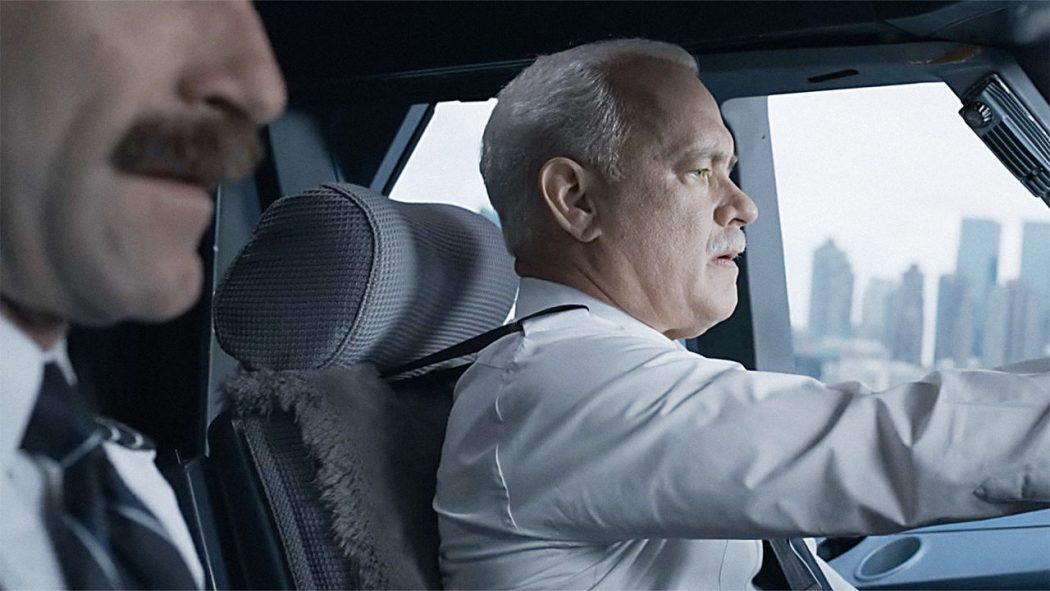
Both as an actor and as a director, Clint Eastwood has explored his fascination with the conflicted hero narrative. World weary and downtrodden seems to be the resting constitution of most of his protagonists and their stories usually test their personal doubts with a greater conflict that effects the good of their environments. In this year’s “Sully” Tom Hanks takes on this position as the real life commercial airplane pilot Captain Chesley Sullenberger, who in 2009 safely landed an American Airlines jet of 155 passengers along the surface of the Hudson river with no casualties. The story caught the aged, life-long pilot in the middle of a media storm where he and his co-pilot Jeff Skiles (Aaron Eckhart) was crowned heroes by many, while simultaneously enduring pressure and scrutiny by the organization investigating the crash.  

Using Sully’s tested psychosis as the story’s framing device, much of the story is told in flashback, as well as the occasional PTSD-induced nightmare sequence. Hanks plays Sully with a lot of insular angst and quietude and uses his eyes to convey his character’s discomfort and mounting self-doubt. It’s not a particularly showy performance and it leans further into Hanks’ transition into that of a senior performer. Eckhart is then given more room to be vocal and expressive about the nature of their character’s odd position within the media and their stressful behind-the-scenes case.  

The film is also interested in the notion of experienced intuition verses blind empiricism, as the board of investigators keep telling both pilots that every simulation demonstrates that they should have been able to safely make it back to the tarmac without risking a dangerous water-landing (as well as destroying expensive company equipment.) This argument, as presented by the film, could be read as a condemnation of expert analysis and a celebration of blue-collar, folksy instinct but the conclusion to this case wisely factors in human experience and emotional error as a variable itself, saving the picture from slipping too far into an anti-science, finger-wagging appeal to the viewer’s emotions.

 The special effects and the flight recreations are both familiar to the experience of flying and the fear that comes with its risks.  The daydreams and nightmare sequences are  realistic and spiked with harrowing 9/11 imagery, which ties in subtly with New York and America’s exaltation of Sully’s rescue landing.

“Sully” is a competent drama. Hanks is a professional, Eastwood knows exactly how to tell this story and the screenplay aims low enough for both of them to hit their intended marks. If the film does have a flaw it’s Todd Komarnicki’s successful but safe adaptation of Sullenberger’s book “Highest Duty.” Kormarnicki tries to weave in Sully’s past as a war pilot and crop duster to show his experience and his relationship with the air, but that gesture is never really paid off or integrated well enough to fully inform the character or the plot. While studied and precise, the screenplay lacks the amount of narrative ambition it needed to propel the picture from good actor’s showcase to being truly great film.

Grade: B

Originally Published in the Idaho State Journal - Sep/2016

Sunday, September 11, 2016

Kubo and the Two Strings review

Laika studios, the animation studio based in Portland Oregon, has built its brand recognition on a style of detail oriented and highly stylized stop-motion puppetry. Their features, “Coraline,” “ParaNorman,” and “The Boxtrolls,” have primarily catered to the same audience who followed “Coraline” director Henry Selick from Disney’s “A Nightmare Before Christmas,” which shares a similar gothy aesthetic. In contrast, Laika’s latest project “Kubo and the Two Strings” is less interested in introverted protagonists and macabre dark comedy and is more concerned with widening the scope and visual boundaries of their storytelling with an eastern-themed, mythic adventure.

The film interweaves an intricate story-within-a-story that purposely blurs the lines between depictions of imagination and actual magic. The movie follows the multi-faceted coming of age of Kubo (voiced by Art Parkinson), a young boy who lost an eye as an infant and who lives with his mother on the top of a Japanese mountain that overlooks a small village. His shut-in mother encourages him to mingle with the others during the daytime hours, but warns her son to return home before dark. While visiting, he relays the bits and pieces of his mother’s stories/memories for the townsfolk in the form of origami puppet shows, created and directed by the music of his rudimentary three-stringed guitar. One day after staying out too late, Kubo is visited by his mother’s evil sisters (voiced by Rooney Mara) who wish to claim him as their own. Their sudden arrival forces the boy into perusing an Odyssey to find three pieces of a magic armor. Once collected he hopes to destroy the evil Moon King; the mysterious and dark magician who’s most likely responsible for his mother’s sudden disappearance. In her place, Kubo is joined by an enchanted and overly-protective Monkey (Charlize Theron) and a charming Beetle samurai (Mathew McConaughey) with a lot of hard-headed courage.

Fans of Japanese entertainment will likely see in “Kubo” shades of the sensitive fantasies that Hayao Miazaki produced with Studio Gibli, as well the airy and patient pacing of Japan’s classic edo-period action cinema. Elements of the plot also recalls the structure and archetypal symbolism of “The Wizard of Oz.”

The animation exhibited here is by far the most ambitious and expansive work we’ve seen from Laika thus far, and the movie’s camera technique and its consideration of the frame allows for wider shots and wilder pans and zooms than previously implemented in their painstaking form of animation. On a technical level, It’s nearly impossible not to give into director Travis Knight’s vision, even if the ending is clumsy and screenplay’s vague mythology sometimes muddles its themes.

This story is interested in familial legacy, adopted communities, and what it’s like to grow up without a sense of personal history, while simultaneously trying to overcome an unwanted path set before you, but the film sometimes struggles in tying all of these ideas together in succinct and assured way. The team behind this project surly deserves much praise for creating a product for children that is thoughtful and contemplative while also beautifully crafted and creatively art-directed. With that said, admiration doesn’t always translate into a full immersion. “Kubo and the Two Strings” is a significant progression for this studio and it’s more than worthy of your attention but as a story it merely nudges the shoulders of greatness.

Grade: B

Originally Published in the Idaho State Journal - Sep/2016

Listen to this week's episode of Jabber and the Drone to hear more conversation about "Kubo and the Two Strings."

Sunday, September 4, 2016

Don't Breathe review

“Don’t Breathe” is exactly the kick in the neck that extreme horror needs right now. Fede Alvarez’s new thriller cleverly plays with expectations and tropes within the home-invader genre but it never loses sight of its own momentum, creating a vivid cinematic world of its own within a deliberately designed, claustrophobic setting.  The movie makes a lot of allusions to classic shockers of the past, such as Wes Craven’s “Last House on the Left” and Sam Peckinpah’s “Straw Dogs,” as well as scene elements and direct imagery from “Silence of the Lambs,” and “Cujo.” Conceptually, this film is basically a reverse version of the 1967 Audrey Hepburn, Alan Arkin thriller “Wait Until Dark.” But even as those obvious sign posts are visible for the cinefiles in the audience “Don’t Breathe” slams around with enough of its own moves and creative WTF moments to justify its many obvious appropriations.

The story’s set-up is pretty simple; three up-to-no-good, Detroit 20-somethings stake out the home of a blind ex-military man (Stephen Lang) who’s sitting on 300,000 dollars of settlement money after losing his only daughter in a car accident. Rocky (Jane Levy), Alex (Dylan Minnette) and their gun-toting gangster-wannabe frenemy Money (Daniel Zovatto) all hope to use this small fortune to give up their criminal lives and move out west to California, where they can escape their family problems and the general angst of Midwestern, industrial poverty.  Of course, once they break into the house of their mark things don’t go as they had planned.  As it turns out, the blind veteran and his vicious Rottweiler are much more prepared for the occasion than our delinquent protagonists had originally anticipated.

Those with a weak stomach and mild psychological constitution should be warned that this movie serves a pretty strong cup of coffee. Alvarez knows how to wait the appropriate time to strike and he patiently earns his gore, but when the rubber hits the road he doesn’t hold back when it comes to his depictions of blunt violence and seat-squirming shock sequences. In fact, half of the picture’s strength comes from its build up and anticipation towards these moments. This director also never forgets how to structure a scene and uses his wandering camera to layout the architecture of each set-piece so the audience can get a true sense of where everyone is and how hard or easy it should be for them to escape. The best cat and mouse films know that good chase scenes are most effective when they fully incorporate their setting, and in that sense, Lang’s creaky, three-level home becomes another character in the film.

As the movie’s introduces its principle players the dialogue can be stiff and some of the characterizations are at times too broad and archetypal but the actors usually are able pick up the screenplay’s slack in those departments. Things get significantly better once we get into the meat of the break-in. Alvarez revels in the mechanics of his suspense and the cinematic elements of horror as pop entertainment. He loves to pull the strings tight on his scenes and loves to pull the rug out from under the audience, and though the film’s use of sound is especially important here—given that the antagonist is blind—the movie never defaults to the overuse of cheap, quiet-quiet-loud jack in the box scares.

After a summer of misfiring popcorn fare, “Don’t Breathe” is the perfect mean-spirited antidote to start the fall season. It’s unpretentious and unencumbered, and more importantly, it understands the appeal of the genre it’s playing in and knows how to confidently execute it with practical style and craftsmanship.

Grade: B+

Originally Published in the Idaho State Journal-Sep/2016

Listen to this week's episode of Jabber and the Drone to hear more conversation about "Don't Breathe."

Sunday, August 21, 2016

Sausage Party review

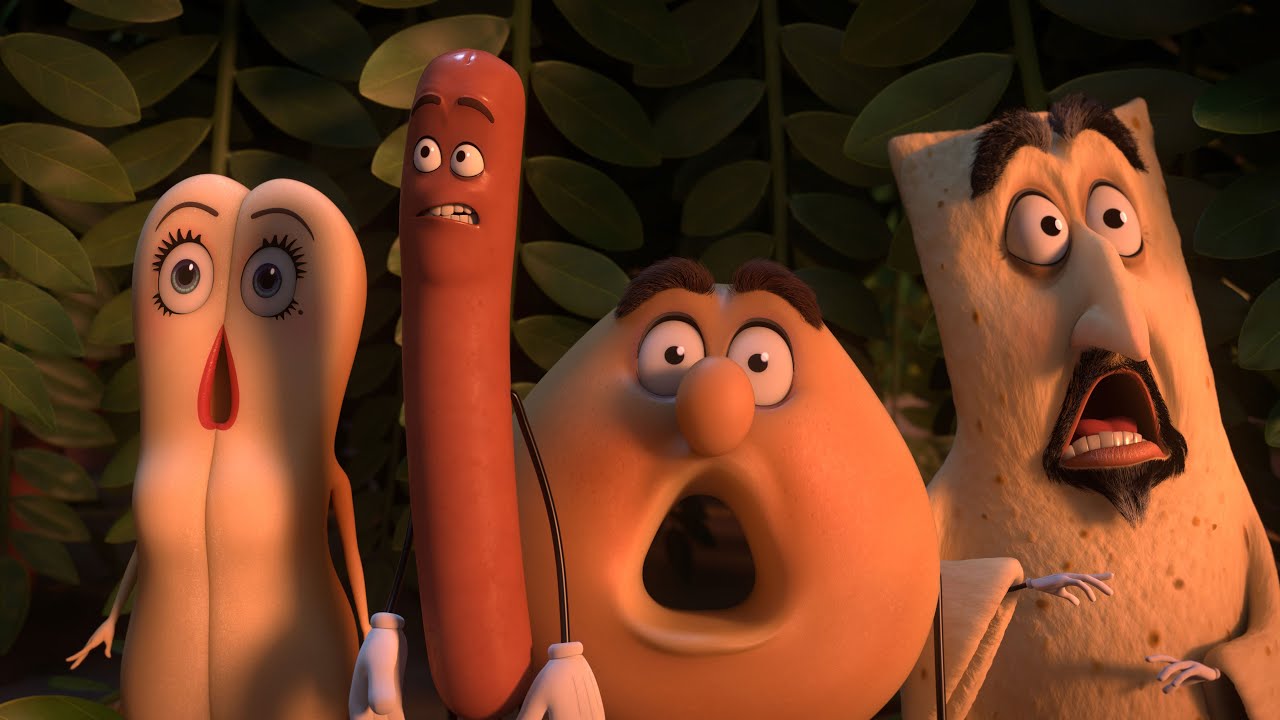
Seth Rogen and Evan Goldberg’s raunchy animated feature “Sausage Party” certainly doesn’t lack audaciousness when it comes to pushing technical boundaries. While it’s not the first of its kind in terms of feature length animated films with adult humor, it is the first to utilize the size and scope of Dreamworks and Pixar’s three-dimensional style. Directors Greg Tiernan and Conrad Vernon both come from animation backgrounds, and that certainly helps to facilitate Rogen and Goldberg’s vision of a colorful grocery store where food items learn the harsh realities of their place in the circle of life. The ambition of this project is impossible to ignore, and with an over-saturation of talking animal cartoons released every year, a parody was ripe for the making. That is why “Sausage Party” feels like even more of a deflating as missed opportunity. This creative team could have really done something spectacular and sharp, but the film lacks both subtlety and wit and leans on lowest common denominator gags and empty vulgarity.

Rogen voices Frank, a hot dog who is looking forward to being chosen by one of the human “gods” so that he may finally copulate with a bun named Brenda (Kristin Wiig), his across-the-shelf girlfriend. When they finally make it into a shopping cart, an accident separates Frank from his package of hotdog friends voiced by Jonah Hill and Michael Cera. Frank and Brenda must then travel back through the many aisles of the store to regroup. Joining their odyssey is a neurotic Jewish bagel named Sammy (Edward Norton), and an angry, pious flat-bread wrap named Lavash (David Krumholtz). Along the way Frank discovers that their purpose in the lives of their gods may not be the heaven they had in mind.

Lavash and Sammy’s contentious relationship underlines the movie’s more shocking sources of comedy; a total surrender to outdated racial and cultural stereotypes. The food in the store is segregated into ethnicities (Mexican, German, Middle Eastern, Asian…etc), and while the film tries to justify their reductive depictions through the script’s themes of cultural unity in the face of blind faith and superstition, the glee it exudes from exploiting these stereotypes cannot be removed from its comedic premise.


For all of its bombast and expensive production values, this movie just isn’t funny enough. The dialogue is riddled with expletives and filthy innuendo from the first frame, and while South Park creators Matt Stone and Trey Parker have made an art out of profane satire in animation, this screenplay is far lazier in its execution. The writers seemed to believe that to show a cartoon character cursing is funny enough on its own without properly set-up jokes or subversive insight to support each scene. What results is a series of unfunny conversation set-pieces that sound transcribed from preteen boy’s locker room. Case in point; Nick Kroll voices the villain of the story, a feminine product who calls himself “The Douche.”


The movie works best when it explores the violent, darker places within its premise. After escaping the clutches of death from a human, Michael Cera’s character, Barry, leads us into unpredictable and absurdly macabre situations when he ties to make it back to the store to warn his friends of certain doom. These moments are based more on vivid imagery that properly utilizing its animated context--unlike the bumbling primary plot, which relies too heavily on hard-R raunch and Rogen's obligatory pot jokes.

The film has an interesting message about how religious interpretations can divide us in this life while we worry too much about what's in the next, but as a comedy “Sausage Party” is largely a one-trick pony. While its tone-deaf racial humor is supposed to be boldly irreverent, much of it is cringe inducing, and with this much time and effort put into the animation process there is no excuse for the comedy be this tired.

Grade: C-

Originally Published in the Idaho State Journal/Aug-2016

Listen to this week's episode of Jabber and the Drone to hear more conversation about "Sausage Party."

Sunday, August 14, 2016

Suicide Squad review

After the clunky and underachieving disaster that was “Batman v Superman: Dawn of Justice” the stakes for David Ayer’s “Suicide Squad” were raised too high. Though Warner Brothers never planned it, because BvS failed to live up to its own hype, this quirky film, inspired by a 4th-teir DC comics property, is now expected to give Warner's fledgling movie universe enough fuel to drive fan interest to the next spin-off. Given that “Suicide Squad” is an already an odd premise—grouping imprisoned super-villains to fight for the government against their will--and features mostly unknown characters, a property this idiosyncratic and niche was hardly positioned to save an entire franchise from failing. Making things all the more difficult, Ayer’s attempts at dark satire and genre subversion are undercut by the studio’s bottom-line priorities and the narrative has been ravaged by intrusive re-shoots and bad editing.

Following the events of “Batman v Superman,” government intelligence decides to create a team of mutants and misfits of their own in case another ‘meta-human’ decides he or she above the law. Agent Amanda Waller (Viola Davis) brings together the unlikely ensemble of a hitman named Deadshot (Will Smith), a dangerous pyro-kinetic named Diablo (Jay Hernandez), the unicorn obsessed maniac Boomerang (Jai Courtney), a sewer dwelling cannibal called Killer Crock (Adewele Akinnuoye-Agbaje), a possessed mystic named Enchantress (Cara Delevingne) and an unpredictable Joker obsessive named Harley Quinn (Margot Robbie). Once the team is assembled they are set on the first mission to stop Enchantress when her vaguely defined witch spirit is reunited with an ancient Mezzo-American war-god, unleashing a horde of amorphous, blob-headed bad-guys onto the city streets.

The movie almost never works either as a streamlined superhero peice or a darkly humorous action-comedy, but as misbegotten or as poorly executed as it might have been I can’t bring myself to dismiss Ayer’s ambitions. There are moments in this swirling, crass, adolescent and tone-deaf glorified videogame that approaches a level of hysteria and anarchy that too few mainstream comic book movies dare to embrace. Even this year’s “Deadpool,” which was celebrated for it’s hard-R raunchiness, played it safe when it came to defining who we’re supposed to root for, who we’re supposed to hate and it created a safe relatability when it came to the protagonist’s goals and desires. “Suicide Squad” muddies all of those waters and celebrates the sickest and most deranged motives within its characters, but it fails to take its punk-rock attitude beyond the surface into the thematic territory where it could have made a bigger impact.

All the actors seem committed and game to embody these larger than life sociopaths—Margot Robbie walks away with whole movie and Will Smith almost reminds us why we liked him in the first place—but the filmmakers are never as committed to the story. The generic and buffoonish cartoon plot is treated merely as an apparatus to house the ensemble and to highlight the film’s overbearing aesthetic choices. The overall production design seems to be inspired by a 13-year old’s pog collection from the mid-90s and the groan-inducing jukebox soundtrack is filled with painfully on-the-nose rock music selections. It doesn’t help that the actors, as hard as they try, never compensate for the one-note, smart-alecky dialogue.  

Somewhere in the creases and corners of this unmitigated disaster exists the seeds of a more interesting movie.  Jared Leto’s minor appearance as the Joker is occasionally exciting but like everything else is buried under the larger beats of the silly and uninteresting A-plot. I can’t help but wonder if a movie about Joker and Harley that fully explores their toxic romance might have been more satisfying (think Oliver Stone’s “Natural Born Killers” in Gotham). Perhaps if the film had been allowed to be R-rated and these supposedly dangerous criminals were forced to plow through the Joker’s hench-men or an opposing military instead of mystically powered, faceless ghouls, the movie could have retained the grit and immediacy of Ayer’s previous work (“Fury” “End of Watch”).  As it stands, “Suicide Squad” is an empty-headed and tonally frustrating missed opportunity and yet another stumbling block in DC/Warner’s desperate attempt to catch up with Marvel’s blockbuster winning streak.


Grade: C- 

Originally published in the Idaho State Journal/Aug-2016

Listen to this week's episode of Jabber and the Drone to hear more conversation about "Suicide Squad."

Monday, July 25, 2016

Ghostbusters (2016) review

Paul Feig’s “Ghostbusters” remake has been a lightning rod for controversy since it was announced a couple of years ago that the picture would feature an all-female cast. Though the living cast members of the original 1984 film have given their blessing to this project and have even appeared in in the picture as bit parts, for some, this has been the straw that breaks the back of fan-culture when it comes to remaking their favorite nerd properties from the 80s. This internet outrage has also caught the attention of a less than savory flavor of he-man-women-haters and racists who’ve used the film as a soapbox to attack these actresses as well as feminism as a whole, which has then forced the media into siding with Feig and his project in hopes to proportionately counter the negative online buzz. What does any of this have to do with the movie, you might ask, not very much at all.

Like most classics that we now take granted now, the original “Ghostbusters” was a film that, on paper, shouldn’t have worked. It’s an absurd premise that’s actually taken semi-seriously and features a cast of television comedians playing doctors and scientists.  It also made allusions to the heroes’ interests in the occult, smack-dab in the middle of America’s satanic panic, and the screenplay’s structure is a more loosely accumulative than it is classically three-act.  This remake irons out all of those kinks and idiosyncrasies for something that is unsurprisingly more safe and centered around a series of jokes and premises rather than scenes.

Like the original, this film is also comprised of actors mined from Saturday Night Live such as Kristen Wiig, Leslie Jones, Kate McKinnon, as well as Feig’s muse Melissa McCarthy. Wiig plays Erin Gilbert, an uptight physicist who's lost her tenure at the university that employed her when a video is leaked that connects her with past interests in paranormal study. She’s then reunited with her former partner in crime Abby (McCarthy) and Abby's zany lab assistant Jillian (McKinnon).  With nowhere to go but up the group moves their headquarters to the attic of a Chinese restaurant in New York where they up shop as a ghost removal service. Later they enlist the help of a hunky but flighty receptionist named Kevin (Chris Hemsworth), as well as Metro worker named Patty (Jones) who’s been witnessing strange things in the underground tunnels.

There are plenty of nods and winks to the 1984 predecessor but the majority of the plot elements here are conceived from a much less specific place and the jokes are based more on visual gags and punch-lines than they are on character. Wiig is a passive, bland lead, McCarthy simmers her wild comedic persona to blend into the ensemble and its Jones and McKinnon who provide the films hardiest chuckles, making broader, wilder character choices.  Hemsworth isn't given a lot to do but he's game to play an empty-headed receptionist and has a few funny moments of his own. Still, the movie never really takes off like it should and the plot elements never coalesces into something I could comfortably call a story. Like Feig’s previous work (“Spy,” “Bridesmaids”) this movie is based around key comedic set-pieces and conversational dialogue, which is then restricted by many complicated special effects and a PG-13 rating that doesn't seem to suit this cast or this director.

As a story, this “Ghostbusters” doesn’t have the mythic complexity or the same sense of character history that its source material was able to weave into the narrative and as a comedy I can’t say that laughed as much as I wanted to. I enjoy the neon look of the special effects and some of the new gadgets are silly and exuberant in a Saturday morning cartoon sort-of way, but even if we are only comparing this to previous Feig comedies this would still rank pretty low. My childhood is still intact and the female cast doesn’t threaten my masculinity--nor does it subvert anything as a political gesture--but this remake's screenplay is noticeably lazy and I’d be lying if said I found this effort to be a satisfying or substantive movie going experience.   

Grade: C-

Originally Published in the Idaho State Journal - July/2016


Sunday, July 17, 2016

The BFG review

Steven Spielberg’s adaptation of the classic Roald Dahl novel “The BFG” suggests a director and source material paring that should yield exciting work. Spielberg is the master of creating four-quadrant Hollywood product that rides the line between the joy and wonder of cinema with an undercurrent of menace and Hitchcockian thrills. Dahl’s books capture a similar sense of childhood wish fulfillment often shadowed by morose details and black humor. Unfortunately, somewhere in the production of “The BFG” the sneakier tones and shades that made the original story pop were glossed over with a slick, motion-capture focused accessibility that’s flattens its most interesting quirks.

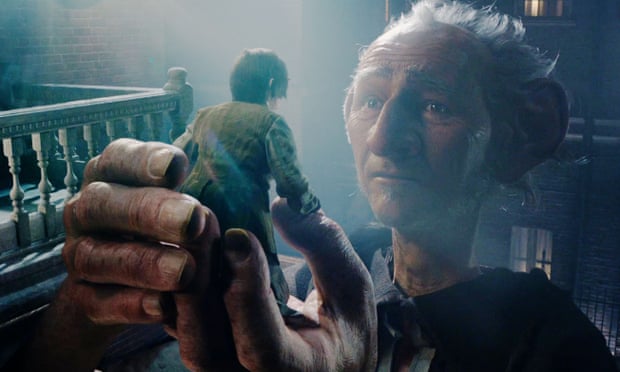
When the movie's protagonist Sophie, played by newcomer Ruby Barnhill, stares out of the window of her orphanage bedroom and we first see the shadow of the 60-foot Big Friendly Giant, we get a glimpse of the Spielbergian power of mystery and imagination. After the clearly animated giant then snatches our protagonist through the window and brings her back to his magical home in giant land the sense of mystery is quickly replaced with focus on the special effects and Dahl’s idiosyncratic dialogue. We are also introduced to a pack of bigger, meaner, man-eating giants who live with the BFG and who pose a threat to Sophie, so long as she’s living with her capture, but that threat is never treated with enough weight or seriousness to effectively motivate the narrative.

The film tries to balance the unfamiliarity and strangeness of Sophie’s new surroundings, and like Dahl’s other novel “Charlie and the Chocolate Factory” we are lead through a series of set pieces were we are introduced to a lot of silly and bizarre concepts, but the hallmark-channel tone of the film never allows for the necessary emotional peaks or valleys to ground these concepts in a way that properly thrusts the story. Even John Williams’s lilting score is always humming inoffensively in the background and never recedes or swells to punctuate scenes in a meaningful way.

The choice to iron over Dahl’s threatening world with the story’s friendlier message leaves the audience with little else to attach ourselves. The photo-realistic animation is the focus of the movie and it isn’t new enough or distinct enough to wow us into loving the characters. Mark Rylance’s voice work as the friendly giant is commendable and Barnhill’s interactions with a green-screen environment is seamless and mostly convincing but the film suffers from an amiable blandness that surprisingly lacks creative vision.

As a children’s film “The BFG” is not a grating or unbearable experience but it’s also not a memorable one either and from Spielberg this come with a harsher critical eye, given that he essentially perfected this genre with his past films such as “E.T: The Extra Terrestrial.” Hell, even the often maligned “Hook” took more risks and wasn’t afraid to build in moments of suspense and peril to underline the dramatic stakes. “The BFG” has a few transcendent moments in which it’s director seemed to be engaged with the material, but the overall execution of the film is a missed opportunity.

Grade: C

Originally published in the Idaho State Journal - July/2016

Listen to this week's episode of Jabber and the Drone to hear more conversation about "The BFG."


Saturday, July 2, 2016

The Neon Demon review

Danish filmmaker Nicholas Winding Refn (“Drive,” “Bronson,” “Pusher”) is an exciting and daring stylist who’s equally confounding and frustrating as a visual storyteller. Like many auteurs in the post-modern era, he wears his influences on his sleeve and uses pastiche as a way of creating new meaning from old genre tropes. His latest film “The Neon Demon” combines the dreamy nature of euro-trash, exploitation horror with the camp sensibility of a  Hollywood rise and fall drama.

Because of their surface interests in shock and attitude, horror and camp have always been kissing cousins and both have often shared a lot of space on the cult-movies racks of the now-extinct video stores, but here Refn isn’t satisfied with simply achieving approval as a cult curiosity, he also wishes to be taken seriously as an artist and a visionary. Perhaps it’s the way the film vibrates between the boarders of shock, camp and art-house experimentation that prevents it/saves it from conveniently being excepted as any of the above, while also never settling on an appeal those different tones might provide.

Elle fanning plays the lead as a Jesse, a young runaway trying make it as a model in Los Angeles. Because of innocent youth and her effortless beauty, she’s quickly signed to a top agency where she catches the attention of Jenna Malone as a make-up artist named Ruby and two viciously completive models named Gigi (Bella Heathcoat) and Sarah (Abbey Lee). As Jesse begins to slowly come out of her shell and her naivety is—supernaturally? —transformed into spotlight bravado, her urban-fairytale surroundings creep in closer and closer, becoming more hostile as the movie progresses.

Though the story is quite traditional, Refn’s take on the material is anything but. The movie opens on a slow moving tableau of Jesse who appears murdered and blood soaked. This reveals itself to be stylish photoshoot in which our heroine is trying to put together a portfolio. Given the eventual trajectory of the plot, this also mirrors the staged beauty and ornate artificiality of the film itself and the genre it’s participating in. Refn challenges the notion of style over substance—a critical dart often thrown in his direction—by embracing a world and a set of characters in which style is substance. At one point a hacky fashion designer tells our protagonist “Beauty isn’t everything, it’s the ONLY thing,” and with that philosophy in mind, this movie couldn’t be more aesthetically satisfying. Every frame is meticulously designed with dramatic lighting schemes that paints the world in fluorescent reds and pinks and turquoise. Even Jesse’s seedy Pasadena hotel room is designed and arranged within an inch of its life. This, along with Cliff Martinez’s synthy score that harkens back to the work of 1980s Tangerine Dream, all helps to create a sleepy, slow-motion nightmare.

There’s a lot to soak in here and much to appreciate on an aesthetic level and as a horror movie the flick meets its splatter quota with a third act that dares to go to exceedingly disturbing and twisted places, but the pacing is sometimes a bit too deliberate and the tension it needs to maintain as a psychological thriller is intermittently relaxed for the sake of bathing in the hallucinatory scenery.

“The Neon Demon” feels like an experiment in genre that was never quite resolved before it hit the screen, but it never lacks something to look at, something the laugh at, or something that will make you genuinely wince and squirm. For all its flaws and awkward handling of the narrative, this is undeniably active cinema at work and Refn’s clarity of vision shouldn’t be ignored in favor of the comfort of conventionality.


Grade: B

Originally Published in the Idaho State Journal/July-2016

Listen to this week's episode of Jabber and the Drone to hear more conversation about "The Neon Demon."

Sunday, June 26, 2016

Finding Dory review

“Finding Dory” is Pixar’s latest attempt at recapturing the magic of one of their flagship animated films. “Toy Story” managed to go back to the well twice, resulting in satisfying sequels that arguably eclipsed the original. On the other side of the spectrum they have “Cars 2;” a sequel nobody asked for, which managed to annoy non-child audiences even more than its predecessor. “Finding Dory” falls somewhere closer to that, even though, unlike “Cars,” 2003’s “Finding Nemo” was beloved by many and is still quoted and referenced to this day.

Ellen DeGeneres’ Dory, a blue fish with short-term memory-loss, was the quirky comedic relief of the first film and helped to offset the stern and humorless Clown fish Marlon (Albert Brookes) as they searched the ocean for his son Nemo. Here she now takes center-stage after having flashbacks of her childhood, becoming concerned with finding her parents and rediscovering her roots, of which she only has fragmented memories. Marlon reluctantly agrees to help her along the way before the two become separated and Dory is placed in quarantine tank at a California marina. There she meets an octopus named Hank with seven tentacles (Ed O’Neill), a near-sited whale named Caitlin (Kailin Olsen) and a beluga named Bailey with broken sonar (Ty Burrell).

There’s plenty to admire about this production and the animation is more rich and vibrant than we’ve seen from Pixar in a while. The ocean vistas are alive with all kinds of activity in each frame and Dory, along with the new characters in her adventure, are entertaining and humorous, but structurally, this story struggles to find a natural flow, often labored in clunky set-pieces that increasingly dares to break the audience’s suspension of disbelief. Director and co-writer Andrew Stanton find far too many cheats to get their ocean creatures out the water, with Dory spending much of the movie in a coffee bowl while Hank slithers her around their marina enclosure—an enclosure which seems to be fairly easy to escape from and, for some characters, is completely open to the ocean.

Believability aside, the characters suffer from a lack of clarity or specificity. The nature of Dory’s memory-loss, which has now been upgraded from a quirk to a plot-point, is inconsistent and the severity of which is often changed for jokes to land and for action sequences to work, which only undercuts the movie’s emotional themes about overcoming and transcending disability.  Poor Nemo and Marlon are given practically nothing to do in their piddling B-plot, which slogs its way an eventual convergence with Dory’s more-lively, if not somewhat ridiculous, A-plot.

The script feels unfinished and banal and the movie as a whole doesn’t justify its being made—other than Disney’s obvious cash-grabbing opportunity—but “Finding Dory” is still watchable. The voice talent helps to elevate the telegraphed jokes and the eye-rolling call-backs, and the animation, as previously mentioned, is gorgeous to look at. Pixar sets a high bar of excellence that both damns the films in their catalog that are merely mediocre while still shaming most their competitors, but I can’t help but consider this a missed opportunity.

Grade: C-

Originally published in the Idaho State Journal/Jun-25

Listen to this week's episode of Jabber and the Drone to hear more conversation about "Finding Dory."

Saturday, June 4, 2016

X-Men: Apocalypse review

20th Century Fox’s X-Men series has a been one of the longest running and most volatile of Hollywood’s plentiful superhero franchises. When director Bryan Singer helmed the first two entries around the turn of the century his objective was to naturalize the pulp materials his movies were based on and to internalize the comic book’s over-the-top sci-fi premise into a relatable political allegory about governmental oppression and systemic bigotry. Since then, the X-Films have been passed along to many directors and many writers and the sincerity of its themes have been gradually muddied by competing aesthetic choices, bad screenplays and a timeline that’s tangled itself into more knots than a pocketed pair of earbuds.  

When Singer returned to the property for 2014’s “X-Men: Days of Future Past” he had of lot of narrative housecleaning to get back to his original vision, but was still able to carefully land his albatross of a time-travel plot with all toes touching the ground.  The promise of “Days of Future Past” was that the slate was now clean and the films going forward no longer had to answer for the mistakes of the past, that’s why the latest entry, “X-Men: Apocalypse,” is all the more disappointing, as it relapses into many of the same inconsistencies found within its weaker predecessors.

Moving ten years forward from the events of the last film, this installment sees our heroes faced by an ancient mutant named Apocalypse (Oscar Isaac) brought back from the dead from the depths of the pyramids of Egypt. Once this god-like entity is restored he is put on a path to destroy the earth of human dominion by recruiting four powerful soldiers who are sympathetic to his cause. After Magneto (Michael Fassbender) is ripped away from his newly established anonymous life in eastern Europe he joins Apocalypse alongside a young Storm (Alexandra Shipp), Angel (Ben Hardy), and Psylocke (Olivia Munn).  When Professor Xavier (James McAvoy) catches wind of this new force he assembles a new team to keep his school safe, as well as the future of the world as we know it.  

This film somehow manages to suffer simultaneous from being too much and not enough. There are too many characters and too many subplots to keep track of and yet none of them are really explored with enough depth or purpose to justify their inclusion. The heroes such as Beast (Nicholas Hoult), Cyclops (Tye Sheridan), Quicksilver (Evan Peters) and Mystique (Jennifer Lawrence) are explore to some capacity and have some stakes in the plot but the script lacks a sense of focus and drive by its constant shifting of the story’s center of consciousness. Is this supposed to about Mystique trying to save the soul of her mentor and friend Magneto? Is it about Cyclops’ journey to find belonging and responsibility within the group as a new student? Is it a political allegory about the arms race of the 80s? None of these plot ideas are fully flushed out and much of the film feels like a poorly paced build up to a non-climax.  

Secondly this movie suffers from a style that is far campier than we’ve been treated to from this series thus far, with flashier set-pieces, hokier dialogue—courtesy of hack screenwriter Simon Kinberg—and ridiculous costuming.  The film’s 3D minded cinematography heightens every battle scene into cartoony weightlessness. Because of this, the action sequences are less vital and less tactile and the visuals appear flattened and cheap when projected in two dimensions.


Still, McAvoy and Fassbender are great actors and there are moments of candy-coated pop filmmaking to be found in this mess, along with the DNA of the comic book’s higher minded ideas as well as Singers’ passion for minority social justice. “X-Men: Apocalypse” isn’t the worst film in the franchise—“X-Men Origins: Wolverine” still has that distinction—but this material has clearly become tired and strained from being worked and reworked over the last 15 years and as a result th movie never settles into a comfortable mode of its own.   

Grade: C-

Originally Published in the Idaho State Journal/May-2016

Listen to this week's episode of Jabber and the Drone to hear more conversation about "X-Men: Apocalypse."