Showing posts with label reviews. Show all posts

Sunday, December 24, 2017

Star Wars: The Last Jedi review

Under the steady control of Kathleen Kennedy and J.J. Abrams, this third Star Wars trilogy has built upon the traditions of George Lucas’ mythology and pays homage to the type of fan-service that sells light-sabers at Toys R’ Us. But the director of the latest installment, Rian Johnson of “Looper,” “Brick” fame, plays the storytelling of this new sequel like a bored gamer who decides to break away from the core missions to see how far the boundaries the video-game will go. This isn’t to say that “Star Wars: The Last Jedi” is wildly off-topic or even experimental, but it does play with the expectations of the audience with narrative risks not seen in the franchise since Irvin Kershner’s 1980 sequel, “The Empire Strikes Back."

The story picks up where 2015’s “The Force Awakens” left off; Rey (Daisy Ridley) has found Luke Skywalker (Mark Hamill) hiding as a hermit on a distant planet. There, she hopes to be trained in the ways of the force by the former Jedi master. Cocky flyboy Poe Dameron (Oscar Isaac) and the reluctant and frightful ex-Stormtrooper Finn (John Boyega) are traveling with the Resistance, trying to survive the intergalactic pursuit of the imperial First Order, which is led by the vengeful Kilo Ren (Adam Driver).

Structurally, many of these story beats are very similar to those built into the plot of “The Empire Strikes Back,” and similarly, this installment wishes to disturb the canon with a few sharp left turns and a few shocking reveals. But rather than making his bed in the comfort of nostalgia, Johnson’s tricky screenplay also challenges Lucas’ classical, Campbellian tropes. Rey’s journey of self-discovery does not lead to self-assuring revelations about her past, and only further complicates her place in this battle between good and evil. Ridley and Driver share several scenes in psychic conflict, in which the characters bridge the bureaucracy of war and destiny to make a deeper connection that defies both of their places in their spiritual and philosophic struggle.  This potentially treasonous relationship is very well acted and is some of the most compelling drama the series has produced thus far.

We’re treated to another side story in which Finn and a young resistance mechanic named Rose (Kelly Marie Tran) travel to a space Casino full of intergalactic one-percenters to find a hacker who can help them stop the First Order from being able to track their ships whilst escaping in light-speed. This mission, while bouncy and played like a high-stakes movie heist, is also subverted and woven into the greater peril of Leia's command (Carrie Fisher) and difficult decisions made by her Vice Admiral Holdo (Laura Dern).

Johnson’s visual take on the material is a little left of center as well, and the set design is often beautifully stark and minimal. His work with the actors is generous and thankfully he gives aged performers like Fisher and Hamill more to do in the story than to simply act as camera-winking cameos. This is a terrific action film and great advancement of the Star Wars canon.

Some long-time fans have bucked to the risks Johnson took with his entry, but what I appreciate the most about “The Last Jedi” is that, while it’s a half hour too long and some of the humor doesn’t land, this is one of the most story-driven installments the series has ever seen. Rather than serving a classical hero’s journey about good versus evil, the characters are now forced to move forward with a plot that has greater ties to their unpredictable motivations.

Grade: B+

Originally published in the Idaho State Journal/Dec-2017

Listen to this episode of Jabber and the Drone to hear more conversation about "The Last Jedi"

Sunday, January 22, 2017

My Top-10 Films of 2016

2016 has been strange and surprising for all of us, and that’s also reflected in the films that came out last year. Many of the most anticipated blockbusters either underperformed or failed on arrival (“Assassins Creed,” “Independence Day: Resurgence,” “Alice: Through the Looking Glass”), while the R-rated superhero farce “Deadpool” and a Winona Ryder starring, eight-episode Netflix miniseries about Dungeons and Dragons and parallel universes captured America’s imagination.

My favorite movies of the year seem to fill the cracks between Hollywood’s biggest wins and biggest losses, mostly showcasing talented filmmakers that remind us that the most standard genre paradigms still hold true if realized with filmic discipline and a passion for the subject matter.

10 – Tickled – New Zealand documentarian David Farrier falls down the rabbit hole of online competitive tickle-torture, and what started as an assignment to highlight a wacky sub-culture, descends into a lurid story about power, control, money, and online extortion. Doing for the internet what “Psycho” did for showers, this documentary takes wild and unexpected left turns and reveals itself to be one of the most tense and uncomfortable movie watching experiences of 2016.

09 – The Lobster – Colin Ferrell plays a lonely man who checks himself into an isolated single’s retreat to find a life-partner. Once there, he agrees with the management that if he’s unable to find a suitable mate he will forced to live his next life as a lobster. Yorgos Lanthimos' surrealist dark comedy gleefully queers the heterosexual experience and satirizes the arbitrary nature of human social constructs.

08 – The Neon Demon – It took me a few days to untangle the movie's meaning and discern the intentional camp of Nicholas Winding Refn’s fashion-industry horror story. Like a modern and perverse take on the Little Red Riding hood fairy-tale, refracted through the prism of expressive, euro-styled exploitation thrillers and sleazy camp-classics such as “Valley of the Dolls” and “Showgirls,” “The Neon Demon” never lets you comfortably judge the movie based on its genre expectations.

07 – Hell or High Water – It’s been a while since we’ve had a really great, down-and-dirty cops and robbers flick. “Hell or High Water”—2016’s top grossing indie release—is the type of thinking-man’s man-movie that we didn’t know we were craving. Chris Pine and Ben Foster play West-Texas bank-robbing brothers who’re out to steal from the same institution’s that took their fathers land after the Great Recession. Jeff Bridges plays the cowboy detective hot on their trail. Think “Butch Cassidy and the Sundance Kid” meets “Thelma & Louise.”

06 – Midnight Special – Jeff Nichols shows off his love for Spielberg’s sci-fi dramas like “E.T.” and “Close Encounters of the Third Kind” with a paranoid fantasy about a young boy with special abilities who’s running from the government,
 while trying to communicate with beings from another world. The film’s brooding tone and eerie, atmospheric imagery is emotionally grounded by terrific performances from Michael Shannon, Joel Edgerton, Adam Driver and child actor Jaeden Lieberher.

05 – La La Land – Emma Stone and Ryan Gosling sing and dance their way through Damien Chazelle’s archetypal boy-meets-girl musical, which uses the gloss of the Hollywood tradition to argue for the uncertainty of cinema’s future.

04 – Don’t Breathe – Horror movies can talk about today’s issues with insightful allegory, or they follow the footsteps of Hitchcock’s methods of audience manipulation and take us on a jolting thrill-ride. Fede Alvarez’s “Don’t Breathe” chooses the latter and gracefully treads the water of the home-invasion thriller with suspenseful and well-crafted set-pieces.

03 – 13th – Ava DuVernay’s Netflix documentary deconstructs the legal language of the 13th amendment which ended slavery only to pave the path for America’s prison-industrial complex. Racial divisions have been written into our very constitution and DuVernay carefully traces every civil-rights set-back to the passing of the 13th, showing us that our own justice system has replaced the plantation owners of yesteryear.

02 – Moonlight – What separated this film from the other character-driven, austere drama’s that sweep awards season, is its experimental and lyrical cinematic language. Barry Jenkins tells the story of a young black teen who grows up in poverty while he learns to repress his own sexual confusion, reminding us that ‘It Gets Better’ doesn’t always apply to every social situation. Alex R. Hibbert, Ashton Sanders and Mahershala Ali all turn in fragile and deeply effecting performances as a boy who is forced to hide his emotional truth to survive his day-to day existence.

01 – The Witch – Robert Eggers’ folktale about a settler family in the 1600s who’re oppressed by a darkness from within their New England backwoods property sunk its teeth into me as early as February of last year and it still hasn’t let go. The craft and detail that went into this modest production serves to highlight the film’s allegorical concerns about faith, sin, doubt, evil, and perception. Everything from the performances by the mostly-unknown cast, the dark and striking cinematography and the thoroughly bleak presentation of the subject matter left me without a single thing to fault to find in this thoughtful and transcendent art-house horror. 

Honorable Mentions:
Star Trek Beyond, Arrival, Eddie the Eagle, Everybody Wants Some, The Nice Guys, Kubo and the Two Strings, Popstar: Never Stop Never Stopping

Originally Published in the Idaho State Journal/Jan-2017

Listen to this week's episode of Jabber and the Drone to hear more conversation about  out year-end lists.

Sunday, October 30, 2016

13th review

Ava DuVernay’s new documentary “13th” should be required viewing for every high school civics course across the country. The film focuses on how the American justice system has been systematically rigged against people of color since the passing of the 13th amendment ended slavery in the 1800s, conveniently leaving in the clause that strips humans of their rights as soon as they enter the prison system and often long after they have served their sentences. This documentary creates a comprehensive examination of how these laws have specifically targeted the black communities through the segregation era and into the ever-expanding war on drugs, dramatically spiking our incarceration numbers over time.

Released in a particularly salty election year in which minority issues such as Black Lives Matter and immigration have been front and center in the political discussion, the film’s decision to release on Netflix streaming, rather than only engaging in a limited theatrical run, allows for the possibility of a wider reach and deeper cultural impact.

The movie gives us many damning statistics, including the fact that America accounts for 25% percent of the worlds prisoners, despite only representing 5% percent of the global population, or how African American’s make up 40% of those incarcerated, even though they only account for 6.5% of the total U.S. population. These stats are then supported by showing us how both republican and democrat lawmakers have continually stacked the legal deck against minorities to keep prison filled and profits high.

DuVernay makes the argument that slavery didn’t end with the passing of the 13th amendment, rather it was merely shifted to the prison systems. When seeing footage of minority inmates performing free labor for many successful American manufacturers, it’s hard to argue against this position. One of the stronger points made in the film—also brought to light a while back by comedian John Oliver on his HBO program—is the governmental part played by the American Legislative Exchange Council (ALEC) who guides the passing of many restrictive policing and incarceration policies, based on the whims of the powerful corporate lobbyists who fund their initiatives. These initiatives include California’s damaging three strikes policy and mandatory minimum sentencing that took judicial power away from judges and gave it to prosecutors. No matter your race or political persuasion, one ought to be disturbed by how big of a role corporations have played into the withering of freedoms, the expansion of militant policing and growth of America’s prison industrial complex.  

Formally. the documentary shifts between archival footage and talking-head interviews by the likes of activists such as Angela Davis and Bryan Stevenson, educators like Jelani Cobb and commentators and lawmakers such as Newt Gingrich. Graphics and popular music is implemented for the purposes of style and pacing but never distracts from or overwhelms the film’s content.

Here DuVernay brings the activist spirit and polemic energy that she sheathed with “Selma” in order to graciously portray the life and reputation of Martin Luther King Jr. Whereas 2014’s “Selma” aimed to bridge differing political points of view under the reverence of a classy, performance-oriented prestige picture, “13th” takes off those silk gloves and bares its anger and outrage with a meticulously researched take-down of the white supremacy that’s built into our government’s interpretation of law and order. This documentary is not a casual watch and it was made with the purpose to complicate the hotly divided conversations created by our culture of stagnant left-right squabbling, and for that alone it’s one of the most important and essential films to come out this year.

Grade: A

Originally Published in the Idaho State Journal/Oct-2016

Sunday, May 24, 2015

Mad Max: Fury Road review

             George Miller’s “Mad Max: Fury Road” is a carnival of choreographed chaos, a celebration of blackly humorous ultra-violence, and an unbridled release of frenzied fetishism. It’s a movie that isn’t holding anything back or practicing any form of restraint, yet somehow manages to fit in a story that flows effortlessly from one freak-show set-piece to another. Even more astounding is the tonal balance displayed between the film’s cartoonish, hard-R viciousness and an operatic whimsy that almost seems childlike and gleeful in all its bright-eyed mania.

           Writer/Director Miller returns to the mythology that launched his career from being an ozploitation cult curiosity to a reliable Hollywood mainstay. After introducing the world to the desolate wastelands of the post-apocalypse in 1979’s “Mad Max,” 1981’s “Mad Max 2: Road Warrior,” and 1985’s “Mad Max: Beyond Thunderdome” Miller went on to defy his cinematic first impressions with mid-level dramas like “Lorenzo’s Oil” and family movies like “Happy Feet.”  Now, after 30 years away from the franchise that propelled him and actor Mel Gibson, he has comes back to the Mad Max world as an accomplished technical filmmaker with new vigor for visual storytelling.

           The ruggedly handsome Max, played previously by a much-younger Gibson, has now been replaced by a gruffer, more wild-eyed version of the lone wanderer, played by English actor Tom Hardy. Here Max rambles into the wrong situation again, as he finds himself amongst a devious cult-leader/dictatorial sultan named Immortan Joe (Hugh Keays-Burn). The disfigured king rules an army of bald, suicidal soldiers who are begging for the chance to give their lives in glorious destruction, as they race their rusted, modified death machines across the desert landscape.  Max is then taken hostage and chained to front of a car manned by an eager try-hard named Nux (Nicholas Hoult. They’re connected by chains threaded with a long intravenous tube allowing the two to share blood as Nux eventually loses control of his vehicle amidst all of the destruction and ends up tagging along even as our hero manages to escape the relentless death-ride.

           Max’s hapless journey leads him to Furiosa (Charlize Theron), a selfless warrior-woman transporting a truck full of abused sex slaves who were forced to breed with the evil ruler. The hero begrudgingly decide to join their cause if it means using their vehicle to find a sliver of earth unfazed by the blight of nuclear devastation. Not unlike “Road Warrior,” this act of defiance causes a horde of pursuers to charge the truck in hopes to stop the rescue mission before the desperate party can reach their destination.

          The movie is dominated by a series of extended chase scenes involving the complicated blocking of several stunt vehicles, racing along at unknown speeds. There are only a few moments where the movie slows down to explain things and in between those moments we are treated to a three-ring circus of high-octane shoot-outs, people pole-vaulting from one moving vehicle to the next, and a hostile environment that seems to glisten everyone in visible, sun-scorched agony. 
  
         Interestingly enough, this installment seems to be less influenced by the tone and style of the previous films within the franchise and more inspired by the many movies that shamelessly aped the genre tropes they established. The brutality of Neil Marshall’s 2008 end of the world pastiche “Doomsday” echoes in the background. Likewise, in his Post-Modern western “The Good, The Bad, The Weird,” Kim Jee-Woon’s restaging of the climactic vehicle pursuit sequence from Miller’s own “Road Warrior” informs the amped up, hyper-edited language of the chase scenes in “Fury Road.” The snake is eating its own tail maybe, but done with surprising effect.

          Even well-meaning pulpy schlock such as Kevin Costner’s “Waterworld” and the Vin Diesel’s Riddick movies seem present in the mythological make-up of this long-awaited sequel. Yet unlike Disney’s tedious “John Carter” film, which suffered from too many better movies having the privilege ripping-off its original source material first, “Fury Road” took the relevant notes from its cinematic offspring to reinforce its sturdy framework. 

         It’s easy to speak of “Fury Road” in hyperbole because it’s made with the kind of bravura that baits a loud response.  It’s also made really, really well, despite being filled with the type of non-stop action pornography that normally disengages the critical mind—ala the headache inducing “Transformers” saga or Gore Verbinski’s messy and over-long “The Lone Ranger.” Instead of padding a lazy screenplay with a joyless gauze of carelessly edited cacophony, Miller adds a musicality and lyricism to his destruction that feels inspired and joyful at the visual possibilities of kinetic action. What’s more, the detail and attention paid to the film’s production design and world-building is so specific that your eye is always given something to focus in on and dissect.

         Fans should enjoy the bizarre inventiveness exemplified in the movie’s grotesque makeup and the junk-punk aesthetic of the weaponized cars and motorcycles. There are other, stranger inclusions such as a character’s spraying their mouths with silver paint, and a ghoulish slave known only as The Doof Warrior, who, while chained to the back of a truck lined with a wall of amplifiers, plays the movie’s score with a double-necked electric guitar/flame thrower. Even as the movie barrels along there is also something briefly exhibited and never explained that implies a rich science-fiction tapestry and history. The world of “Fury Road” is one that is lived in and tangible. Unlike most modern actioners that are swooned too easily by the convenience of computer generated spectacle, and whose worlds feel so produced and overdesigned that they exhaust the audience’s capacity for imagination, Miller integrates his graphics with weighty, practical effects. Even a massive sand-storm—the film’s one CGI money-shot—only takes over the frame after a long build-up that sufficiently earns its inclusion.

          Much of the movie’s overwhelming look comes from the stunning cinematography by John Seale. The desert wasteland becomes a full-fledged character and perhaps the film’s most severe antagonist. Like “Dune” and “Star Wars” and the Technicolor westerns they drew their inspiration from, Seal’s wastelands are bathed in brilliant lighting, sometimes shimmering like a vast ocean and other times shot with an air of desolation, where even a tumbleweed couldn’t survive. The landscape’s effecting mood is only enhanced by artful color-correction that fills the frame with lavish splashes of red and orange. The film’s small batch of night scenes also contrast nicely with the warmer tones of the action sequences that dominate the run-time.

          Like all good science fiction, audiences will project whatever political point of view feels most evident to them at the time.  Some of that comes from intentionality by the filmmakers and some of that will come from the context a viewer brings with them into the theater. “Fury Road” is a pure, and relatively simple action movie that has enough political suggestions to pull at that a person extrapolate something deeper than what is plainly stated in the text. Some might see a gang of suicide driven murderers who recklessly end their own lives in collateral destruction so that they might realize a warrior afterlife and see a middle-east allegory in all of this. Others might see this as a post-occupy movie, as Immortan Joe hordes his kingdom’s  precious water supply from the peasants who are grateful for whatever generosity he might feel willing to exhibit.

         A lot has been written about the feminist subtext of the film and I’m not going deny that gender sociology plays a big part in the narrative, but I’m also reluctant to call this an overtly political movie, as the plot really only serves to function its technicality as a thrill-ride. There’s been a long tradition in pulp literature regarding strong Amazonian tribal women, and wild matriarchies, and I think Miller’s story, while perhaps subverting some of those tropes within a neo-liberal context, is more interested in exploring those fictional avenues. That said, this film helps to remind us that there’s nothing wrong with a mindless ride, so long as it’s as fun and creative as this.

         While “Mad Max: Fury Road” may have more in common with the extreme, post-911 cinema of the last decade than it does the comparatively quieter, Akira Kurosawa inflected “Road Warrior” of the 1980s, the spirit of the franchise has been fully revived with a blast of uncompromised adrenaline. This, without a doubt, is an excessive and indulgent film, but it’s also just weird and deranged enough to suggest that Miller wasn’t worried about alienating the uninitiated. And it’s that kind of audacity that saves the film from blockbuster cynicism

Grade: B+

Originally Published (in part) in the Idaho State Journal/May-2015

Sunday, April 5, 2015

It Follows review

               David Robert Mitchell’s supernatural stalker film “It Follows” evokes the tropes and trappings of many culturally recognizable horror movies, but does so in a way that showcases his unique filmic point of view and pays homage without succumbing to lazy fanboy pastiche. Not unlike recent independent horror films such as Ti West’s “House of the Devil” or Adam Winegard’s “You’re Next,” viewers of a certain age will be reminded of the babysitter slashers of the late 70s and early 80s--particularly John Carpenter’s genre-defining “Halloween”—but here, the message about teenage sexuality is treated with more complexity and compassion than the Reagan-era morality massacres.
               Jay Height (Maika Monrow) is a high-school girl secretly dating an older guy (Jake Weary), who after rushing them out of a movie theater seduces her into a passionate parked car encounter.  Their bliss quickly turns to dread once he informs her that their union will enact a curse in the form of a shapeshifting, immortal entity that will follow her until she either dies or passes it on to someone else. After the two making a run for it, Jay’s dropped off back home, still stunned from a complete sense of bodily betrayal and with the new emotional and psychological burden of convincing her younger sister (Lili Sepe) and her friends (Keir Gilchrest, Olivia Luccardi) of the ghostly presence that’s on its way to kill her.
                Clearly this movie wants us to think about the consequences of hasty hanky-panky, but to call it a simple condemnation or cautionary tale would also be underplaying the greater depth of this discussion. Jay as a young female protagonist is faced with a sexual reality that follows her after an encounter she was tricked into participating. The trauma of this event is so impossible to describe that she is left without many she can comfortably confide in besides her peer’s, two of whom volunteer themselves to relieve her of the curse. Once her body becomes a plot point her relation to every male character is loaded with difficult consequences and choices to make.  Many will probably read an STD metaphor in all of this and that’s a valid enough interpretation, but we should also consider the drastic differences in sexual power and vulnerability expressed in the gender dynamics of these teenage characters, especially given the noticeable and purposeful lack of parental or adult representation in the film.
                Beyond the layers of interesting subtext to sift through, this film also delivers the goods as an effective horror thriller. Mitchell manipulates the audience with lingering establishing shots and subverts the use of subjective camera with Hitchcockian delight. The artful lighting and blocking of each scene also keeps things stylish and moody without divorcing the film from a realistic and tangible atmosphere, but it isn’t so tethered to reality that it forgets to enjoy being a movie. This is best expressed in the synthy score by electronic artist Disasterpeice, who soaks each creeping build-up in horror movie nostalgia, bringing to mind the Casio background music of John Carpenter and the dreamy scores of Italian director Dario Argento’s band The Goblins.
                Occasionally, Mitchell feels the need to pay off the mystery and defuse the building tension with clumsy attack scenes. Minor special-effect moments don’t work quite as well as the film deserves and somewhat demystifies the overall ambiance. The potential for more disorientation and deeper scares are available but these elements are diluted by more character interactions and metaphorical allusions—a respectable, if somewhat lamentable creative choice.
              “It Follows” celebrates its throwback appeal to the teen-driven drive-in classics, but it also has something to say about its characters and its target demographic: Sex isn’t simple for anyone, especially teenagers, and it can’t be treated as a curse to hide from everyone or a game to play with just anyone. David Robert Mitchell does a wonderful job exploring the lasting effects our formative experiences have on the rest of our lives.


Grade: A-

Originally Published in the Idaho State Journal/April-2015

Sunday, January 25, 2015

American Sniper review

              Like any movie that embraces the moral ambiguities of a particularly controversial war, Clint Eastwood's “American Sniper” is a difficult film to discuss without drifting into reactionary politics or blame-game finger pointing. It becomes all the more difficult when the movie breaks all kinds of records for a January release—infamously understood as an seasonal lull for Hollywood economics—and the public figure who inspired the story, U.S. Navy Seal Chris Kyle, had an equally divisive past that challenges the very ethics of the film's supposed hero. An easier admission to make is that on a technical and aesthetic level this is Eastwood's sharpest and most accomplished film in almost ten years and contains hair-raising sequences that rivals just about anything from his past catalog.
            Based on his autobiography, this movie recounts the life of Chris Kyle (Bradley Cooper), a good ol' boy from Texas who was raised on God, guns and girls, and was personally drawn into military life in 1999 after witnessing on the news the loss of American soldiers overseas. Because his daddy taught him that there are only three types of men, the sheep (the weak and the stupid), the predators (the aggressors) and the sheep dogs (protectors of the weak), Kyle makes it his personal mission to keep his fellow soldiers on the battle field safe, creating a superman complex that would increasingly haunt his psyche once America was called to action in the middle-east. His wife Taya (Sienna Miller) does her best to raise their children alone while Chris does four successive tours in the war-torn streets of Iraq, leaving the bulk of their relationship attended over voice mails and the occasional phone call.
            Locked within a distinctly American depiction of a troubled war started on shaky reasoning and based on a book that was written by a man who posthumously lost a defamation case against a blow-hard Minnesota wrestler turned governor, this film struggles to be everything for everyone. It wants to do right by the now deceased soldier, who, while protecting the lives of his fellow troops was responsible for the deaths of over 160 enemies, including women and children. At the same time, while never showing his duties as anything but well-intended and heroic, the film also surrounds Kyle with multiple characters who question the logic of the war their fighting and their value within it.
            During the emotional climax, when Kyle finally faces off against an Iraqi sniper who killed many of his best friends, the battle field is struck by a blinding sand storm, which seems to suggest a divine or natural dissension over the mounting violence justified by earthly ideologies... Or maybe it doesn't mean that at all, but because of the movie's vague and waffling point of view it only augments the individual viewer's political leanings. Whether you walk into this thinking it's a pro-war propaganda piece, an anti-war character study, or a patriotic tribute to a lost American folk hero, you'll ultimately leave with your original judgments and expectations intact.
            Questionable thematics aside, nobody should deny Eastwood's return to form here, as he demonstrates that he can carefully and sensitively build tension within each high-stakes shootout and create a palpable haze of paranoia over the final scenes where Chris Kyle can barely make sense of his civilian life after returning home to raise his family. Likewise, Bradley Cooper is fully committed to the role and plays the charismatic sniper without any apology and bravely lets the audience into the mind of his character's fractured world-view. Unfortunately we can never truly know if the internal struggle that complicates the ideological mine field exists outside of the dramatic padding of this movie universe.

Grade: B-

Originally Published in the Idaho State Journal/Jan-2015

Monday, December 29, 2014

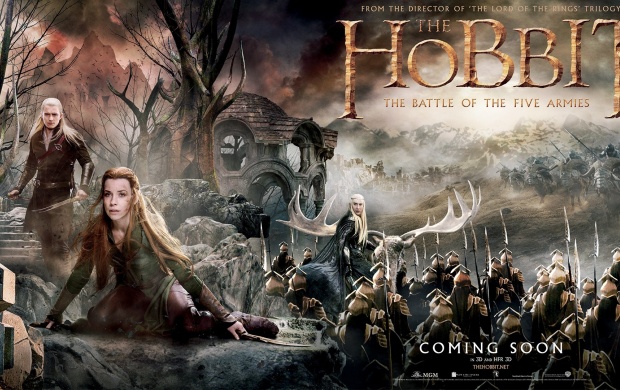
The Hobbit: Battle of the Five Armies review

       Given the critical and commercial success of the original “Lord of Rings” films and it's lasting cultural relevance that culminated in 2004 when “Return of the King” took home the best picture Oscar, I don't think it's a controversial statement to say that Peter Jackson's return to Middle Earth with this needlessly drawn-out Hobbit trilogy has been something of a thudding disappointment. Sure, these prequels have sold plenty of tickets and kept the popcorn industry afloat but even their most ardent defenders would probably agree that there has been a significant and noticeable drop in quality. Shot in a faster frame-rate to smooth out the performance of the 3D graphics and cartoonish CGI, the Hobbit films have been far more interested in testing new technologies and cashing in on recent nostalgia then gracefully or even faithfully adapting the (comparatively shorter) J.R.R. Tolkien novel.
With “Battle of the Five Armies” I found my self finally defeated by my disappointments and  expectations and passively willing to experience this conclusion as a theme park ride rather than a story that I could possibly be engaged in, and actually, once set in that frame of mind, this movie breezed by rather inoffensively. Still, there's hardly any story speak of as it's only intention is to wrap everything up and because of the added content and tangential plot byways the movie gets lost in from time to time, a severer lack of point of view and purpose keeps this installment from transcending the tech-demo action-schlock that Jackson has apparently settled for.
After the dragon Smaug is quickly and anti-climatically destroyed by the peoples of Lake Town the humans are caught in an awkward position when they they ask to borrow some of the newly available treasure to rebuild their burning village and the Dwarves' fearless leader Thorin (Richard Armitage) refuses to share the wealth, now taking up his mantel as the new king of the mountain. The wood elves feel like they deserve a piece too since they did their part in helping the Dwarves reach Smaug's cave, and just as the three armies begin to duke it out for the booty the same Orcs who have  been perusing the heroes since the beginning of the journey come back to finish what they started.
Along side the battle set-pieces that dominate the picture there exists a number of cameo plots, such as Gandalf (Ian McKellen) escaping near death after getting kidnapped by a not-so-mysterious evil force who's planning on making his big comeback, as well as a narratively inert love-triangle between the warrior elf Legolas (Orlando Bloom), the wood elf Taurial (Evangeline Lilly) and Kili (Aiden Turner), a young Dwarve who frankly doesn't have a shot. And in all of this, Bilbo (Martin Freeman), the titular Hobbit, is nearly sidelined and drown out of the film, serving almost no functional purpose.
There are faint ghosts of Tolkein's themes regarding greed and the petty but complicated nature of war and global economics that hums in the background of the spectacle but “Battle of the Five Armies” never settles on one place, one character, or one situation long enough to let anything substantive break through the bells and whistles. On a technical level everything moves along through the nonsense just sufficient to entertain but the the film's slap-dash plotting and heavy reliance on digital trickery kept me from truly believing in this world or caring about the people in it, and after the last three years of enduring this labored mess of an epic I desperately wish Peter Jackson would just go back to making-low budget horror films with puppets.

Grade: C-

Originally published in the Idaho State Journal/Dec-2014

Exodus: Gods and Kings review

         If Hollywood knew what they were doing, Bible stories would be the next major source for untapped IPs. They’re ripe with special effects potential and simplistic, Campbellian hero’s journey narratives, and not only will they draw in big crowds in the flyover states but if they keep it Old Testament they could even play well abroad. “Exodus: Gods and Kings” is Riddley’s Scott’s adaptation of the famous story of Moses and unlike Darren Aronofsky’s reinterpretation of “Noah” from earlier this year, this film in perfect step with the biblical text in terms of major plot details and the overall message of building trust in God, but rather than then the parable function it serves in the bible as a morality tale, Scott is far more interested in its cinematic function as a setting for swords and sandals spectacle, and maybe that’s not entirely a bad thing.
The first third of the movie teases a “Prince of Egypt” like tension between Moses (Christian Bale) before he becomes the self-identified revolutionary of the Hebrews and his adopted brother Ramses II (Joel Edgerton) before he becomes the Pharaoh. Having been raised as Egyptian royalty, Moses slowly learns through the oppressed peoples he visits on a business trip that he’s actually one of them, which then causes his existential collapse and his eventual exile from the kingdom. After wandering the desert for a bit, Moses makes a new life for himself when he marries and becomes a sheep herder, and all seems well until his newly acquainted Hebrew God asks him to return to Egypt to confront the Pharaoh and free the slaves.
Throughout the picture there’s a constant war between the spiritual and philosophic concerns of the content and the overbearing aesthetics and grandiosity of the production. The brother-against-brother storyline isn't properly milked for its dramatic potential as we’re initially told it’s going to be. Instead, midway through, Moses and Ramses are full-on enemies and that’s pretty much that.  There’s a small but significant thematic thread dealing with Moses’ increasingly taxing relationship with the elusive Biblical God, and every so often those concerns are dealt with in a semi-thoughtful and humanistic way; first when Moses is abruptly asked to leave his family to save his people, and then later as God instructs him sit and watch the Egyptians he grew up with tortured and killed by a host of terrifying plagues.
          The scenes depicting Moses’ struggle with his faith is about the only relatable thing here as the majority of the film feels and looks like a Las Vegas production, bathed in gold-tinted color-corrected lighting schemes, and spotlighting  a cast of Caucasian actors cheaply bronzed to look more ethnic , wearing bejeweled accessories and thick drag-queen eyeliner. Not helping this is a series of distracting and smirk-inducing casting choices with equally bizarre performances, including John Turturro as Moses and Ramses’ king father, Sigourney Weaver as their queen mother, who, with the exception of one scene, is seemingly only there to walk in and out of rooms, and Breaking Bad’s Aaron Paul as a crazy-eyed Hebrew slave who has looks as if he had a bad month and wandered on set without any discernible direction.
         You can always expect a level of technical craft when it comes to a Riddley Scott production and you certainly get that here.  The sets are lavish, the cinematography is atmospheric and the special effects sequences such as the plagues and famed parting of the Red Sea, visually captures your attention. But despite Scott’s minimal attempt at humanizing this tale, a large gilded heap of camp buries the story elements and turns this overlong  epic into a theatrical Circ de Sole performance, and like a well-lit show at the Luxor, it has its entertainment value even if it lacks artistic credibility.

Grade: C-

Originally published in the Idaho State Journal/Dec-2014

Sunday, September 7, 2014

As Above, So Below review


                 In what’s perhaps the weirdest not-sequel to “Lara-Croft: Tomb Raider,” found footage horror oddity “As Above, So Below” manages to continually up the ante of its premise while continually failing to deliver on it.  It’s a gimmicky movie obsessed with nodding to genre tropes—both from horror-films and adventure pulp—but lacks any sense of cathartic pay-off. Accidentally, the film does occasionally slip into an anarchic absurdity that keeps things moving but ultimately fumbles its B-movie aspirations.
                Scarlett (Perdita Weeks) is an academic explorer continuing her father’s life-long research of the mysterious sorcerer known as Nicolas Flemel, on the search for the Philosopher’s Stone.  After deducing the location of the stone, hundreds of feet within the catacombs under the streets Paris, she convinces her old friend and colleague George (Ben Feldman) and her nervous camera man Benji (Edwin Hodge) to aid in her discovery.  A group of street-wise Parisians show the bullheaded anthropologists the quick ways through the dark corridors and the secret passages with the hopes of splitting the ancient treasure amongst themselves, but after getting lost and scared they decide to break through a forbidden tunnel, later finding themselves circling back on their path, passing occultists and suffering strange hallucinations tied to the darkest moments of their personal hells.
                Despite a general sense of ineptitude with its material, this film does have the benefit of great natural location, ripe for horror potential. The caves and catacombs, some of which are a set, some of which are not, certainly create a building sense of claustrophobia and chaos, especially when the perspective shifts between each member of the team—all of which are recording with camera headsets.  The ‘found-footage’ conceit, now beyond over-played, actually has a dramatic purpose here, as the limited camera placement allows for effective build-up and surprise when our characters are unable to see ten feet ahead in any direction.  However, when we do finally creep around the corner to see the boogie men or the Satanists or the mysterious apparitions the accumulated dread exhales in disappointingly pedestrian horror imagery.  Never mind the internal logic of this film as the character’s run headfirst into further danger after getting picked off one by one, viewing multiple forms unexplainable terror, but somehow manage to avoid it once they need to backtrack to retrace their steps.
                The first-person perspective combined with the constant puzzle-solving to advance from one set-piece to another quickly starts to resemble the storytelling mechanics a survival-oriented videogame, to the point where I began to reach out to the screen with my hands clasped around an invisible controller, leaning in my seat and toggling left and right to avoid the spooks.  But, in this regard, I have to say that with your expectations placed appropriately low “As Above, So Below” is the kind of Sunday matinée schlock that has a base-level (though not entirely intentional) entertainment value.  It isn’t terribly committed to being scary, and you might wish that “Quarantine” director John Erick Dowell would have utilized his unique location with a better screenplay, but as a grown-up Goonies-like adventure or virtual haunted-house ride it almost, just barely, works.

Grade: C-

Originally published in the Idaho State Journal/Sep-2014

Saturday, August 30, 2014

Sin City: A Dame to Kill For review


                2005’s “Sin City” was a visually ambitious effort by troublemaker director Robert Rodriguez, adapting the black and white Frank Miller comic book as accurately as possible. In employing never before seen green-screen technology, animating almost everything except the actors, he envisioned a graphically unique movie universe that romanticized and exaggerated the film noir style, digitally sculpting entire sets and moods with angular lighting concepts and isolating certain characters and props with splashes of sharply contrasting color. Sure, it was gimmicky and the style vastly outweighed the substance, but, it in a midnight-movie way, it was purely cinematic and it suggested whole new possibilities between the worlds of digital animation and adult-themed action movies.
                Then again, what we took for granted in Rodriguez’s successful experiment was the apparent tight-wire act it accomplished with tone and execution. Lesser adopters of this technique, like Zach Snyder’s “300,” “Watchmen,” and “Sucker Punch,” proved that world building and visual panache must to be balanced with sensitive direction, considerate acting , and, at the very least, functional storytelling to pull a film together, lest the entire thing becomes an overblown videogame cut-scene. While the original “Sin City” was light on story, it was effectively moody, paced exceptionally well and doled things out in such a way that it continually surprised the audience. Now, nine years later, Rodriguez’s long-planned sequel “Sin City: A Dame to Kill For,” performs like an over-confident cover-band, lazily going through the motions, believing that it doesn’t matter if it slogs through the song as long it nails the guitar solo.
                Like its 2005 predecessor, this is a triptych narrative that interweaves three short stories, all staring different protagonists. Joseph Gordon Levitt plays Johnny, an egotistical gambler who gets in over his head when he wins a game of poker against the cartoonishly evil Senator Roark—played with some conviction by Booth Powers. The second plot, in which the film takes its name, tells the backstory of private eye Dwight McCarthy (previously played by Clive Owen , now Josh Brolin) who gets tangled in the web of a spider-women named Ava (Eva Green), and who vows revenge after a brutal double-cross leaves him disfigured. The last tale tracks the mental deterioration of a stripper named Nancy (Jessica Alba), who seeks to kill the Senator responsible for death of her fatherly protector Hartigan, played in both films by Bruce Willis.
                In this triple-scoop serving of splat-tastic pulp there’s no shortage of stars hamming it up as they deliver the Miller’s tough-guy dialogue, as well as no shortage of ultra-violent black and white money-shots. However, for all its hack and slash and stylish masculine bravado, what the movie does lack is any tangible sense of mood, danger, or dramatic tension.  
                 The Joseph Gordon Levitt short is inexplicably split apart, and though the first half builds to an interesting conflict, when we pick back up 25 minutes later the story putters out in a flatulent anti-climax.  Alba was always distractingly miscast as Nancy Callahan but now that she’s expected to do more than just provide cheesecake as a damsel in distress, her failings as a dramatic actress are even more apparent in this totally unnecessary follow-up  to the last movie’s most emotionally resonant segment.  Here she broods at the bottom of a whiskey bottle, talks to Obi-Wan Bruce Willis from beyond the grave and comically takes to the streets on a motor-cycle.  The title story, based on a vintage Sin City text, narratively anchors the rest of flab around it, highlighting the movie’s best performance in Eva Green vamping it up as the archetypal femme fatale. But even with this Rodriguez manages to spoil the experience by over playing his digital color-correction tricks and over-exploiting the 3D exploitation.             
                Unfortunately, “Sin City: A Dame to Kill For” is a depressing disappointment, not only for the audience who may still remember the energy and audaciousness of the first film and have been anticipating this sequel for many summers, but for the talented cast and creators responsible for its deflating results.

Grade: D

Originally published in the Idaho State Journal/Aug-2014

Wednesday, August 27, 2014

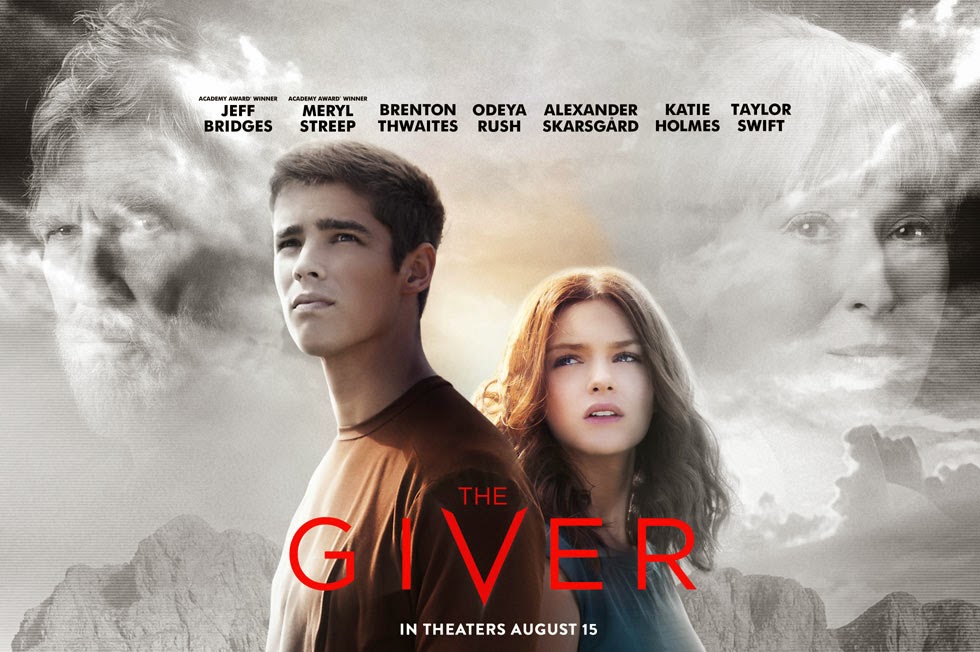
The Giver review


                As it turns out, I was the only American in my age group who wasn’t encouraged to read Lois Lowry’s “The Giver” in middle school. For many, this young-adult utopian science-fiction novel was a significant literary moment in their lives and is regarded with the utmost reverence. I was there for The Hobbit, R.L. Stine, and, though a little too old to fully appreciate it, I was even there for the early Harry Potter buzz. Nevertheless, I completely missed this phenomenon and wasn’t even aware of “The Giver” until a few friends of mine begun complaining about the trailers for its recent movie adaptation.
                In the wake of politically-minded YA sci-fi adaptations such as “The Hunger Games” and its shameless clones “Divergent” and the upcoming “Maze Runner,” it makes perfect sense that the suits in Hollywood would choose this pop-culture moment to green-light Lowry’s 1993 novel. In toeing the line of this tween-friendly genre, this adaptation has been given a slick CW makeover, with just enough cold austerity to imply the type of thematic depth, to which these kinds of films usually can’t commit. That is why, despite its mercenary attempts at cashing-in, it is both surprising and nice to say that this film works pretty well, even if it simply functions without a whole lot of pizazz. 
                In the distant future, society has bubbled itself into a tight-knit, highly-monitored community that is able to exist without pain, suffering, war or hunger. Children are studied at a young age for specific attributes and skills and are placed into jobs on their eighteenth birthday by the Chief Elder, played with a sinister calm by Meryl Streep. Jonas (Brenton Thwaites) is a chosen last in his graduating class to work, not as a scientist or laborer, but as a special archivist called The Receiver. This work consists of intensive sessions where he shares psychic memories of the old-world with an elder called ‘The Giver’ (Jeff Bridges) behind the walls of an isolated library restricted to the outside public. With these memories comes a heightened sensitivity to both the extreme joys of music, diversity, and love, as well as the depressing realities of, sickness, prejudice and war. Jonas is then left to decide whether to share the raw truth with everyone else or work keep it concealed.
                Tellingly, the cinematography conveys Jonas’ psychological arc from a worker bee to a revolutionary through the use of color, beginning with the first item he notices, a brilliant red apple. After his first few sessions, everything else begins to fade out of the digital grayscale into muted pastels, ending in a color explosion.  This depiction of enlightenment of course brings to mind Dorothy’s journey in “The Wizard of OZ” as well the biblical story of Adam and Eve, as their knowledge of good and evil also began with fruit.  Politically, the story’s Stepford-society recalls films made during the height of post-soviet red-scare and unlike the socialist-leanings of Suzanne Collins’ “Hunger Games” adaptations, this story’s more concerned with possible threat of government controlled egalitarianism.  But, lest we get too caught up in the barely-coded ethos of the source material, the movie itself moves from point A to B with little fuss and sufficiently rewards those who’re willing to accept its middling ambitions.
                Thwaites blank-slate performance unfortunately never matures as his character is supposed to be encumbered by the painful realities of the truth, and as a hero he ultimately fails to inspire much empathy. However, veteran director Phillip Noyce, better known for adult spy-thrillers such as “Clear and Present Danger” and “Patriot Games,” paces the film deliberately and with enough care and attention to the dramatic beats of the story that the movie is occasionally able to do the actors’ work without their help.  Key scenes are skimmed over in montage, leaving the emotional component slightly underdeveloped, but as a cursory introduction to dystopian fiction, “The Giver” at least tries to infuse the YA genre with enough visual creative dynamism to keep things interesting.

Grade: C+

Originally published in the Idaho State Journal/Aug-2014