Showing posts with label Anya Taylor-Joy. Show all posts

Sunday, February 12, 2017

Split review


M. Knight Shyamalan’s latest film “Split” combines his love of Hitchcockian thrills and with his predilection for high-concept myth-making and fuses these obsessions in a way that’s surprisingly energetic and captivating. I have to say surprising because since the heights of his career in early 2000 Shyamalan has only recently come off a long losing-streak s. After big budget genre-flops such as “Lady in the Water” and “The Last Airbender” he lost of lot of credibility as a coherent storyteller with both audiences and critics alike. Halving his costs under the pop-horror banner of Blumhouse Productions, it seems that he’s now able to make smaller, more efficient work without the pretenses of prestige. 

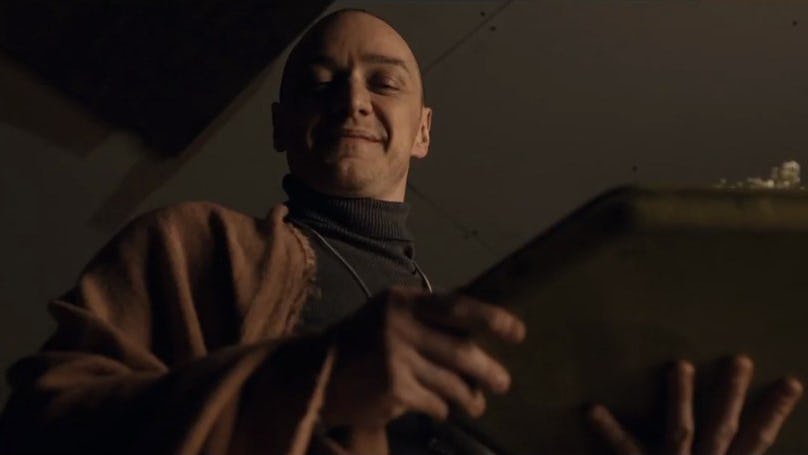
James McAvoy is given the spotlight playing a troubled man named Kevin who constantly switches between multiple personalities. After a complicated battle of dominance between the personalities inside of his mind, he kidnaps three teenage girls in the hopes to appease a brooding darkness growing from within. Anya Taylor-Joy plays Casey Cook, the most introverted and ostracized of these women, and through this kidnapping experience she's forced to relive her past abuse. Haley Lu Richardson and Jessica Sula portray the other two girls who can’t understand why Casey has no will to fight. As they try to come up with clever ways to escape McAvoy’s underground lair, Casey tries to get to know and manipulate Kevin’s separate personalities.

We get to know McAvoy as a brutish clean-freak and fetishist named Dennis, a passive-aggressive English woman named Patricia, a nine-year-old attention-seeker named Hedwig, a nervous fashionista named Barry and a demonic force of nature known only as The Beast. While Dennis and Patricia--the personalities responsible for the kidnapping--have the most control over their host, the others have sought the help of a psychiatrist named Dr. Karen Fletcher (Betty Buckley), who's beginning to notice that her patient has something to hide.

Like any Shyamalan film, there’s a lot of plot here and his characters are subservient to the whims of the director’s set-ups and reveals. His depiction of mental illness has less to do with diagnose-able science and more with pulp mythology that’s rooted in past psychodramas and paranormal science-fiction.  If you’re willing to suspend your disbelief and give in to the script’s wacky concepts, as a thriller, the movie works well enough. The ticking-clock set up at the beginning of the film allows for constant tension that keeps everything on a track, even as scenes digresses into long-winded explanations of the movie rules through clunky, expository dialogue.

McAvoy’s having a lot of fun with these multiple roles and approaches the film’s goofy plot with just the right amount on whit and sarcasm to aid in its occasional black comedy. Anya Taylor-Joy is more informed by her character’s flashbacks than by her performance, but her emotional stillness helps to ground the movie’s themes and dramatic stakes.

“Split” is a mixed bag; it’s overwritten, it’s a bit hokey and Shyamalan has some problematic and concerning ideas about abuse-survival as a means of martyrdom, but the film is never boring and it managed to keep me engaged with the story as it moved along.  Thrill rides don’t necessarily have to be realistic, and though I wish this ride hadn’t stopped every ten minute to explain something that didn’t need explaining, despite it's failings, I appreciated the end-result.

Grade: B-

Originally Published in the Idaho State Journal/Feb-2017

Listen to this week's episode of Jabber and the Drone to hear more conversation about "Split."

Saturday, February 27, 2016

The Witch review

Robert Eggers debut horror film “The Witch” is one of those rare tour de force first features that spotlights a true talent to look out for.  This black metal folk tale is a near-perfect study in tone and immersive tension, with a keen sense of setting and period that boasts a handful of completely credible performances. It not only uses the macabre to sell its aesthetics as a horror film but it embraces a true sense of darkness and slithering evil that will stay in your consciousness long after the initial shock of its deranged third act.

Even more astonishing, “The Witch” has finally broken the hex that dictates that movies starring actors from “Game of Thrones” must suck (“Pompeii,” “The Other Woman,” “Terminator: Genisys”). Ralph Ineson and Kate Dickie play the mother and father of a 1630 puritan family who decide to leave their New England pilgrim community to settle their own property in the middle of a nearby gloomy forest. There they hope to build a purer relationship with God, away from the noise of regular society. Their eldest daughter Thomasin (Anya Taylor-Joy) has begun to question the logic of her parents, their son Caleb (Harvey Scrimshaw) is coming to terms with his difficult puberty, their two young twins may or may not be talking to evil spirits through the family's farm goats and their unbaptized newborn has just gone missing. After the kidnapping, the family begins to find themselves crushed with religious guilt, exposing each member’s personal struggles with sin. Soon internal battles with lust, pride and dishonesty manifests themselves into real or perceived oppressions from the dark forces lurking within the shrouded forest.

What makes this film more narratively enriching than your average cabin in the woods shocker is that the screenplay, laced with biblical, old-English dialogue, is just as committed to the drama and the interior lives of the characters as it is with hitting all the intended genre beats as a thriller. The performances by the mostly-unknown cast are realistic and heartbreaking, especially by lead actress Taylor-Joy whose emotional and symbolic arc within the film is both complex and challenging. Rather than lacing the plot with empty boo-scares and gotchya moments, every character is tormented by their own guilt and their own fears, with the titular Witch preying on the family’s vulnerabilities in ways that are visually creative and truly horrific.  

The sets look lived in and the grim 1600's period imagery is never played for theatrical camp. Because of the intense attention to the film's cosmetic details, Eggers portrayal of pagan magic is strangely believable within the context of this satanic melodrama. Cinematographer Jarin Blaschke uses single-source lighting-schemes with metaphoric intent, etching the characters and subjects out of the natural darkness, while never defaulting to flat desaturation or an overuse of digital color-correction.

Some might search for a contemporary message within the story and when talking about dangerous accusations of witchcraft, feminism rises to the surface, and if you’re looking for it, that’s certainly in there. But the picture’s more prevalent theme is of man’s relationship with sin and the unhealthy consequences of repression. 

Given the character’s conflicts with their own faith alongside the high-contrast imagery that's obscured by spindly tree-branches, Swedish art-house auteur Ingmar Bergman would have been proud of this film's relative mainstream success.

“The Witch” was released wide and is being sold as a casual winter horror programmer but unlike the seemingly generic title, this movie is anything but a lazy and predictable experience. The pace is deliberately slow and not unlike Kubrick’s “The Shining,” its taught sense of dread moves closer to you as each sequence pulls the cord a little tighter. There’s certainly entertainment to be had in all its artful spookiness, but this is not really a popcorn film. Rather, this is a masterful study in atmosphere, history and religious philosophy that deserves as much discussion as it deserves your gasps and nightmares.


Grade: A+

Originally Published in the Idaho State Journal/Feb-2016

Listen to more discussion about "The VVitch" on this week's Jabber and the Drone Podcast.