Saturday, February 21, 2015

50 Shades of Grey review

                The mass success of “Fifty Shades of Grey” has fascinating cultural implications. Within the drug-store literary world there’s always been a healthy market for filth geared towards women , but now that it’s been visually realized as the first feature of what is going to be a very successful film-franchise, the private fantasies of many would-be wholesome Americans are exposing themselves in a very public way. It’s just a shame that a film as dull and thick-headed as this is what’s introducing suburban soccer-mom’s to the world of kinky and transgressive cinema.
                Based on a series of dirty books that author E.L. James adapted from her online, “Twilight” fan-fiction, this film follows the early stages in the prickly romance between Anastasia Steele (Dakota Johnson) and Christian Grey (Jamie Dornan).  After Ana gets an opportunity to interview the billionaire executive, the two enter into a sordid love affair. With only a minimal flirtatious period, the virginal college grad gives herself up completely to the domineering yuppie. As Ana learns more about his secret desires for bondage and sadomasochism she does what she can to break through his icy exterior to establish something other than a physical connection, but due to Christian’s abusive past, he is unable to let himself be vulnerable.
                Despite some good lighting and distinguished cinematography, this movie doesn't have enough story or narrative stamina to maintain a natural rhythm. There are far too many repetitive scenes between Dornan and Johnson where the two argue about their fundamental incompatibilities as sexual and romantic partners. Tension only derives from fact that even when Ana tries to make her own healthy decisions to stay away from the situation, Grey continually follows her and draws her back into his emotional mess. Whatever it is that is supposed to be sexy about this kind of manipulation is completely lost on me.
                There’s also the unsavory wealth-worship and patriarchal fetishizing that underlines this couple’s unhealthy union. While Ana works part time at a hardware store to make ends meet, Grey has his name on just about everything he owns, including his building, his private helicopter and his office supplies.  When Ana asks what it is that she can have if she participates in his domination role-playing—keep in mind this is supposed to be her first sexual relationship—Grey responds with “you get me.” Of course, when this doesn't sound as appealing as he had hoped and she understandably bolts, he then buys her a new computer and a car to ensure her hesitant submission.  Yuck.
               Yes, there’s a lot of sex in this movie and though it’s all shot in careful angles, close-ups, and montages, the frankness of these scenes is somewhat refreshing to see in a wide-release mainstream film, given Hollywood’s current trend towards safe, neutered, and relatively inoffensive cinema. Nevertheless, the story's lack of compelling conflict, the borderline abusive nature of this central relationship and the movie’s backwards sexual-politics spoils whatever titillation is supposed to be had.

Grade: D-

Originally published in the Idaho State Journal/Feb-2015

Sunday, February 15, 2015

Jupiter Ascending review

             
                 The Wachowski’s new space opera “Jupiter Ascending” is a considerable oddity, both while you’re watching it and maybe even more so while you’re thinking about it later.  These siblings have always been known for making up grand mythologies such as the “Matrix” trilogy and their head-scratching, multi-segmented portmanteau film “Cloud Atlas,” but here their brew of classic sci-fi tropes and fairy-tale storytelling devices mixes together in a way that is somehow tired and baffling at the same time.
                Much of the story is essentially a Cinderella retelling, placed in an overwrought, Flash Gordon-like movie universe. Jupiter Jones (Mila Kunis) is a second-generation Russian immigrant who cleans toilets for a living but wishes to someday be an astronomer. After her lay-about cousin convinces her to visit a clinic to donate her eggs for money, her physicians reveal themselves to be large-headed aliens sent to kill her. Just then, Cain Wise (Channing Tatum), a genetically modified angel/alien bounty hunter, comes in to bring her to the House of Abrasax--the galactic royal family who broker our part of the universe. As it turns out, Jupiter is more important than she realizes and one of these princes will need to wed her in order to have full access to earth’s precious resources. Of course, more is introduced, including a rebel group out to undermine the galactic royalty--yes, there’s a lot of “Star Wars” in here as well—Shakespearean betrayals, and some eastern philosophy about reincarnation and bees.
                This is definitely a Wachowski event through and through and there’s a lot of passion and vigor in the film-making, but it’s almost completely lost in heaps of weird ideas that are unsupported by unfinished motifs and a heavy amount of hum-drum, explanatory dialogue. I wish I could say that a film featuring dragon-people, galactic weddings, and Channing Tatum swooping around in flying Zanadu-skates would either be crazy-good or crazy-bad, but the truth is everything here is so plot-heavy and labored that it’s never as much fun as it should be.  The sets and costumes are lavish and the special effects are good enough—minus some spotty wire work—but the script has too many narrative chutes and ladders to pass through before it can the character’s reveal themselves naturally.
                Acting-wise, this movie is all over the map. Kunis and Tatum are game for whatever but neither of them seem to believe for a second what they’re doing or saying, and as a result, their performances register a little bored. Douglas Booth appears to be having fun as the duplicitous prince Titus Abrasax, but the Oscar-nominated Eddy Redmayne is definitely having too much fun as his evil brother Balem. Redmayne devours scenes whole as the swishy, petulant aristocrat who whispers threats in his enemy’s ear and then punctuating every line with an eye-rolling shout.
                Everything and the kitchen sink seems to be crammed into this gaudy mess, and while I don't have a problem with letting your freak-flag fly, the film might have benefited from taking a page out of the “Guardians of the Galaxy” playbook, using more humor and self-awareness to deal with its outlandish exposition. The Wachowski's try to engage thoughtful ideas about destiny, capitalism, and the future of modern medicine, but none are addressed with enough screen-time to come to a relevant conclusion. There might be some meaningless joy to be had in it’s flashy, pin-ball machine-like design, but “Jupiter Ascending” isn't committed enough to its storytelling to be anything more than generic.

Grade: C-

Originally Published in the Idaho State Journal/Feb-2015

Monday, February 9, 2015

Selma review

             Ava DuVernay’s “Selma” is a sensitive film that chronicles one of the most significant moments in black civil rights and dares to do so without drowning history in phony movie sentimentality. Which isn’t to say that DuVernay doesn't appreciate the romanticism of cinema or enjoys her own directorial flourishes now and again. On the contrary, “Selma” is a handsome looking feature that’s dramatically lit to highlight the emotional underpinnings of Dr. Martin Luther King Jr’s fight for full African American equality in the south, but unlike the general swoft of historical films that deal in this subject, “Selma” doesn't need to charge its emotions with a false sense of retrospective austerity.
           Martin Luther King, as played marvelously by British actor David Oyelow, is technically the main character here but not necessarily the central focus of the story, as he is surrounded by many others who influence his behaviors and political actions. Much of the film follows the symbiotic but prickly relations between the minister turned activist and the President Lyndon B. Johnson (Tom Wilkinson). King needs Johnson to enforce legislation what would make it easier and more accessible for black voters to participate in the electoral process without facing intimidation or refusal by the all-white gate-keepers guarding the booths. Johnson’s reluctance to grant King this request is treated by the film as exactly what it was, cowardly and politically strategic, and the film climaxes with King leading the historic march from Selma to Montgomery Alabama--a monumental demonstration that prompted the President to finally sign the voting rights act of 1965.
           As much as this is a film about civil equality and the stifling conditions for American blacks alive during the ‘60s, it’s also a film about the political process and how minorities are used as bargaining chips by those in power who have something to gain from the transaction. Wilkinson’s portrayal as LBJ is that of pragmatist who saw the fight for black equality as a political future worth investing in, so long as he can work with the peaceful and reasonable King rather than politically divisive protesters like Malcolm X. Likewise, Oyelow’s King seems conflicted about his place in all of this as he yearns to bridge the rift between black constituents and white politicians through diplomacy, but also feels ostracized from both communities for taking the patient approach. Of course history has shown that his fate was sealed either way, and DuVerney is sure to conjure the looming threat that hovered over every decision he made.
         Where the film suffers is in its blocky script and uneven editing. After electrifying scenes with moments of immediate consequences, such as the dialogues between King and President, King and his impatient protesters or the morally ambivalent conversations between the President and the defiantly racist Alabama Governor George Wallace (Tim Roth), the movie tends to exhale between these sequences and lull into a melancholic static, waiting to recharge before the next place we have to visit or the next plot beat that needs to be activated. Because of this stop-start tendency the structure of the film feels loose and ragged in a way that undermines its most powerful moments. Extended scenes between Oyelow and Carman Ejogo, who plays King’s wife Corretta Scott, are interesting in theory but inexplicably inert and distracting in execution. This complicated marriage certainly has its own historical significance but its integration here within the overall narrative is too clumsy to fully appreciate.
         Even when “Selma” is taking a rest between the beats that DuVernay is obviously more excited to get to,  the textured and moody cinematography by Bradford Young as well as the subtle attention to period detail in the production design keeps the film alive with implied tension.  When the movie wakes up and is fully engaged in what’s going on, instead of keeping the audience at a distance behind museum rope, the power and grace of this history is presented with tangible vitality and blood pumping through its veins.

Grade: B+

Originally published in the Idaho State Journal/Feb-2015

Sunday, February 1, 2015

Blackhat review

          Micheal Mann's male heroes were never as simple or as ideologically set as the muscle-bound Rambo types of the 80s, nor as damaged or doomed as the Travis Bickle types from the decade before. Characters like Al Pachino in “Heat” or William Peterson in “Manhunter” or James Caan in Mann's first feature “Theif” were masculine, morally ambiguous, and darkly sexual all at the same time. Taking his cues from classic film noir and the burgeoning popularity of MTV, Mann pretty much invented this archetype and up until recently had successfully reinterpreted it for three decades in a row.
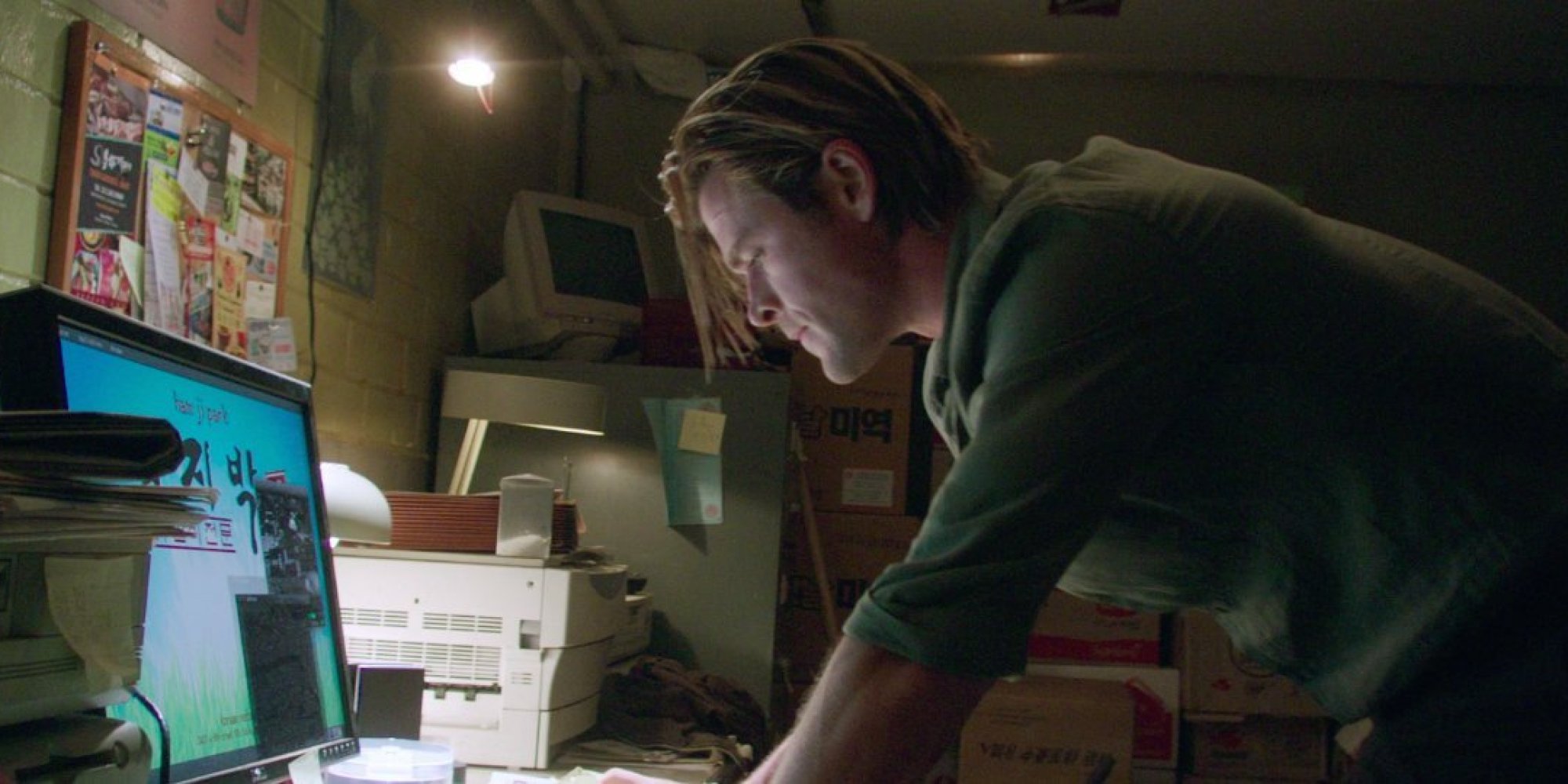
          In his post-911 hacker-espionage film “Blackhat,” Mann tries to return to his sexy crime-thriller style and somehow drops the ball completely. Given the recent hacking scandals at Sony Pictures, the leaking of private celebrities iPhone pics, or the reveal of NSA intelligence breaches by cyber-savvy whistle-blowers, this film had all the potential to be a timely and intelligent genre movie, but as it would happen, none of that was incorporated or considered and what we have instead is an underwritten, uneven deodorant commercial that looks as though it were shot by armature film students doing a Michael Mann study.
         After an unknown cyber-terrorist manages to hack the hydraulic systems of a nuclear power plant and causes a near-meltdown, the CIA enlists prisoner and former super-hacker Nick Hathaway (Chris Hemsworth) to help them beat the bad guys at their own game. It's a simple enough action movie plot structure to satisfy without complicating the formula, but once you add a superfluous love story with the tag-a-long Chinese sister of another hacker (Wei Tang and Leehom Wang) along with crudely executed, digital shaky-cam action sequences, you're left with a haggard headache of a movie. Even Oscar nominated Viola Davis as the apprehensive CIA operative who agrees to let Hathaway out of prison, so long as he wears an electronic anklet, doesn't help to bring any depth or originality to this drab disappointment.
         The script leaves no room for character exploration or pathos and instead uses most of it's dialogue to go over needless exposition. Hemsworth has nothing to do here, and, looking not unlike Don Johnson in “Miami Vice,” is comically miscast as the computer genius criminal. More frustrating, because his role is so underdeveloped we never actually see how any of his coding or techniques are realistically accomplished. Instead Mann visualizes the hack-attacks and retaliations through goofy CGI explorations of the inner-workings of computer circuitry; a strange and obnoxious crutch. As previously mentioned, the tormented love story between Tang and Hemsworth is uninformed and unmotivated and eats up more than third of the movie's run-time.
         The one element that should be able to save a bad screenplay, the action, is so miss-handled by the visually jarring transitions to cheap looking digi-cam single-takes that the film simply toggles between being depressingly ordinary and embarrassingly inept. There is the occasional flourish of style, as best exemplified in the final showdown between Hemsworth and the baddies as he tries to sneak up on them during a ceremonial parade in Jakarta, but unfortunately these moments of clear and steady direction are few and far between. Lastly, with it's awkward integration of Chinese celebrities and locations, the film's desperate attempt to pander to the Chinese market only proves that Mann's faith in his own project was compromised from conception with lazy and vulgar business choices, reflected in every aesthetic decision on screen.


Grade: D

Originally published in the Idaho State Journal/Feb-2015

Sunday, January 25, 2015

American Sniper review

              Like any movie that embraces the moral ambiguities of a particularly controversial war, Clint Eastwood's “American Sniper” is a difficult film to discuss without drifting into reactionary politics or blame-game finger pointing. It becomes all the more difficult when the movie breaks all kinds of records for a January release—infamously understood as an seasonal lull for Hollywood economics—and the public figure who inspired the story, U.S. Navy Seal Chris Kyle, had an equally divisive past that challenges the very ethics of the film's supposed hero. An easier admission to make is that on a technical and aesthetic level this is Eastwood's sharpest and most accomplished film in almost ten years and contains hair-raising sequences that rivals just about anything from his past catalog.
            Based on his autobiography, this movie recounts the life of Chris Kyle (Bradley Cooper), a good ol' boy from Texas who was raised on God, guns and girls, and was personally drawn into military life in 1999 after witnessing on the news the loss of American soldiers overseas. Because his daddy taught him that there are only three types of men, the sheep (the weak and the stupid), the predators (the aggressors) and the sheep dogs (protectors of the weak), Kyle makes it his personal mission to keep his fellow soldiers on the battle field safe, creating a superman complex that would increasingly haunt his psyche once America was called to action in the middle-east. His wife Taya (Sienna Miller) does her best to raise their children alone while Chris does four successive tours in the war-torn streets of Iraq, leaving the bulk of their relationship attended over voice mails and the occasional phone call.
            Locked within a distinctly American depiction of a troubled war started on shaky reasoning and based on a book that was written by a man who posthumously lost a defamation case against a blow-hard Minnesota wrestler turned governor, this film struggles to be everything for everyone. It wants to do right by the now deceased soldier, who, while protecting the lives of his fellow troops was responsible for the deaths of over 160 enemies, including women and children. At the same time, while never showing his duties as anything but well-intended and heroic, the film also surrounds Kyle with multiple characters who question the logic of the war their fighting and their value within it.
            During the emotional climax, when Kyle finally faces off against an Iraqi sniper who killed many of his best friends, the battle field is struck by a blinding sand storm, which seems to suggest a divine or natural dissension over the mounting violence justified by earthly ideologies... Or maybe it doesn't mean that at all, but because of the movie's vague and waffling point of view it only augments the individual viewer's political leanings. Whether you walk into this thinking it's a pro-war propaganda piece, an anti-war character study, or a patriotic tribute to a lost American folk hero, you'll ultimately leave with your original judgments and expectations intact.
            Questionable thematics aside, nobody should deny Eastwood's return to form here, as he demonstrates that he can carefully and sensitively build tension within each high-stakes shootout and create a palpable haze of paranoia over the final scenes where Chris Kyle can barely make sense of his civilian life after returning home to raise his family. Likewise, Bradley Cooper is fully committed to the role and plays the charismatic sniper without any apology and bravely lets the audience into the mind of his character's fractured world-view. Unfortunately we can never truly know if the internal struggle that complicates the ideological mine field exists outside of the dramatic padding of this movie universe.

Grade: B-

Originally Published in the Idaho State Journal/Jan-2015

Sunday, January 11, 2015

My Top-10 films of 2014


If I were to identify a theme present in most of the films on my top-10 this year it would be genre films that managed approach things from an interesting angle or simply films with familiar trappings that completely subverted my expectations. I guess as someone who see's a lot of movies, reads about a lot of movies, and ends up writing about a lot of movies, I want to be surprised, and this list consists of the ten best surprises I encountered this year.

Forget the loaded titled that sparked a short-lived Twitter campaign, this debut feature from writer/director Justin Simien is one of the sharpest and smartest comedic satires about race since Spike Lee's “Do The Right Thing."  “Dear White People” examines culture-clash in a post-racial America through a nuanced lens of youthful identity panic and turns what could have been a simple and predictable story about a racially divided college into a universal message about learning how to define yourself instead of living up to the expectations of others.

From South Korean genre director Bong joon-ho comes his first English language film, a multinational post-apocalyptic action thriller about a team of survivors fighting their way through a train that separates the worlds population by class as they get closer to the engine room. There they hope to find a path to freedom and equality. This is an unapologetic, bleak vision of our world's current Geo-political mess, in which joon-ho refuses to supply any easy answers. Filled with shocking blasts of action violence and beautifully arranged set-pieces, “Snowpiercer” takes the tropes of a familiar hero story and forces the audience to examine difficult political questions.

Set in small town, rural America, this mini-budge revenge tale is another film that leaves you guessing all the way through. Almost a Coen Brothers archetype, our protagonist is an unassuming, ill-equipped nebish who takes on more than he is capable of dealing with when trying to right the wrongs between two warring families. While the tone or look of the film never suggests overt comedy, the priceless scenes of actor Macon Blair fumbling through learning how to shoot guns, dispose of a bodies and hide from his pursuers creates a nervous laughter throughout.

There have been plenty of indie flicks about young couples who're stuck in a vacation home to work through their relationship problems, but never one as chilling and surreal as director Charlie McDowell and writer Justin Lader's “The One I Love.” Mark Duplass and Elizabeth Moss are sent to vacation house per recommendation of a counselor and after some drinking and music they find that the house provides a type of strange existential therapy that can't easily be explained. I don't want to say too much because going on the ride is all the better when you don't know anything about it. All I will say is that the movie takes an absurd premise and follows it to it's natural extremes, and does so without overshadowing the original theme of what it takes for a young marriage to resolve problems of trust and communication.

David Fincher's adaptation of Gillian Flynn's popular airport novel “Gone Girl” also examines trust issues between sorted lovers. Fincher is a master at work here, as he takes what could have been a overwrought and over-written B-movie, and through his own cinematic brilliance, he confidently guides us through a brooding noir yarn that somehow manages to jump the shark three times and recover just as quick.

Indie veteran and uber-cool NY hipster Jim Jarmusch made a film about rock and roll, vampire junkies and reworked a well-worn and tired cinematic myth to create a sarcastic and post-modern world of his own. Tilda Swinton and Tom Hiddleston are captivating as bored shut-ins who have to live their lonely lives away from the public that worships them. Jarmusch's romantically lit vision of the deteriorating industrial neighborhoods of Detroit also suggests that these character's observations about the generational and economic changes in high/low culture has had a measurable effect on America's global relevance.

Jake Gyllenhaal gives his best performance yet in Dan Gilroy's black-as-coal media satire “Nightcrawler.” Here he plays Luis Bloom, a desperate and eager swindler who goes to uncomfortable lengths to film the fallout of crime scenes before his competitors get there first. Gilroy compares the hunger to succeed with a sociopaths lack of empathy, creating a nocturnal LA milieu where the loners and losers rule the city.

Forget those warm and fuzzy flicks about an older mentor and his younger talented protegee looking for words of wisdom. Damien Chazelle's “Whiplash” re-examines this familiar set-up as an abusive and epic power struggle. Miles Teller as the masochistic and ambitious college jazz drummer and JK Simmons as his Hannibal-Lector-like teacher steal the air from every scene as they fill their spaces full of raw and tangible tension, boiling to a fever pitch until arriving at one of the best movie ending of last decade.

Richard Linklater's twelve year project about a Texas boy growing up in a broken family creates an emotional scope far larger than the average coming-of-age drama usually aspires. By watching these actors age on camera and by composing each scene as a mini narrative within the larger context of someone's life, this movie becomes a living photo album full of the key memories that define who we are--be it the big moments that change everything or the small, insignificant moments that we forget as time passes.

Unlike anything else this year, this intimate sci-fi horror slinked it's way into brain and never let me go. Scarlett Johansson says very little as a predatory vixen who roams the poorly lit streets of Scotland looking for her prey. Without explicitly trying, British director Jonathan Glazer illustrates a compelling allegory about sexual power dynamics and gender politics, wrapped in a sensual thriller that will possess a patient audience with it's icy atmosphere and nightmarish visuals.

Honorable Mentions:
Guardians of the Galaxy, Captain America: The Winter Soldier, Stranger by the Lake, Birdman, Foxcatcher, The Grand Budapest Hotel, Dawn of the Planet of the Apes, Obvious Child, Locke


Originally Published in the Idaho State Journal/Jan-2015

Sunday, January 4, 2015

Into the Woods review

        After the awards buzz and accolades that surrounded the 2013's cinematic adaptation of “Les Miserables,” it was only natural that another well regarded Broadway production would make it's way into the next year's crop of holiday releases. Disney's reworking of Stephen Sondheim and James Lapine's “Into the Woods” is a gleefully traditional musical comedy full of big stars doing big hammy performances, and it's camera-winking dorkiness is probably the most endearing thing about it. Though director Rob Marshall ("Chicago," "Nine") uses his mouse-house money to fully realize the fantasy world in which these intertwining stories take place, on some level, the movie still operates like a high-budget, high school musical staring the most popular jocks and cheerleaders of Hollywood, and within that tonal imagining there's definitely a charm to be had, but the film never quite makes the impact that the cast or the budget would suggest.
        In an extended overture we are introduced to this fairy tale mash-up world where in the same village lives Little Red Riding Hood (Lilla Crawford) and the Big Bad Wolf (Johnny Depp), Cinderella (Anna Kendrick) and Prince Charming (Chris Pine), Rapunzel (Mackenzie Mauzy), and Jack of the beanstalk fame (Daniell Huddleston). In the background while these stories play themselves out more or less like we have seen before, the primary plot focuses on baker and his wife played by James Cordon and Emily Blunt, who desperately want to have a child and who find themselves manipulated by a witch (Meryl Streep). Together they orchestrate all of these tales in such a way that they can obtain the items they need to perform a fertility spell. It's all very convoluted and for the most part incidental when giving in to the mindless joy of watching our favorite Grim's fairy tales unfold this ironic, post-modern context. Later, when the second half kicks into gear and adds a 'be careful what you wish for' twist to every premature happy ending, the movie oddly runs out of creative juice and the amicable tone of the first half of the film is replaced with ponderous and severely unearned character dilemmas.
         The cast is obviously having fun here and are given license to fully send-up the cliches attached to their stories and their character's. Chris Pine's turn as the egomaniac Prince Charming and Streep, who's doing her best Margaret Hamilton impersonation, keep things lively and funny. Blunt and Cordon also do a fine enough job working as the glue that keeps these dispirit plots from overwhelming the spinal narrative, but it's Marshall's lackluster visual design and directorial blandness that chains this movie to the floor and keeps it from fully taking flight. Much of this production is lit in muted blues and grays and creates for a dreary, damp looking post-Burton conceptual expression that doesn't reflect the buoyancy of the performances or Sondheim's varied musical numbers. Many scenes are shot in traditional coverage, composed mostly of simple masters, close-ups and over the shoulder shots, without hardly any swooping cranes, impressive single-takes or even occasional grandiose establishing shots that would open up the frame, resulting in musical set-pieces that feel small and televisual.
       Far less melodramatic or irritating as last-year's overlong “Les Miz”, and with sing-along musical sequences that are more confidently and skillfully performed, recorded and mixed, “Into the Woods” is a benign, if somewhat banal, movie going experience. Family's who're looking to escape the polar-vortex and/or the discomfort of having to talk to each other will most likely enjoy the majority what they see here, even if by the last thirty minutes they might be thinking more about their holiday dinner leftovers than how the movie will be resolved.

Grade: C+  

Originally published in the Idaho State Journal/Jan-2015