Showing posts with label Russell Crowe. Show all posts

Monday, May 30, 2016

The Nice Guys review

Shane Black’s hardboiled comedy “The Nice Guys” uses its 1970s Los Angeles setting to mirror the disillusionment of its masculine archetypes and to highlight a turning point in which people no-longer trusted their politicians. It also happens to be an amiable buddy caper in the tradition of Black’s similar screenplays such as “Kiss Kiss Bang Bang,” “The Last Boy Scout” and “Lethal Weapon.”

Russell Crowe plays Jackson Healy, a world-weary heavy for hire who’s looking to protect a young girl gone missing named Amelia. On his trek to punch out the seedy men who’re following her, he runs into Ryan Gosling as Holland March, a hapless private eye who’s been hired by an elderly woman, looking for a dead porn star who happens to resemble Healy’s client. When the two realize they have a common goal they decide to team up to find out what the connection is between their missing girl, city-wide scandal involving the adult film industry, the police, a dangerous group of hitmen and the LAPD. Holland’s precocious pre-teen daughter Holly tags along and turns out to be much more useful than the duo would have originally assumed.

Like other jokey private-eye mysteries, “The Nice Guys” uses common Raymond Chandler tropes such as too many characters, convoluted plots and multiple red-herrings and turns them into intentional aspects of the comedy. Similar to the Coen brother’s “The Big Lebowski” or Paul Thomas Anderson’s adaptation of “Inherent Vice,” the plot is not the point, but merely a structure to support the characters, the larger themes and comedy set-pieces. Though not as idiosyncratic and instantly quotable as Lebowski or as ponderous and heady as “Inherent Vice,” Shane’s take on this kind of material is peppy and littered with his writerly fetishes.

The pairing of Crowe and Gosling never quite gels as the unlikely comedy duo we never knew we wanted but individually they are both good enough to carry the movie, even as their chemistry is obscured by their natural interiority as actors. Both of them are one hundred percent committed to the interpretation of their roles and they both do stellar work—Crowe in particular is better here than we have seen from him in a while—but in scenes where they are meant to exchange quick banter and snappy conversational dialogue, rather than acting off of each other they seem to be acting next to each other. Angourie Rice as the young Holly surprisingly becomes the glue that holds them together and becomes the heart of the film, symbolizing the moral center of this story about bottomless corruption and impotent protest.

Despite its muffled impact as a comedy, by the end I was romanced by the film’s thematic goals and was eventually invested in the lives of its characters.  “The Nice Guys” is not as fresh or vibrant as the movies it will remind you of—particularly those in Black’s filmography—but it’s confidently made and a good time at the theater nonetheless. The 70s production design is effective and immersive and there’s enough hardy chuckles to justify its failings.


Grade: B-

Originally published in the Idaho State Journal/May-2016

Sunday, April 6, 2014

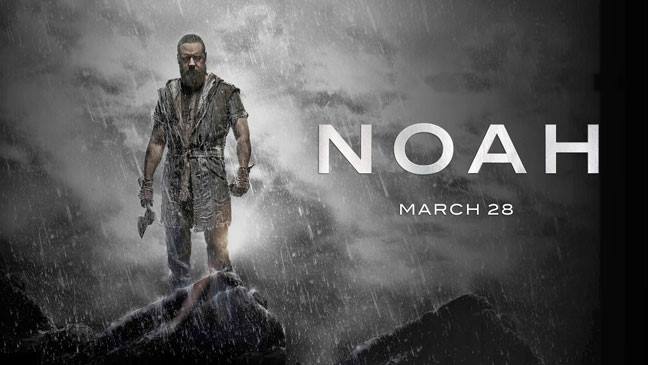
Noah review


                Everyone knows the story of Noah and the great flood of The Bible, or at least they think they do.  Stories like this one and many others that have permeated the social sphere are usually not remembered, recited or quoted with accuracy or even with any of the relevant context to the scriptures that surrounds them. Instead, these tales have become a kind of cultural meme, and in the case of “Noah” over time the myth has been whittled down to the iconography of animals, rainbows and a big wooden boat. 
                New York filmmaker Darren Aronofsky, most well-known for his bleakly-pitched, visceral indie work like “Requiem for a Dream” and “Black Swan”, cares nothing about the memetic simplicity or even the moral dichotomies within the Noah story of the original biblical text.  With his recent adaptation—working within a much bigger budget than he’s usually afforded—he transgresses the familiar narrative in search for the darker implications of the legend.
                In this alternative universe version of “Noah” , Russell Crowe plays our hero as he is shown by the creator visions of a watery apocalypse that will destroy every living person in the world. His grandfather Methuselah (Anthony Hopkins) informs him that he has been called to save his family and the animalia of the planet by building a large ark that will float along the earth’s surface during the imminent flood. (Yeah yeah yeah—we know all that.) However, this time around, what Noah isn’t telling his family is that perhaps the creator never intended for the human race to survive past their death once they have saved the other species.  This becomes even more complicated when Noah’s adopted daughter Ila (Emma Watson) is struggling to bare children with his eldest son Shem (Douglas Booth), while at the same time his younger son Ham (Logan Lerman) is begging for a wife to validate his budding manhood.
                Much has been written about the fundamentalist reaction against Aronofsky’s additions to the source material, and it’s obvious within the first ten minutes that accuracy is not his aim. Much of the movie’s second half deals with the existential angst that these characters have to endure in the face of their seemingly elusive deity. Noah is forced to ponder if he was chosen because he’s the best of mankind or simply the best man for the job. The psychological weight this brings down on him and his family when they hear the screams outside of the arch as the flood rises around them exemplifies the universal truth of moral and spiritual uncertainty that this adaptation is interested in.  The disgruntled faithful should know that, as a story, the slanting of the text to better examine these characters and to give these actors more pathos to deal with is not where the movie fails…but this does lead me to my other point: rock monsters.  
                Maybe in a grand statement of defiance, or perhaps in a broad brushstroke of creative freedom, Aronofsky includes many Tolkien fantasy elements that unfortunately overpower the first half of this otherwise dark film with misjudged silliness. But besides scene-ruining rock monsters, Hopkins’ wizard-like Methuselah seems to serve more as a writing device than as a character, telling us what we already know or could gather from the plot, handing out magic-grow tree-seeds, and going on and on about berries.   Luckily the power and paranoia of the second half just barely saves the film from the Dungeons and Dragons nonsense of the first half. 
                I see no reason why details about the rather short biblical verses shouldn’t be altered for the sake of exploring characters and situations in a more complex or subversive way, even if the film’s pot boils over with too many discordant ideas from time to time. “Noah” is, without a doubt, an audacious and deeply melancholy cinematic experience, but it may alienate fans of the book.

Grade: C+

Originally published in the Idaho State Journal/March-2014