Showing posts with label 2016. Show all posts

Sunday, January 1, 2017

Rogue One: A Star Wars Story review

Long before Marvel and DC took a stab at the extended cinematic-universe idea, George Lucas’ “Star Wars” expanded in the form of comic books, novels, video games, cartoons and two Ewok movies, which then led into the much-maligned movie prequels. Now that Lucas himself has sold his intellectual properties to Disney, they’ve successfully kicked off a new trilogy with last year’s “The Force Awakens” and will be filling in the wait-times with tangential films that explore the other gaps in the established timeline.

“Rogue One: A Star Wars Story” explains how the rebels were able to find the design flaw that allowed them to blow up the planet-demolishing Deathstar at the end of 1977’s “Star Wars: A New Hope,” but unlike the other prequels, this story doesn’t focus on any of the franchise's key players or any of the Han/Luke/Vader family drama. Here we're introduced to Felicity Jones as Jyn Erso (Felicity Jones), a runaway survivor of a raid by the Empire. Her father Galen Erso (Mads Mikkelsen) is a scientist and engineer who works for the Empire who is forced against his will to design the Deathstar. As an adult, Jyn finds a new family in a group of rebel fighters led by Diego Luna as Cassian Andor. Given her connection to her father’s involvement with this dangerous new weapon, she must lead a group into the heart of the Empirical army to find a secret blue print that shows us where Galen hid the space-craft’s only weakness.

The movie also introduces us to Jyn's downtrodden band of misfits in Riz Amed as the skittish Bodhi Rook, Donnie Yen as the blind-swordsman Chirrut Imewe and Wen Jiang as his faithful partner Baze Malbus.  Alan Tudyk voices a sassy robot called K-2SO and Forest Whitaker shows up briefly the wild-haired bandit named Saw Gerrera who first rescued and sheltered our hero as a child.

Writers Chris Weitz (“About a Boy,” “The Golden Compass”) and Tony Gilroy (“The Bourn Identity”) and director Gareth Edwards approached this movie as a kind of “Seven Samurai” ensemble adventure, dampened by the bleak, war-is-hell overtones of “All Quiet on the Western Front.” They tease us with the promise of distinct characters and a fun high-stakes heist, but the script’s slavish devotion to its nuts and bolts macguffin-driven narrative and the lack of depth explored within the movie’s wide-spread cast makes for a surprisingly dull and joyless action experience. 

Felicity Jones is given nothing to do on screen besides hold the audiences hand from one set-piece to another and her fledgling romance with Diego Luna’s angsty Cassian Andor feels tacked on and unearned, as if the movie realized at the 80-minute mark that it forgot to establish a compelling emotional anchor.  The other emotional component between Jones and Mikkelsen as her long-lost father is truncated and treated less like substantive character motivation and more as a means for exposition.

The movie boasts some haunting images of the looming Deathstar, visible though the atmosphere of the doomed planets it hovers above, and the fight choreography is held-back and treated with more physical heft than we’ve seen in this sci-fi world before. This all becomes moot as the film devolves into a swirling montage of aerial dogfights and mindless destruction without enough personal moments with the characters to be invested in their outcomes.

Because there won’t be any direct sequels to this side-bar story, “Rogue One” takes some wild risks that are commendable, and its detachment from the kid-friendly exuberance of the previous Star Wars films allowed for the movie to embody a unique identity. Yet, the film arrived at this darker, more adult space at the expense the audience, who is denied a way to penetrate its sphere of despair.

Grade: C+

Originally Published in the Idaho State Journal/Jan-2017

Listen to this week's episode of Jabber and the Drone to hear more conversation about "Rogue One."


Sunday, December 18, 2016

Nocturnal Animals review

With his second feature “Nocturnal Animals, fashion designer Tom Ford tackles the very things that inspires great art and how the different people in our lives leave impressions that help form our creative responses. This is a lofty theme and with his adaptation of Austin Wright’s novel “Tony and Susan” Ford compares and contrasts two different genres and two different styles of visual filmmaking to comment on the formation the art and storytelling itself.

Amy Adams plays Susan Marrow, an icy and disconnected art curator who’s married to a traveling trophy husband named Hutton (Armie Hammer).  While Hutton is away on a clumsily obvious secret trip with his mistress, Susan receives a manuscript for a novel written by her ex-husband Tony Hastings (Jake Gyllenhaal). The book comes with a note about how the how the story was inspired by their turbulent history. The film then visualizes the contents of Tony’s book, in where Gyllenhaal also plays the main character of Tony’s Novel Edward Scheffeild. Edward is an easily frightened man who loses his wife and daughter to a gang of drunk rednecks after being forced off a West-Texas road after a car chase in the middle of the night. He seeks to punish these men with a rogue desert detective named Bobby Andels (Michael Shannon), a man of few words who no longer fears losing his job or his life to do the right thing.

 The film opens on an audience-testing slow-motion sequence where morbidly obese elderly women are shown dancing seductively to the movie’s melodramatic stringed score. This title sequence lingers on close-ups of sagging body parts before revealing these women are part of art exhibition curated by Adam’s dispossessed character. The mix between the grotesque the gorgeous permeates Ford’s every narrative and aesthetic choice here. The framing device about Susan rediscovering her young and complicated passion with the struggling writer of her post-college years is couched in the story to represent the ‘real-world.’ Yet the painfully stilted dialogue, the intentionally cold and bloodless performances within these scenes and the careful framing of Ford’s modern-art Los Angeles set-design presents a less relatable world than what is represented in the scenes depicting Tony’s pulpy and hyper-violent western/thriller manuscript.

With this strange juxtaposition, Ford tries to make the argument that success and wealth stifles creative expression by cutting the artists away from humanity, and in doing so, he proves his own point by constructing a film that is stifled by battling creative agendas. The two stories are supposed to be symbiotic and analogous but the movie lacks the necessary connective tissue to develop either story past their highly-stylized surfaces. Though pulpy and overly-treaded genre territory, the Coen Brothers-esq manuscript segments are far more engaging and impactful than the sterile soap-opera framing plot, which resembles the high-art sleaze of the 60s and 70s Italian filmmakers, as filtered through the steely cynicism of “Dead Ringers” era David Cronenberg. The two styles constantly trip over each other as the film cuts between them and their intended symbolic relationship reveals a disappointingly shallow connection.

“Nocturnal Animals” is filled with a lot of style and the structure of the story attacks character-motivations and themes in a challenging and indirect way. This is a laudable storytelling approach, but it fails to meet those challenges in a way that doesn’t seem overly self-conscious and ill-considered by the director. Gyllenhaal gives two great performances and Michael Shannon does what he’s made a career of doing and gives the best performance in a problematic movie.  Adams is almost denied an emotional reality so that she can act as a vessel by which the movie’s (unintentional?) misogyny is accounted for.  What makes the film all the more frustrating is that its ambitions are the cause of its own failure.

Grade: C

Originally Published in the Idaho State Journal/Dec-2016

Listen to this week's episode of Jabber and the Drone to hear more conversation about "Nocturnal Animals."

Sunday, December 11, 2016

Moana review

Disney’s tradition with the Princess protagonist motif has been a staple of the company’s long-term success.  They’ve returned to that particular wishing-well so many times, in fact, they now have to think of ways to consciously subvert the trope, lest they run the risk appearing out-of-touch or out of ideas—their live-action remakes notwithstanding. “Moana,” the mouse house’s latest animated adventure, tries its best to arrive at a new spin on their girl-with-a-destiny story, using its Pacific Island mythological setting to embellish and disguise many reworked Disney tropes.

This oceanic fairy-tale tells features a young island daughter of a Chief named Moana (Auli’li Cravalho) who is sent on a journey to return a magic stone back to heart of a neighboring island after a darkness creeps onto their land, making it impossible to fish or grow crops. On her way, she finds a Hawaiian demi-god named Maui (Dwayne-The Rock-Johnson) who wants to retrieve his magic hook weapon that allows him to shape-shift into any animal he chooses.  Johnson’s Maui must learn to curb his hubris as he helps the determined ruler to be, and Moana must learn how to believe in herself.

Truth be told, the motivations of the characters are noticeably surface-oriented and most of the movie is driven plot rather than story. Moana is sent on her journey to prove she can be a capable ruler of her people and because her grandmother encourages her from beyond the grave, informing her that she has been chosen by the ocean itself to restore the magic heart of the sea back to its rightful place. What ensues is an episodic odyssey where Moana and Maui encounter multiple challenges on their way to defeat a giant lava creature. Moana herself is somewhat undefined as a protagonist outside of her immediate goals and circumstances, and the film’s aesthetic focus never allows for her to develop past her function in the plot.

On a screenplay level, the story isn’t terribly interesting or dynamic once you strip away the beautifully rendered animation and the catchy musical sequences written by Opetaia Foa’I, Mark Mancina and Lin-Manuel Miranda of Broadway’s hit play “Hamilton.” Like many classic Disney films the soundtrack becomes another character. The musical numbers are placed strategically and each track has a bounce and melodic structure that rings in your head days after your viewing experience. In some regards, this outing seems a little desperate out-Frozen “Frozen,” as far as the catchy radio-ready music is concerned, but these songs will likely be the film’s largest takeaway.

“Moana” is well crafted and enjoyable but it doesn’t reinvent wheel or step too far out of what’s been comfortable and successful for Disney’s animation studio. The film leans of the studio’s greatest hits, including familiar character types and beats from “Aladdin,” “Little Mermaid,” “Mulan,” “Hercules” and others. But while the story doesn’t offer much substance, it’s hard to totally dismiss the movie’s visual flare and infectious positive energy.

Grade: B

Originally Published in the Idaho State Journal/Dec-2016

Listen to this week's episode of Jabber and the Drone to hear more conversation about "Moana.

Sunday, December 4, 2016

Fantastic Beasts review


JK Rowling’s has returned to the wizarding world of her successful Harry Potter franchise with her first screenplay for David Yate’s new film “Fantastic Beasts and Where to Find Them.” Part Potter prequel and part expanded-universe filler, the origins of this film come from a fictional bio written for a series of magician’s textbooks mentioned off-hand in Rowling’s original novels. While it’s not uncommon for filmmakers such as George Lucas and Peter Jackson to go back to the well for creative inspiration—and/or more money--“Fantastic Beasts” avoids the stench of calculated, corporate cash-grabbing by finding a new way to enter this well-established world.

Recent Oscar-winner Eddie Redmayne plays Newt Scamander, a British magician who’s travelled to early 20th-century New York to find suitable homes for the magical creatures he keeps in his wizard suitcase/terrarium. After a few of these animals escape into the city, he and a local muggle factory worker named Kowalski (Dan Fogler) must find and capture them before Newt blows his cover and breaches important magician’s secrecy laws. Kathrine Waterson plays MACUSA agent Tina, who tries to help Newt navigate his search without exposing himself.

In the background of this light set-up, Rowling gives us a much darker story element involving Samantha Morton as a wizard-phobic street-corner kook named Mary Lou who’s secretly running a witch’s conversion center, where she abuses and shames young children who come from magical parents. One such teen is played by the always intriguing Ezra Miller, who’s living a double life as a secret agent trading information with a nefarious rogue member of the MACUSA (Colin Ferrell).

Yates and Rowling’s previous collaborations resulted in some of the darker and more menacing Potter sequels that came later in the series, and that tone is returned to here, sometimes appropriately, sometimes not.  The whimsical monster-catching stuff is treated with childlike awe and magical wonder, while other scenes are treated as light-horror or mystery and intrigue. The other films in this franchise could mitigate these same tonal-shifts within the framework of a rather standard Campellian hero’ journey. There’re multiple competing plot threads running simultaneously through the feature and without a central hero such as Harry Potter to follow—Redmayne’s performance as Newt is treated more as a cypher or conduit rather than a fully-fledged character—it’s sometimes difficult to find a narrative track to travel through this installment. After forty minutes of setting up everyone’s individual situations and establishing the illusive stakes of the plot, the movie then condenses into something relatively streamlined and tangible.

Despite a wobbly narrative foundation and an over-stuffed screenplay, Yates still captures the period scenery and production values that are both completely immersive and fully realized. Newt’s computer imagery creatures are always imaginative and memorable and Yates proves again that he can handle special-effects moments in a way that serves rather than overwhelming the story.

“Fantastic Beasts and Where to Find Them” is peripheral and marginal compared to the previous nine films that built towards an epic story over a decade, but the choice to avoid the high-school dramas and the overused good versus evil myth that defined the original Harry Potter films makes for a different and sometimes idiosyncratic blockbuster experience. The film’s ensemble is spread too thin along peaks and valleys of the plot and because of this none of them get a lot to do, but they’re still able inform their characters with enough physicality to ground and realize their performances. Certainly, as a kick off to a somewhat unnecessary prequel expansion, so far this is more enjoyable and substantial than either Lucas’ Star Wars episodes I-III or Jackson’s bloated Hobbit trilogy.

Grade: B-

Originally Published in the Idaho State Journal/Dec-2016

Listen to this week's episode of Jabber and the Drone to hear more conversation about "Fantastic Beasts and Where to Find Them"

Sunday, November 13, 2016

Doctor Strange review

Marvel Studios is an anomaly of modern populist filmmaking. Based partly on the rules of comic book publications, serialized television and the producer-driven classical studio system, Kevin Feige and the other Marvel executives designed a fruitful model that spawns and nurtures multiple, converging franchises that can share and swap characters. They’ve also successfully introduced general, non-geek audiences to super-dorky pulp characters like Thor, Ant-Man, The Vision, the whole Guardians of the Galaxy team and now, their nerdiest character of all, Doctor Strange. The reason audiences continually eat this up is because of the studio’s steady oversight and a strict style-guide that keeps their films uniformed and consistent. In the case of Scott Derrickson’s “Doctor Strange” this same-ness, delivers an amiable blockbuster but stifles the possibilities for creative experimentation.

Benedict Cumberbatch plays our hero Doctor Steven Strange, a smug celebrity neurosurgeon who’s looking to execute a complicated procedure that will further elevate his status. Amid this pursuit, Strange is seriously injured in a car-accident that leaves his hands unable to perform with precision. As he travels the world looking for a miracle surgery that will allow him to work again, he discovers a house of mystics in Katmandu that promise to show him ways to heal himself through the use of magic and sorcery. Strange is then caught up in a secret war between the temple’s Sorcerer Supreme (Tilda Swinton) and a band of rogue magicians, led by a disgruntled student of the dark-arts named Kaecilius (Mads Mikkelsen) who’s hell-bent on bringing an evil entity upon the earth.

Derrickson’s history in horror filmmaking (“Sinister,” “The Exorcism of Emily Rose,” “Deliver Us From Evil”) could have easily gone hand in hand with the occult-leanings of the Marvel’s magician hero. Instead of punching his way to victory or blowing up his opponents with wrist-rockets, Doctor Strange uses his intellect and skills as a sorcerer to defeat other-worldly foes. Yet, what we are given in this movie is another standard superhero origin story about a reluctant hero who must overcome his own hubris for the good of man-kind. Many beats of the plot repeat what we’ve recently seen in “Iron Man,” “Thor” and “Ant-Man,” and the shiny, non-threatening tone of Marvel’s happy-meal presentation disguises every genre cliché with lavish sets and complicated special effects.
 
The post-Matrix/post-Inception visuals and the film's art-direction is spectacular and eye-popping—particularly the set-pieces and fight-sequences that take place among the shifting and folding Escher-esq cityscapes—but they are placed almost randomly and with very little stakes within the story. Most of the screenplay consists of long sequences where Swinton’s Ancient One and Chiwetel Ejiofor’s Mordo explain to Cumberbatch all the ins and outs of mirror realms and astral projection and forbidden libraries and magic imbued weapons and so on and so on. To the credit of the screenwriters and the performances from the actors, this exposition-heavy dialogue is peppered with enough humor and whit to distract from its utilitarian function.

Aside from a slightly rushed plot and another stale Marvel-Studios villain with a weird face, “Doctor Strange” is perfectly entertaining and keeps true to the company brand, but it’s the very nature of this idiosyncratic character that begs for a less calculated approach. Given Derrickson’s past work and given the prestigious background of the cast, the movie’s familiar superhero trappings are more nakedly obvious and its getting increasingly harder to overlook Marvel’s unwillingness to challenge their formula.

Grade: B-

Originally Published in the Idaho State Journal/Nov-2016

Listen to this week's episode of Jabber and the Drone to hear more conversation about "Doctor Strange."

Monday, November 7, 2016

Moonlight review

Now that awards season is in full swing, attention has been turned to Barry Jenkin’s second feature “Moonlight,” an archetypically American tale about the cross sections between poverty and identity. While embracing an exciting and vivid style of its own, the film is stripped bare, minimal and noticeably low-budget. Even still, Jenkins carefully puts every dollar on the screen, directing with his feelers fully extended to capture every meaningful moment with his actor’s vulnerable and honest performances.

This story focuses on three time periods in the life of a struggling African American boy named Chiron (Alex R. Hibbert) who has to constantly dodge the neighborhood bullies for being too quiet and sensitive. Making things even more difficult, he discovers his mother (Naomi Harris) is using crack and bringing home strange men to access it. He then finds refuge in the unlikely parental figures of a local Florida drug dealer named Juan and his right-hand-woman Teresa (Mahershala Ali and Janelle Monae).

We meet our protagonist again as a teenager (Ashton Sanders) when he’s forced to confront his inner conflicts with his only friend and confidante Kevin (Jharrel Jerome) after their school-yard relationship reaches a new level of emotional possibilities. Towards the last third of the film we drop in one last time with Kevin and Chiron as adults (Trevante Rhodes and Andre Holland), reconnecting after years have passed and their lives have taken them down widely diverging roads.

Through these stories are connected by a single timeline, each third works well on its own as an individual short, which makes a lot of sense given Jenkins many years working in the short-film format. What he accomplishes in this structure is something like Richard Linklater’s growing-up opus “Boyhood.” The audience is forced to look at these three moments in the changing life of Chiron and fill in the blanks between the juxtaposing segments. This successfully creates a larger world than the movie has the budget or time to accomplish on its own, giving the film both an overarching timelessness and the individual spirit of cultural specificity.

What makes the film live and breathe is the cast who works hard to be as natural and as delicate as possible. Because the movie is exploring themes of repression and the defensive masculinity that queer people in tough urban environments must front in order to survive, the actors play their parts very close to their chests, avoiding melodramatic Oscar-clipping as much as possible. The whole cast puts their trust in Jenkins sensitive direction to use their every hesitated breath and every raised eyebrow to inform the emotional realities that’s often deliberately left out of the dialogue. Naomi Harris as the dysfunctional mother is probably the broadest character and most literal performance given. Compared to the quiet intensity expressed by the rest of the cast, her portrayal is much less nuanced and the lines she delivers often mirrors her emotions exactly. Harris is faithfully playing the role as written, but it looks rather reductive compared to the subtly sublime work by the three actors who play her son.

This might not be your personal growing-up story but the raw emotions expressed in “Moonlight” are universal. While the ending comes to a disappointing halt just as the movie’s momentum is peaking and there’s nothing particularly new in the storytelling-- the plot touches on many tropes in both the coming-of-age and coming-out genres—the finely tuned performances and Jenkin’s filmic execution feels personal and authentic, even as he employs familiar narrative techniques.

Grade: B+

Originally Published in the Idaho State Journal/Nov-2016

Sunday, October 30, 2016

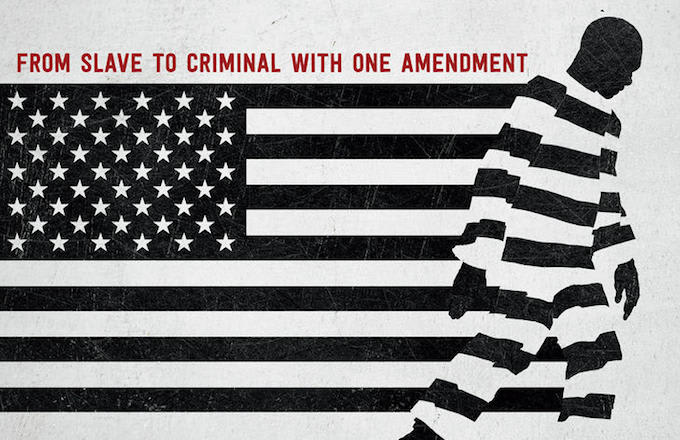
13th review

Ava DuVernay’s new documentary “13th” should be required viewing for every high school civics course across the country. The film focuses on how the American justice system has been systematically rigged against people of color since the passing of the 13th amendment ended slavery in the 1800s, conveniently leaving in the clause that strips humans of their rights as soon as they enter the prison system and often long after they have served their sentences. This documentary creates a comprehensive examination of how these laws have specifically targeted the black communities through the segregation era and into the ever-expanding war on drugs, dramatically spiking our incarceration numbers over time.

Released in a particularly salty election year in which minority issues such as Black Lives Matter and immigration have been front and center in the political discussion, the film’s decision to release on Netflix streaming, rather than only engaging in a limited theatrical run, allows for the possibility of a wider reach and deeper cultural impact.

The movie gives us many damning statistics, including the fact that America accounts for 25% percent of the worlds prisoners, despite only representing 5% percent of the global population, or how African American’s make up 40% of those incarcerated, even though they only account for 6.5% of the total U.S. population. These stats are then supported by showing us how both republican and democrat lawmakers have continually stacked the legal deck against minorities to keep prison filled and profits high.

DuVernay makes the argument that slavery didn’t end with the passing of the 13th amendment, rather it was merely shifted to the prison systems. When seeing footage of minority inmates performing free labor for many successful American manufacturers, it’s hard to argue against this position. One of the stronger points made in the film—also brought to light a while back by comedian John Oliver on his HBO program—is the governmental part played by the American Legislative Exchange Council (ALEC) who guides the passing of many restrictive policing and incarceration policies, based on the whims of the powerful corporate lobbyists who fund their initiatives. These initiatives include California’s damaging three strikes policy and mandatory minimum sentencing that took judicial power away from judges and gave it to prosecutors. No matter your race or political persuasion, one ought to be disturbed by how big of a role corporations have played into the withering of freedoms, the expansion of militant policing and growth of America’s prison industrial complex.  

Formally. the documentary shifts between archival footage and talking-head interviews by the likes of activists such as Angela Davis and Bryan Stevenson, educators like Jelani Cobb and commentators and lawmakers such as Newt Gingrich. Graphics and popular music is implemented for the purposes of style and pacing but never distracts from or overwhelms the film’s content.

Here DuVernay brings the activist spirit and polemic energy that she sheathed with “Selma” in order to graciously portray the life and reputation of Martin Luther King Jr. Whereas 2014’s “Selma” aimed to bridge differing political points of view under the reverence of a classy, performance-oriented prestige picture, “13th” takes off those silk gloves and bares its anger and outrage with a meticulously researched take-down of the white supremacy that’s built into our government’s interpretation of law and order. This documentary is not a casual watch and it was made with the purpose to complicate the hotly divided conversations created by our culture of stagnant left-right squabbling, and for that alone it’s one of the most important and essential films to come out this year.

Grade: A

Originally Published in the Idaho State Journal/Oct-2016

Saturday, October 22, 2016

The Girl on the Train review

Tate Taylor’s adaptation of Paula Hawkins best-selling crime novel “The Girl on the Train” owes much of its intended style and tone to David Fincher’s much more interesting take on Airport pulp “Gone Girl,” but unlike that film, which took many risks and was able to carefully balance icy sensuality with pitch-black cynicism, this sleepy thriller never quite marries its objectives between the narrative, the themes and its genre conventions.  Given all of these obvious shortcomings, lead actress Emily Blunt still manages ride the bumbling vehicle in a way that, at the very least, allows her to showcase her dramatic range.

The story focuses on the broken life and the fractured memories of Blunt’s character Rachel. Erin Cressenda Wilson’s adaptation of Hawkins’ novel decides to tells the story in a similarly non-linear way, emulating Rachel’s foggy recollection of the past events within the plot. The screenplay purposely withholds information or gives us false memories to obscure the later reveals. What we know early on is that Rachel is a hard-drinking alcoholic still reeling from a divorce with a man named Tom (Justin Theroux), who’s recently remarried and had a child with his younger mistress Anna (Rebecca Ferguson). Unable to get over their failed marriage and her inability to bear a child for her former husband, Rachel rides a train past their old home every day to see the progression of Tom and Anna’s new life. One day while pining for her past she witnesses her former neighbor Megan (Haley Bennett) kissing a strange man on an outdoor balcony, only a few days before Megan herself goes missing. This makes a Rachel a lead suspect because of her history with being seen around her ex’s property uninvited. In getting closer to Megan’s worried and cuckholded husband (Luke Evans) this event also invigorates Rachel into solving the case to both exonerate her and to bring closure to her messy past.

This movie has some very interesting things to say about women’s relationship with their domestic lives, in terms of what they’re ‘supposed’ to be as a wife, a lover, a fantasy, a mother and modern careerist. The film posits that most of these identities are unfairly defined by the expectations of men and that a woman’s fully formed identity and a true sense of absolution can only be achieved by realizing their life outside of the confines of a traditional marital paradigm. Blunt and the other leads in the cast do well to underline these themes with their performances and they help to carry the feature through its many weighty scenes, but the slowly accumulating structure of the plot never truly satisfies as the brooding whodunit mystery it wants (and needs) to be.

This unconventional take on the neurotic detective, the unreliable narrator and the Hitchcockian wrong-(wo)man protagonist should have crackled more than Taylor’s lilting direction allows for. Taylor borrows style from many sources but never synthesizes them in a way that supports the narrative elements or its boiler-plate genre surprises. What could have been a dark satire about the American domestic fairytale—the angle Fincher’s “Gone Girl” already mastered—or what could have been a suburban “Silence of the Lambs” feminist mystery ends up being a suffocated character study that sacrificing its pop sensibilities for an air of safe and unearned prestige.

For a Lifetime movie writ large “The Girl on the Train” has moments and individual scenes that highlights nuances performances, as well as some thoughtful set design, but the film is so concerned with its rainy tone and its structural juggling that it’s never in conversation with the audience. The result is a somewhat flat and edgeless piece of fast-food filmmaking that can’t sell the shocking reveals it depends on.

Grade: C-

Originally Published in the Idaho State Journal/Oct-2016

Listen to this week's episode of Jabber and the Drone to hear more conversation about "The Girl on the Train."

Sunday, October 2, 2016

Magnificent Seven (2016) review

Antione Fuqua’s reworking of the classic 1960 western “The Magnificent Seven” neither challenges or ruins the original’s winning formula. Of course by original we have to speak in general terms, as the initial version of this story was first told as Akira Kurosawa’s 1954 Japanese action film “Seven Samurai,” and that epic's plot, about a rag-tag group of rogue mercenaries who help a small village/town of farmers defend their property from a murderous group of thieves, has been an oft-utilized source of cinematic inspiration over the following decades. The first American version spawned a few sequels of its own, was remade as a TV mini-series in 1998 and Pixar’s “A Bug’s Life” even took a stab at the same story structure.

 Denzel Washington plays the grizzled hit-man Chisolm. On his way through the west to find a bounty he's hired by a grief-stricken young girl named Emma Cullen (Haley Bennett) after she watched her brother get shot down by an evil thief named Bartholomew Brogue and his group of well-armed cronies. Knowing how outnumbered and outgunned they will be, Chisolm collects the best gun-men and criminals he knows to help the town prepare for an all-out war. This group includes Chris Pratt as the mouthy trickster Josh Faraday, Ethan Hawke the ex-confederate sniper Goodnight Robicheaux, South Korean superstar Byung-hun Lee as Robicheaux’s knife-wielding bodyguard Billy Rocks, Manuel Garcia-Rulfo as the wanted-man Vasquez, Martin Sensmeier as the deadly Native American warrior Red Harvest and Vincent D’Onofrio as the jittery, mountain man spiritualist Jack Horne.

The movie does a good job at distinguishing all of these different characters and allowing for enough breath and space between the shoot-outs to get to know the ensemble and understand their contrasting dynamics as a team. Denzel is commanding as their sturdy leader and helps to support the more idiosyncratic players in the cast. While Pratt, Hawke and Washington get the most to chew on the others do well with their limited screen time, even if much of the cast barely develops past their archetypes, but with such an archetypal story, these broad choices function well within the limitations of the mechanics of the plot.

Given Fuqua’s history in action filmmaking and urban-based crime thrillers such as “Training Day,” “Bait” and “Equalizer,” less racial stereotypes than the 1960 version and brings more diversity to the cast, commenting ever so slightly on America’s moral growing pains after the civil-war. But the picture exists primarily as a piece of consequence-free, pop-western entertainment that’s generally more interested in being cool than clever.  Here Fuqua evokes not only the original “Magnificent Seven” but also the blunt ultra-violence of Sam Peckinpah’s the “The Wild Bunch,” occasional flashes of Sergio Leone’s expressive Spaghetti Western style, and the post-modern irony of Quentin Tarantino’s “Django Unchained.”

As a pastiche the end result is successful as visceral film experience but a bit empty as a comment on the genre or the movie’s it pays homage to. Luckily that Kurosawa structure is rock solid and can support just about any interpretation, so long as the cast is interesting and the director is capable. In the case of this iteration of “The Magnificent Seven” both of those boxes have been checked the job has been fulfilled adequately even if it doesn’t go above or beyond the parameters of the assignment.

Grade: B-

Originally Published in the Idaho State Journal/Oct-2016

Sunday, September 18, 2016

Sully review

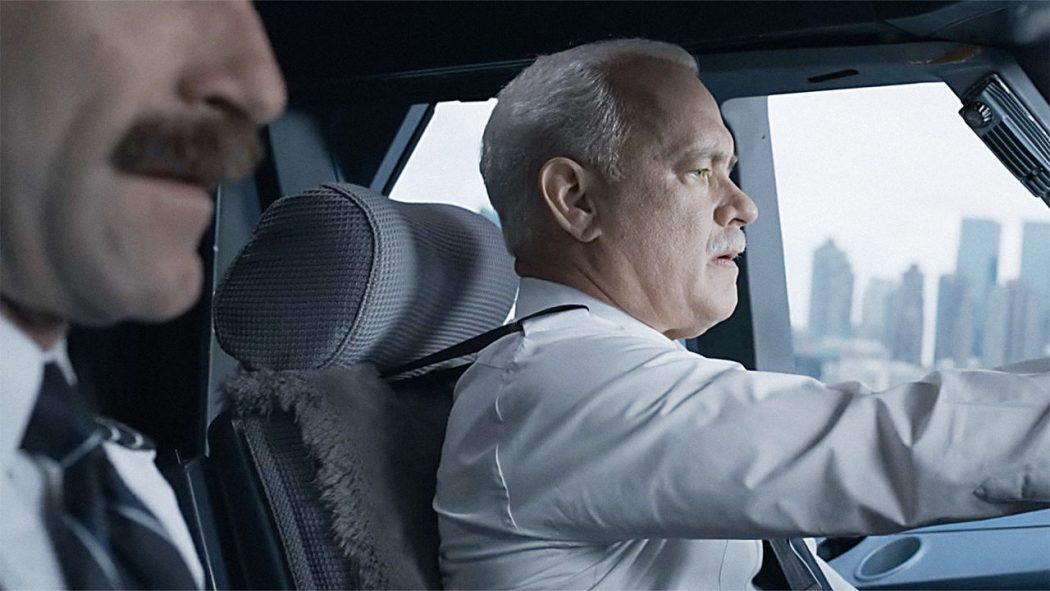
Both as an actor and as a director, Clint Eastwood has explored his fascination with the conflicted hero narrative. World weary and downtrodden seems to be the resting constitution of most of his protagonists and their stories usually test their personal doubts with a greater conflict that effects the good of their environments. In this year’s “Sully” Tom Hanks takes on this position as the real life commercial airplane pilot Captain Chesley Sullenberger, who in 2009 safely landed an American Airlines jet of 155 passengers along the surface of the Hudson river with no casualties. The story caught the aged, life-long pilot in the middle of a media storm where he and his co-pilot Jeff Skiles (Aaron Eckhart) was crowned heroes by many, while simultaneously enduring pressure and scrutiny by the organization investigating the crash.  

Using Sully’s tested psychosis as the story’s framing device, much of the story is told in flashback, as well as the occasional PTSD-induced nightmare sequence. Hanks plays Sully with a lot of insular angst and quietude and uses his eyes to convey his character’s discomfort and mounting self-doubt. It’s not a particularly showy performance and it leans further into Hanks’ transition into that of a senior performer. Eckhart is then given more room to be vocal and expressive about the nature of their character’s odd position within the media and their stressful behind-the-scenes case.  

The film is also interested in the notion of experienced intuition verses blind empiricism, as the board of investigators keep telling both pilots that every simulation demonstrates that they should have been able to safely make it back to the tarmac without risking a dangerous water-landing (as well as destroying expensive company equipment.) This argument, as presented by the film, could be read as a condemnation of expert analysis and a celebration of blue-collar, folksy instinct but the conclusion to this case wisely factors in human experience and emotional error as a variable itself, saving the picture from slipping too far into an anti-science, finger-wagging appeal to the viewer’s emotions.

 The special effects and the flight recreations are both familiar to the experience of flying and the fear that comes with its risks.  The daydreams and nightmare sequences are  realistic and spiked with harrowing 9/11 imagery, which ties in subtly with New York and America’s exaltation of Sully’s rescue landing.

“Sully” is a competent drama. Hanks is a professional, Eastwood knows exactly how to tell this story and the screenplay aims low enough for both of them to hit their intended marks. If the film does have a flaw it’s Todd Komarnicki’s successful but safe adaptation of Sullenberger’s book “Highest Duty.” Kormarnicki tries to weave in Sully’s past as a war pilot and crop duster to show his experience and his relationship with the air, but that gesture is never really paid off or integrated well enough to fully inform the character or the plot. While studied and precise, the screenplay lacks the amount of narrative ambition it needed to propel the picture from good actor’s showcase to being truly great film.

Grade: B

Originally Published in the Idaho State Journal - Sep/2016

Sunday, September 11, 2016

Kubo and the Two Strings review

Laika studios, the animation studio based in Portland Oregon, has built its brand recognition on a style of detail oriented and highly stylized stop-motion puppetry. Their features, “Coraline,” “ParaNorman,” and “The Boxtrolls,” have primarily catered to the same audience who followed “Coraline” director Henry Selick from Disney’s “A Nightmare Before Christmas,” which shares a similar gothy aesthetic. In contrast, Laika’s latest project “Kubo and the Two Strings” is less interested in introverted protagonists and macabre dark comedy and is more concerned with widening the scope and visual boundaries of their storytelling with an eastern-themed, mythic adventure.

The film interweaves an intricate story-within-a-story that purposely blurs the lines between depictions of imagination and actual magic. The movie follows the multi-faceted coming of age of Kubo (voiced by Art Parkinson), a young boy who lost an eye as an infant and who lives with his mother on the top of a Japanese mountain that overlooks a small village. His shut-in mother encourages him to mingle with the others during the daytime hours, but warns her son to return home before dark. While visiting, he relays the bits and pieces of his mother’s stories/memories for the townsfolk in the form of origami puppet shows, created and directed by the music of his rudimentary three-stringed guitar. One day after staying out too late, Kubo is visited by his mother’s evil sisters (voiced by Rooney Mara) who wish to claim him as their own. Their sudden arrival forces the boy into perusing an Odyssey to find three pieces of a magic armor. Once collected he hopes to destroy the evil Moon King; the mysterious and dark magician who’s most likely responsible for his mother’s sudden disappearance. In her place, Kubo is joined by an enchanted and overly-protective Monkey (Charlize Theron) and a charming Beetle samurai (Mathew McConaughey) with a lot of hard-headed courage.

Fans of Japanese entertainment will likely see in “Kubo” shades of the sensitive fantasies that Hayao Miazaki produced with Studio Gibli, as well the airy and patient pacing of Japan’s classic edo-period action cinema. Elements of the plot also recalls the structure and archetypal symbolism of “The Wizard of Oz.”

The animation exhibited here is by far the most ambitious and expansive work we’ve seen from Laika thus far, and the movie’s camera technique and its consideration of the frame allows for wider shots and wilder pans and zooms than previously implemented in their painstaking form of animation. On a technical level, It’s nearly impossible not to give into director Travis Knight’s vision, even if the ending is clumsy and screenplay’s vague mythology sometimes muddles its themes.

This story is interested in familial legacy, adopted communities, and what it’s like to grow up without a sense of personal history, while simultaneously trying to overcome an unwanted path set before you, but the film sometimes struggles in tying all of these ideas together in succinct and assured way. The team behind this project surly deserves much praise for creating a product for children that is thoughtful and contemplative while also beautifully crafted and creatively art-directed. With that said, admiration doesn’t always translate into a full immersion. “Kubo and the Two Strings” is a significant progression for this studio and it’s more than worthy of your attention but as a story it merely nudges the shoulders of greatness.

Grade: B

Originally Published in the Idaho State Journal - Sep/2016

Listen to this week's episode of Jabber and the Drone to hear more conversation about "Kubo and the Two Strings."

Monday, July 25, 2016

Ghostbusters (2016) review

Paul Feig’s “Ghostbusters” remake has been a lightning rod for controversy since it was announced a couple of years ago that the picture would feature an all-female cast. Though the living cast members of the original 1984 film have given their blessing to this project and have even appeared in in the picture as bit parts, for some, this has been the straw that breaks the back of fan-culture when it comes to remaking their favorite nerd properties from the 80s. This internet outrage has also caught the attention of a less than savory flavor of he-man-women-haters and racists who’ve used the film as a soapbox to attack these actresses as well as feminism as a whole, which has then forced the media into siding with Feig and his project in hopes to proportionately counter the negative online buzz. What does any of this have to do with the movie, you might ask, not very much at all.

Like most classics that we now take granted now, the original “Ghostbusters” was a film that, on paper, shouldn’t have worked. It’s an absurd premise that’s actually taken semi-seriously and features a cast of television comedians playing doctors and scientists.  It also made allusions to the heroes’ interests in the occult, smack-dab in the middle of America’s satanic panic, and the screenplay’s structure is a more loosely accumulative than it is classically three-act.  This remake irons out all of those kinks and idiosyncrasies for something that is unsurprisingly more safe and centered around a series of jokes and premises rather than scenes.

Like the original, this film is also comprised of actors mined from Saturday Night Live such as Kristen Wiig, Leslie Jones, Kate McKinnon, as well as Feig’s muse Melissa McCarthy. Wiig plays Erin Gilbert, an uptight physicist who's lost her tenure at the university that employed her when a video is leaked that connects her with past interests in paranormal study. She’s then reunited with her former partner in crime Abby (McCarthy) and Abby's zany lab assistant Jillian (McKinnon).  With nowhere to go but up the group moves their headquarters to the attic of a Chinese restaurant in New York where they up shop as a ghost removal service. Later they enlist the help of a hunky but flighty receptionist named Kevin (Chris Hemsworth), as well as Metro worker named Patty (Jones) who’s been witnessing strange things in the underground tunnels.

There are plenty of nods and winks to the 1984 predecessor but the majority of the plot elements here are conceived from a much less specific place and the jokes are based more on visual gags and punch-lines than they are on character. Wiig is a passive, bland lead, McCarthy simmers her wild comedic persona to blend into the ensemble and its Jones and McKinnon who provide the films hardiest chuckles, making broader, wilder character choices.  Hemsworth isn't given a lot to do but he's game to play an empty-headed receptionist and has a few funny moments of his own. Still, the movie never really takes off like it should and the plot elements never coalesces into something I could comfortably call a story. Like Feig’s previous work (“Spy,” “Bridesmaids”) this movie is based around key comedic set-pieces and conversational dialogue, which is then restricted by many complicated special effects and a PG-13 rating that doesn't seem to suit this cast or this director.

As a story, this “Ghostbusters” doesn’t have the mythic complexity or the same sense of character history that its source material was able to weave into the narrative and as a comedy I can’t say that laughed as much as I wanted to. I enjoy the neon look of the special effects and some of the new gadgets are silly and exuberant in a Saturday morning cartoon sort-of way, but even if we are only comparing this to previous Feig comedies this would still rank pretty low. My childhood is still intact and the female cast doesn’t threaten my masculinity--nor does it subvert anything as a political gesture--but this remake's screenplay is noticeably lazy and I’d be lying if said I found this effort to be a satisfying or substantive movie going experience.   

Grade: C-

Originally Published in the Idaho State Journal - July/2016


Sunday, July 17, 2016

The BFG review

Steven Spielberg’s adaptation of the classic Roald Dahl novel “The BFG” suggests a director and source material paring that should yield exciting work. Spielberg is the master of creating four-quadrant Hollywood product that rides the line between the joy and wonder of cinema with an undercurrent of menace and Hitchcockian thrills. Dahl’s books capture a similar sense of childhood wish fulfillment often shadowed by morose details and black humor. Unfortunately, somewhere in the production of “The BFG” the sneakier tones and shades that made the original story pop were glossed over with a slick, motion-capture focused accessibility that’s flattens its most interesting quirks.

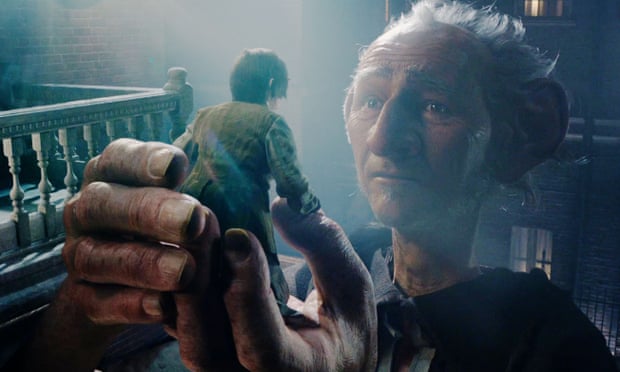
When the movie's protagonist Sophie, played by newcomer Ruby Barnhill, stares out of the window of her orphanage bedroom and we first see the shadow of the 60-foot Big Friendly Giant, we get a glimpse of the Spielbergian power of mystery and imagination. After the clearly animated giant then snatches our protagonist through the window and brings her back to his magical home in giant land the sense of mystery is quickly replaced with focus on the special effects and Dahl’s idiosyncratic dialogue. We are also introduced to a pack of bigger, meaner, man-eating giants who live with the BFG and who pose a threat to Sophie, so long as she’s living with her capture, but that threat is never treated with enough weight or seriousness to effectively motivate the narrative.

The film tries to balance the unfamiliarity and strangeness of Sophie’s new surroundings, and like Dahl’s other novel “Charlie and the Chocolate Factory” we are lead through a series of set pieces were we are introduced to a lot of silly and bizarre concepts, but the hallmark-channel tone of the film never allows for the necessary emotional peaks or valleys to ground these concepts in a way that properly thrusts the story. Even John Williams’s lilting score is always humming inoffensively in the background and never recedes or swells to punctuate scenes in a meaningful way.

The choice to iron over Dahl’s threatening world with the story’s friendlier message leaves the audience with little else to attach ourselves. The photo-realistic animation is the focus of the movie and it isn’t new enough or distinct enough to wow us into loving the characters. Mark Rylance’s voice work as the friendly giant is commendable and Barnhill’s interactions with a green-screen environment is seamless and mostly convincing but the film suffers from an amiable blandness that surprisingly lacks creative vision.

As a children’s film “The BFG” is not a grating or unbearable experience but it’s also not a memorable one either and from Spielberg this come with a harsher critical eye, given that he essentially perfected this genre with his past films such as “E.T: The Extra Terrestrial.” Hell, even the often maligned “Hook” took more risks and wasn’t afraid to build in moments of suspense and peril to underline the dramatic stakes. “The BFG” has a few transcendent moments in which it’s director seemed to be engaged with the material, but the overall execution of the film is a missed opportunity.

Grade: C

Originally published in the Idaho State Journal - July/2016

Listen to this week's episode of Jabber and the Drone to hear more conversation about "The BFG."


Saturday, July 2, 2016

The Neon Demon review

Danish filmmaker Nicholas Winding Refn (“Drive,” “Bronson,” “Pusher”) is an exciting and daring stylist who’s equally confounding and frustrating as a visual storyteller. Like many auteurs in the post-modern era, he wears his influences on his sleeve and uses pastiche as a way of creating new meaning from old genre tropes. His latest film “The Neon Demon” combines the dreamy nature of euro-trash, exploitation horror with the camp sensibility of a  Hollywood rise and fall drama.

Because of their surface interests in shock and attitude, horror and camp have always been kissing cousins and both have often shared a lot of space on the cult-movies racks of the now-extinct video stores, but here Refn isn’t satisfied with simply achieving approval as a cult curiosity, he also wishes to be taken seriously as an artist and a visionary. Perhaps it’s the way the film vibrates between the boarders of shock, camp and art-house experimentation that prevents it/saves it from conveniently being excepted as any of the above, while also never settling on an appeal those different tones might provide.

Elle fanning plays the lead as a Jesse, a young runaway trying make it as a model in Los Angeles. Because of innocent youth and her effortless beauty, she’s quickly signed to a top agency where she catches the attention of Jenna Malone as a make-up artist named Ruby and two viciously completive models named Gigi (Bella Heathcoat) and Sarah (Abbey Lee). As Jesse begins to slowly come out of her shell and her naivety is—supernaturally? —transformed into spotlight bravado, her urban-fairytale surroundings creep in closer and closer, becoming more hostile as the movie progresses.

Though the story is quite traditional, Refn’s take on the material is anything but. The movie opens on a slow moving tableau of Jesse who appears murdered and blood soaked. This reveals itself to be stylish photoshoot in which our heroine is trying to put together a portfolio. Given the eventual trajectory of the plot, this also mirrors the staged beauty and ornate artificiality of the film itself and the genre it’s participating in. Refn challenges the notion of style over substance—a critical dart often thrown in his direction—by embracing a world and a set of characters in which style is substance. At one point a hacky fashion designer tells our protagonist “Beauty isn’t everything, it’s the ONLY thing,” and with that philosophy in mind, this movie couldn’t be more aesthetically satisfying. Every frame is meticulously designed with dramatic lighting schemes that paints the world in fluorescent reds and pinks and turquoise. Even Jesse’s seedy Pasadena hotel room is designed and arranged within an inch of its life. This, along with Cliff Martinez’s synthy score that harkens back to the work of 1980s Tangerine Dream, all helps to create a sleepy, slow-motion nightmare.

There’s a lot to soak in here and much to appreciate on an aesthetic level and as a horror movie the flick meets its splatter quota with a third act that dares to go to exceedingly disturbing and twisted places, but the pacing is sometimes a bit too deliberate and the tension it needs to maintain as a psychological thriller is intermittently relaxed for the sake of bathing in the hallucinatory scenery.

“The Neon Demon” feels like an experiment in genre that was never quite resolved before it hit the screen, but it never lacks something to look at, something the laugh at, or something that will make you genuinely wince and squirm. For all its flaws and awkward handling of the narrative, this is undeniably active cinema at work and Refn’s clarity of vision shouldn’t be ignored in favor of the comfort of conventionality.


Grade: B

Originally Published in the Idaho State Journal/July-2016

Listen to this week's episode of Jabber and the Drone to hear more conversation about "The Neon Demon."

Sunday, June 26, 2016

Finding Dory review

“Finding Dory” is Pixar’s latest attempt at recapturing the magic of one of their flagship animated films. “Toy Story” managed to go back to the well twice, resulting in satisfying sequels that arguably eclipsed the original. On the other side of the spectrum they have “Cars 2;” a sequel nobody asked for, which managed to annoy non-child audiences even more than its predecessor. “Finding Dory” falls somewhere closer to that, even though, unlike “Cars,” 2003’s “Finding Nemo” was beloved by many and is still quoted and referenced to this day.

Ellen DeGeneres’ Dory, a blue fish with short-term memory-loss, was the quirky comedic relief of the first film and helped to offset the stern and humorless Clown fish Marlon (Albert Brookes) as they searched the ocean for his son Nemo. Here she now takes center-stage after having flashbacks of her childhood, becoming concerned with finding her parents and rediscovering her roots, of which she only has fragmented memories. Marlon reluctantly agrees to help her along the way before the two become separated and Dory is placed in quarantine tank at a California marina. There she meets an octopus named Hank with seven tentacles (Ed O’Neill), a near-sited whale named Caitlin (Kailin Olsen) and a beluga named Bailey with broken sonar (Ty Burrell).

There’s plenty to admire about this production and the animation is more rich and vibrant than we’ve seen from Pixar in a while. The ocean vistas are alive with all kinds of activity in each frame and Dory, along with the new characters in her adventure, are entertaining and humorous, but structurally, this story struggles to find a natural flow, often labored in clunky set-pieces that increasingly dares to break the audience’s suspension of disbelief. Director and co-writer Andrew Stanton find far too many cheats to get their ocean creatures out the water, with Dory spending much of the movie in a coffee bowl while Hank slithers her around their marina enclosure—an enclosure which seems to be fairly easy to escape from and, for some characters, is completely open to the ocean.

Believability aside, the characters suffer from a lack of clarity or specificity. The nature of Dory’s memory-loss, which has now been upgraded from a quirk to a plot-point, is inconsistent and the severity of which is often changed for jokes to land and for action sequences to work, which only undercuts the movie’s emotional themes about overcoming and transcending disability.  Poor Nemo and Marlon are given practically nothing to do in their piddling B-plot, which slogs its way an eventual convergence with Dory’s more-lively, if not somewhat ridiculous, A-plot.

The script feels unfinished and banal and the movie as a whole doesn’t justify its being made—other than Disney’s obvious cash-grabbing opportunity—but “Finding Dory” is still watchable. The voice talent helps to elevate the telegraphed jokes and the eye-rolling call-backs, and the animation, as previously mentioned, is gorgeous to look at. Pixar sets a high bar of excellence that both damns the films in their catalog that are merely mediocre while still shaming most their competitors, but I can’t help but consider this a missed opportunity.

Grade: C-

Originally published in the Idaho State Journal/Jun-25

Listen to this week's episode of Jabber and the Drone to hear more conversation about "Finding Dory."

Monday, May 30, 2016

The Nice Guys review

Shane Black’s hardboiled comedy “The Nice Guys” uses its 1970s Los Angeles setting to mirror the disillusionment of its masculine archetypes and to highlight a turning point in which people no-longer trusted their politicians. It also happens to be an amiable buddy caper in the tradition of Black’s similar screenplays such as “Kiss Kiss Bang Bang,” “The Last Boy Scout” and “Lethal Weapon.”

Russell Crowe plays Jackson Healy, a world-weary heavy for hire who’s looking to protect a young girl gone missing named Amelia. On his trek to punch out the seedy men who’re following her, he runs into Ryan Gosling as Holland March, a hapless private eye who’s been hired by an elderly woman, looking for a dead porn star who happens to resemble Healy’s client. When the two realize they have a common goal they decide to team up to find out what the connection is between their missing girl, city-wide scandal involving the adult film industry, the police, a dangerous group of hitmen and the LAPD. Holland’s precocious pre-teen daughter Holly tags along and turns out to be much more useful than the duo would have originally assumed.

Like other jokey private-eye mysteries, “The Nice Guys” uses common Raymond Chandler tropes such as too many characters, convoluted plots and multiple red-herrings and turns them into intentional aspects of the comedy. Similar to the Coen brother’s “The Big Lebowski” or Paul Thomas Anderson’s adaptation of “Inherent Vice,” the plot is not the point, but merely a structure to support the characters, the larger themes and comedy set-pieces. Though not as idiosyncratic and instantly quotable as Lebowski or as ponderous and heady as “Inherent Vice,” Shane’s take on this kind of material is peppy and littered with his writerly fetishes.

The pairing of Crowe and Gosling never quite gels as the unlikely comedy duo we never knew we wanted but individually they are both good enough to carry the movie, even as their chemistry is obscured by their natural interiority as actors. Both of them are one hundred percent committed to the interpretation of their roles and they both do stellar work—Crowe in particular is better here than we have seen from him in a while—but in scenes where they are meant to exchange quick banter and snappy conversational dialogue, rather than acting off of each other they seem to be acting next to each other. Angourie Rice as the young Holly surprisingly becomes the glue that holds them together and becomes the heart of the film, symbolizing the moral center of this story about bottomless corruption and impotent protest.

Despite its muffled impact as a comedy, by the end I was romanced by the film’s thematic goals and was eventually invested in the lives of its characters.  “The Nice Guys” is not as fresh or vibrant as the movies it will remind you of—particularly those in Black’s filmography—but it’s confidently made and a good time at the theater nonetheless. The 70s production design is effective and immersive and there’s enough hardy chuckles to justify its failings.


Grade: B-

Originally published in the Idaho State Journal/May-2016

Sunday, May 22, 2016

The Darkness review

Blumhouse Productions has defined their brand by creating low to mid budget haunted house thrillers that essentially combine the same elements from “The Shining,” “The Poltergeist” and “The Exorcist.” James Wan, so far, has embraced this style of pop horror filmmaking most successfully with his “Insidious” pairing and the “The Conjuring.”  Scott Derrickson’s “Sinister” had its moments as well and “The Purge” films seem to have a consistent draw that perplexes me. Most of Blumhouse’s other output has been spotty and it’s become all the more apparent that their formula is rapidly becoming stale. Their latest “Poltergeist” rip off, “The Darkness,” is just as lazy and bland as the title suggests.

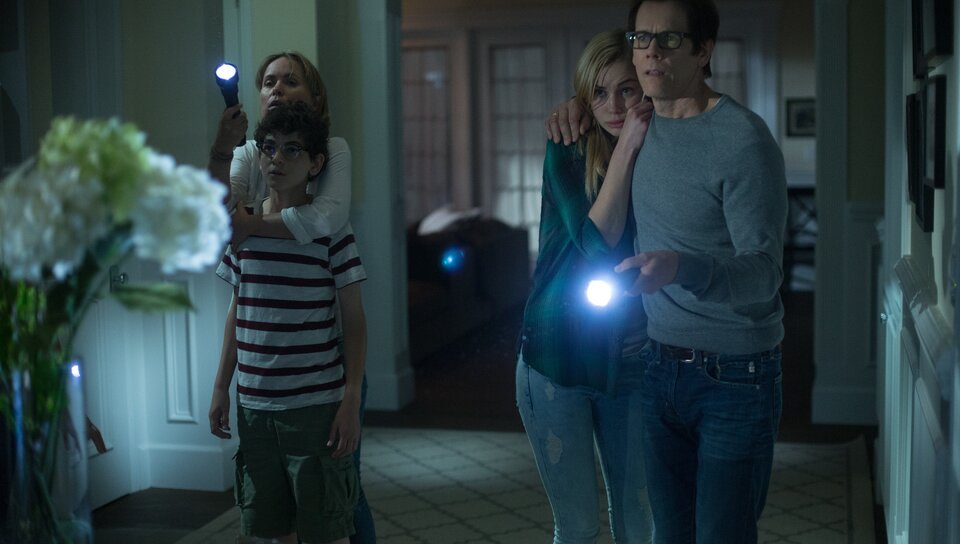
Kevin Bacon and Radha Mitchell play Peter and Bronny Taylor, the parents of a dysfunctional American family—Mitchell is a recovered alcoholic and Bacon once had an affair. Their children consist of a pre-teen boy named Michael (David Mazouz) who lives with a form low-functioning autism and their seventeen-year-old daughter Stephany (Lucy Fry) has body image issues.  Shortly after a trip to the Grand Canyon, where Michael found and secretly brought home some ancient Anasazi artifacts, the family is slowly tormented by a dark presence in their home. Michael’s idiosyncrasies have become more violent and disturbing as everyone else in the house has experienced the psychological terror of strange noises, dirty hand prints, weird smells, barking dogs and self-starting water faucets.  

Forget for a moment that the movie’s handling of Native American culture and the subject of autism is surprisingly regressive, it’s also presented in a way that’s painfully boring and completely without entertainment value. It’s becomes clear that the filmmakers struggled to find any real moments of tension or fear in this lifeless slog and instead tried to make up for its lack of real scares with an annoyingly manipulative score, full of random jolts and ineffective moodiness. Bacon and Mitchell are trying their best to take this insipid, underwritten material seriously and guest star Paul Reiser, as Bacon’s misogynist boss, is trying his hardest to not take it seriously, but even when the character moments occasionally slips into “When a Man Loves a Woman” it’s undercut by the hapless shlock of the rest of the movie and transformed into unintentional Lifetime melodrama.  

Mazous, known by most as young Bruce Wayne on television’s “Gotham,” is given nothing to do here and his performance of a person with a real and complex condition is played with the seriousness of an after-school special. Hell, even the blatant transphobia of the first “Sleepaway Camp,” was at least shocking and audacious, even if a bit dated by today’s standards. Both the story’s autism angle—how are parents supposed to tell the difference between normal-weird and possessed by ancient Native spirts-weird—as well as the production’s Anasazi stylistics are never exploited in way that registers above cliché and tired.

At one point a large dog suddenly attacks the daughter in her bed. That was kind of cool.

It’s hard to say what went wrong here. Director Greg McLean made of my favorite modern horror films with the Aussie serial killer thriller “Wolfe Creek” but none of the style or the simmering tension of that project is transferred into this PG-13, overblown “Goosebumps” book. The shoddy screenplay isn’t helping anyone and the movie’s clear and direct influences loom large in sullen judgement. 

Grade - D

Originally Published in the Idaho State Journal/May-2016

Listen to this week's episode of Jabber and the Drone to hear more conversation about "The Darkness."

Sunday, May 8, 2016

Keanu review

Keegan Michael Key and Jordan Peele have been responsible for a smart and topical breed of socially aware comedy since their days as cast members on the now-defunct sketch comedy show Mad TV. Later, on their eponymously named Comedy Central sketch show “Key and Peele,” they were given the means and freedom to bring their ideas about race, identity, and class to the forefront, with a poignancy that elevated their knack for quotable line-delivery, over-the-top characters and impressive production values.  Now, with their first movie as a duo, “Keanu,” they’ve ported over a lot of the qualities that people expect and appreciate from their brand of humor but not without some noticeable growing-pains as they transition into feature filmmaking.

“Keanu” straddles the line between incisive satire and stoner zaniness and sometimes loses itself in the mediation of both attempts. In what’s the pretty basic framework of a plot—dorky suburban cousins have to pretend to be tough to get a kitten back from a neighboring Los Angeles gang—this premise allows for the duo to further explore their interest in themes such as racial identity, code-switching and the pressure African Americans have to perform masculinity in certain ways.  In the opening of the film we see Jordan Peele’s Rell as a sad-sack lay-about photographer who has recently been dumped by his girlfriend. Posters of famous gangster flicks such as “Heat” and “New Jack City” line his apartment walls. His cousin Clarence (Key) is an uptight corporate team builder and is currently being pressured by his wife to toughen up and break a few rules, as his carefulness is an apparent turn-off. It’s these character traits that are subverted through the film as the characters encounter a real gang leader named Cheddar (Method Man) and infiltrate his group of hard killers, taking to the streets to sling a new party drug.  

Did I also mention the movie’s MacGuffin is an adorable tabby kitten, who, at one point, wears an adorable gold chain and a tiny, adorable do-rag? The kitten is in stark contrast to the hyper-masculine world these gangsters inhabit, as well as the film’s many Jon Woo inspired shoot-outs.  These sorts juxtapositions makeup the screenplay’s comedic engine. Another version of this inversion is the George Michael soundtrack and the many jokes surrounding Clarence’s unabashed love of the famously-out-gay, pop-star of the ‘80s. In a one of the more successful comedy set-pieces, Clarence convinces his new gangster brethren that George Michael is a light-skinned thug who offed his former Wham! partner before embarking on his solo-career. This is crosscut between a downright nerve-racking scene where Rell is caught in a sleazy Hollywood hotel room where drug-deal just gone horribly wrong. This back and forth between the world of the white and the world of black and what is seen as acceptable masculinity and what as seen as weakness is at the heart of what makes this comedy mostly work. Where things fall apart is in the vagueness of the characters as they’re written.

Much of the movie only works as a premise, much like sketch. We know Clarence is a corporate dork and his wife wants him to act stronger only because we are told so in a few bits of brief dialogue before the plot quickly progresses beyond that. Likewise, Rell’s fascination with gangster movies and hard-life as a fantasy is also never explicitly defined. Because their characters are more archetypal their arcs within the story are sometimes difficult to track and the jokes often rely on easy visual gags to make up for the lack of specificity within the script. As the movie stomps through its plot the action-film parody aspect begins to swallow-up the tone, resulting in long stretches of screen time were things become more manic than funny.

While “Keanu” is a commendable effort and entertaining on a base-level, it’s overall impression is slight when stacked against its thematic goals. Key and Peele’s comedic chemistry and the film’s few comedic eccentricities help to keep things light and bouncy and the movie serves as a satisfying distraction, but I can’t help but see through to the smarter, edgier satire that’s begging to break through.    

Grade: B-

Originally Published in the Idaho State Journal/May-2016

Listen to this week's episode of Jabber and the Drone to hear more conversation about "Keanu"

Sunday, April 24, 2016

Jungle Book review

Disney’s reboot/remake of their 1967 classic animated film “The Jungle Book” is a rare achievement, in that it pays lip-service to the most iconic beats of the original feature, while still finding a way of presenting the material without becoming all-together tired and superfluous. Jon Favreau, the character actor turned director of such blockbusters as Marvel’s “Iron Man” and the Christmas comedy “Elf,” has taken on the task of putting this digital IKEA piece together, working within an almost entirely animated environment and using hardly any live-action sets or actors.  This working method of course demands a lot of trust with his crew and the post-production effects team to ensure that his vision, whatever it may be, is represented accurately, and with a multi-million-dollar budget and a small army collaborating to make it work, any number of things can snag on the process. Luckily, things seem to have gone well enough here to bring what is essentially a safe and non-offensive retelling of a slightly better movie.

Neel Sethi gives the only live performance as Mowgli, an orphaned human child who was saved at birth by a black panther named Bagheera (Ben Kingsley). The cat then leaves the boy with a pack of wolves to raise as one of their own cubs, which upsets a tyrannical Tiger names Shere Kahn (Idris Elba) who fears the child might serve as a danger to the Jungle and its current political landscape. It becomes apparent that Mowgli is drawing too much unwanted attention to the pack from Kahn and he offers to leave the forest to be with his own kind in a nearby village. On the way, he is separated from his panther chaperone and falls into the easy life with a lazy bear named Baloo (Bill Murray), nearly escapes a slithering soothsayer named Kaa (Scarlett Johansson) and is trapped by a massive orangutan mobster named King Loui (Christopher Walken).  

There aren’t enough risks taken with this project to be proud of its sustainability as a story, but there’s just enough love and passion put into the production effort to accept its purely corporate purpose for existing. The animal animation is convincing and the CGI jungle environments are beautifully rendered. The team involved did a wonderful job creating a digitally sculpted world that has weight and tactility and Sethi is able to interact with it seamlessly. The celebrity voice cast is given updated dialogue to work with and they all fit their parts well. Murray’s Baloo is warm and inviting and Elba’s Kahn is genuinely intimidating—in an age appropriate, Disney sort of way.

The plot is familiar but it’s comfortable in its own skin and moves naturally. Though largely inspired by the 60s animated feature, the few divergences it takes seem to be cued directly from Disney’s other jungle adventure, The Lion King, and the two stories share enough structural similarities to mix without complications. Sometimes the movie is confused as to whether or not it should include the iconic musical sequences of its predecessor, and most of the it doesn’t, which only makes it all the more awkward when a song or two is attempted without the musical foundation to lay them on. Outside of that hang-up “The Jungle Book” plays like a good time a community theater production of your favorite play – it’s doesn’t have the zest or originality of its reference point, but it’s an acceptable and faithful recreation.


Grade - B- 

Originally Published in the Idaho State Journal/April-2016

Listen to this week's episode of Jabber and the Drone to hear more conversation about "Jungle Book."

Sunday, April 17, 2016

Midnight Special review

Jeff Nichols is a filmmaker whose work often reflects the lives of working class Middle-Americans. He’s also interested in contrasting the realistic, and often hard world of U.S. laborers within the genre trappings of their own populist cinema. In the case of “Midnight Special,” a title that suggest a certain type of boilerplate, pulp storytelling, Nichols has captured the uncanny sense of otherworldly danger and childlike wonder that Amblin-era Steven Spielberg branded in the late 1970s and early 80s, but does so while retaining his own sense of minimalist thriller direction.

The film begins with Michael Shannon and Joel Edgerton as two men who’re armed and on the run from the police with a child named Alton (Jaiden Leiberher), who’s stowed away in the back of their pickup, reading comic books with a flashlight under a sheet. Shannon plays the boy’s biological father who has captured Alton from an unusual foster home situation, ran by a religious zealot/cult-leader who believes the child in question is part of a holy prophecy. This might not the most outrageous theory, as the government has their own interests in Alton because his psychic ramblings have been linked to important U.S. intelligence, making him and his father suspects of treason. Shannon believes that that they have to take Alton to a set mysterious coordinates before the boy’s strange, and dangerous abilities weaken him to point of certain death.

Like Spielberg’s 1977 classic “Close Encounters of the Third Kind”—of which, alongside “E.T.”, this owes much of its structure and aesthetic—Nichols’ allows this science-fiction thriller to reveal itself slowly, working from its realistic exterior to its fantastic core as the story blossoms, uncovering more popcorn-bait with every piece of new information the script lays out. The stakes are immediately apparent which drives the story forward. A seductively dark sense of mystery shrouds the picture, taking place on the deserted desert roads of twilight Texas. Though Nichols’ employs more special-effects here than in his previous films, they are used sparingly and usually to good effect. In one scene we are shown what looks to be meteorites falling from the sky, first as small twinkling lights in the distance and then huge fireballs that violently and convincingly annihilates the rural gas station our characters are stopped at. We later find out this was a satellite that Alton managed to telekinetically crash through our atmosphere.

Scenes like this are captivating in an uneasy way and provides gravitas to the movie’s pulpier elements. That’s why it’s all the more disappointing when the director shows us too much his hand and robs us of the film’s mounting tension by delving further into its sci-fi world-building, with an ending that registers far sillier than the concealed intrigue teased before that point.

Despite its clanging and on-the-nose conclusion “Midnight Special” is a compelling dark fantasy, full of eerie set-ups, an economically written screenplay and a host of great performances, including Adam Driver as a curious NSA agent who’s in over his head. Nichols again proves himself to be an exciting talent who fully understands the unconscious effect classic Hollywood genre filmmaking has had on lives of rural America.

Grade: B+

Originally Published in the Idaho State Journal/April-2016

Listen to this week's episode of Jabber and the Drone to hear more conversation about "Midnight Special."