Monday, July 27, 2015

Ant Man review

Marvel’s latest entree “Ant Man” is a curious bobble of a film that dares a non-comic-initiated audience to hold on to the general appeal of charismatic actors bouncing around in CGI environments without the comfort or ease of John Wayne approved heroic posturing to get them through. What I’m trying to say is this movie is unabashedly geeky, in way that Marvel Studios might have underestimated a regular movie going audience to roll with without noticing. And good for it! “Guardians of the Galaxy” was definitely weird—what with talking trees and smart-alecky raccoons and what-not—but it was also nestled in a space-opera/fantasy trope that the average beer-drinking, football-throwing American’s can recognize from their childhoods as far back as “Star Wars.”  “Ant Man,” on the other hand, is a little more niche.

Michael Douglas plays Hank Pym, a scientist who learned how to shrink himself down while still having the ability to fight with the strength of ten men. He was forced to leave his secret government agency, where he fought as a spy, after he learned that the wrong developers wanted to use his tech for dangerous, military purposes. Fast-forward thirty years into the future and a younger protégée of Pym named Darren Cross (“Corey Stoll) has seemed to develop a similar enough technology that Pym feels the need to interject.  Enter a white-caller cat-burgler and hacker named Scott Lange (“Paul Rudd”), who’s trying to get his life and family together after finally being released from prison. He’s tricked by Pym into breaking his parole to steal the Ant Man shrinking suit, and after some light blackmail he  agrees to help the older inventor break into Cross’s facility to destroy the progress of the dangerous Yellowjacket.

Despite scenes of Paul Rudd learning how to telepathically control ants into sugaring his coffee or flying on the back of harnessed insects, this is basically a heist movie at its core, with a mark, a plan of action, and the booty that needs to be retrieved. What director Peyton Reed does well with this material is he brings us into this idiosyncratic world through the eyes of the affable Rudd as he bumbles his way into becoming a passive hero. Though maybe he’s a bit too passive at times - to the point of almost having no agency within the plot. Nevertheless, he’s charming to watch and he knows how to hit the comedic beats that’s laced throughout the narrative.  Moments between him and his street-wise, criminal friends—Michael Pena almost steals the entire movie away with only a handful of scenes—keep you smiling in good spirits, even when you get the feeling that the movie isn’t entirely invested in its own brand.

Things don’t work quite as well when the story shifts into more character driven territories, particularly anything involving the vague sub-plot dealing with Pym and his estranged daughter Hope (Evangeline Lilly) who is working within the offices of her father’s enemy, while secretly bringing back useful intelligence. When it came to their emotional arc, the revelation of how Pym lost his wife, or even Lang’s difficult relationship with his ex-wife and the daughter he’s barely allowed to visit, I never cared quite as much as the movie wanted me to. It’s clear that the writers wanted to ground the superhero pulp and the comedy with a thematic parallel between Lang and Pym about what it means to be a responsible and present father, but these underwritten moments register more as plot motivators than they do real character builders.

Still, “Ant Man” is a fun and unassuming summer blockbuster that’s refreshingly low-stakes and casual for Marvel action movie. The set pieces are creative and occasionally there’s stylistic flashes of a better movie that might have been possible had the studio let things bake a little longer. As it stands the heist plot could have paid off more satisfyingly and characters could have been more clearly defined, but overall this was a totally inoffensive offering, if not somewhat banal.

Grade: B -

Originally Published in the Idaho State Journal/Jul-2015

Terminator Genysis review


Time travel is the ultimate continuity etcho-sketch. It doesn’t matter how many time-lines you’ve started or how much plot there is to consider, if you set the clock back far enough you can shake the whole thing clean and start all over again. What’s disappointing about “Terminator: Genisys,” the fifth film in this wildly-inconsistent sci-fi franchise, is that every time they start over, they somehow manage to keep telling the same story.

Longtime fans of the series will immediately recognize the tropes and familiar set-ups in this film. John Conner, now played by “Dawn of the Planet of the Apes” star Jason Clarke, is the leader of the human resistance of the future robocalypse, after A.I. was made possible by a shady tech organization called Skynet. After the rebels find a time machine built by androids to kill Conner’s mother Sarah Conner (Emilia Clarke) in the past, human soldier Kyle Reese (Jai Courtney) is sent back in time to 1984 where he must protect the future of their cause.

Yada yada yada, we all know this, but where “Terminator: Genisys,” flips the script, is by pre-supposing that the machines already knew that this counter attack would happen, causing them to send a lethal, liquid-metal android (Byung-hun Lee) back in time to keep their plan in motion, thus inspiring the human resistance to send a reprogrammed Terminator even further back in time to prepare Sarah Conner for the worst possible scenarios. Wait…that’s not different at all. That’s just plot of “Terminator 2: Judgement Day.”

What THIS movie does differently is that the robots create a new safe-guard to outsmart Reese, Sarah Conner and the weirdly-aged Arnold Schwarzenegger father-bot from stopping the atomic destruction of Judgement Day—now rescheduled from 1997 to 2017—by sending back a new opponent with personal ties to the entire group.

The plot is needlessly convoluted, especially if you’re still trying to keep up with the continuity of the franchise, but the dynamics of the story are so familiar that, narratively speaking, the whole thing feels like a video game starting over from the last save-point. Despite slight variations that occur, such as newer ideas about cellphone and internet privacy/NSA paranoia, the majority of the movie still hinges on clunky action set-pieces and lazy fan-service. I’m all for timely metaphors in my science fiction, but the zeitgeist-y gesturing here is never committed to or integrated well enough to give the film any sense purpose or real gravity.  

James Cameron’s two Terminator films of the 1980s and early-90s were dark and misanthropic genre movies that reflected society’s fear of the unmitigated progress of technology amidst the slow fade of humanity within the rise of corporate competition. This film, however, is a bottom-line money-machine, banking on pre-recognized iconography rather than creativity.  With that said, Jason and Emelia Clarke are fine enough in their parts, even as they deliver some of the most preposterously bad, cliché-ridden dialogue heard this summer. Schwarzenegger’s happy to play along, but looks about as tired as the material he’s working with, while Jai Courtney, who played Bruce Willis’ son in the equally-misbegotten “A Good Day to Die Hard,” has still yet to convince me of his appeal.

“Terminator: Genisys” is a bad movie but not offensively so. The action scenes are marginally fun and the aesthetic choice to make the film look and feel dingier and grittier than the usual 3D/IMAX, millennial blockbuster was something I could appreciate, even if,  like so many other reboots and relaunches of late, everything here felt rushed and cobbled together by focus-group notes and marketing speculation.


Grade: D+

Originally Published in the Idaho State Journal/July-2015

Friday, June 26, 2015

Inside Out review


With the release of Pixar’s latest film “Inside Out,” there’s been a lot of discussion by critics and fans about where the film stands among the best and worst within the studio’s animated catalog. Usually this only happens if they release something remarkable on either side of the quality binary. Luckily for us, and the Disney affiliate, this is a near-perfect movie and faith restorer for those who felt something lacking from their last three efforts; “Cars 2,” “Brave,” and “Monsters University.”

It seems redundant to call a movie about the inner workings of human emotions emotional, but director/co-writer Pete Doctor—the same guy who ripped our hearts out with his 2009 feature “Up”—knows a thing or two about how to cut to core of the human experience through the whimsical mechanics of animated fantasy. 

The fantastic world of “Inside Out” takes place within the mind of a 12 year old girl named Riley (Kaitlyn Dias) who is struggling to adjust to new conditions when her parents move her from her friends and her hockey team in Minnesota into a cramped townhouse in San Francisco. Insider her head are five distinct emotions, Joy (Amy Poehler), Anger (Lewis Black), Fear (Bill Hader), Disgust (Mindy Kaling) and then there’s Sadness (Phyllis Smith), who’s often misunderstood and ostracized from the group. When Sadness accidentally changes the emotional make-up of one of Riley’s core memories, she and Joy must travel to the farthest reaches of memory storage to fix the problem before their host becomes chronically depressed and makes a bad decision.

What strikes me most about this charming and vulnerable film is how sophisticated and complex the plot is without ever losing sight of the characters’ personal story. When it comes to explaining how memories are formed and stored, the roles and duties of each emotion, the infrastructure of Riley’s personality traits, and the rules of how this world functions, the movie never loses sight of the emotional arch that bonds all of these screenwriting chutes and ladders. Never mind the fact that there’s essentially two different stories going on simultaneously that are interconnected and effected by these rules.  A lesser filmmaker with a weaker vision could have let all this exposition and world-building overwhelm the characters and freeze out any chance for the audience to connect.  The fact that Doctor managed to make all of it work without the movie feeling muddled or labored makes this a truly special achievement.

Thematically, like “Up,” “Inside Out” is interested in exploring the difficult truths of accepting pain and loss and how these feelings are inexorably linked with the joyful highlights of our development. Opposites create opposites and each emotion has a function that keeps us balanced and grounded, even if they don’t always feel good when we’re feeling them. Again, these themes may seem broad and obvious when you state them out loud, but when they’re manifested as actual characters with their own goals to achieve within the plot, the allegorical nature of the story has a lot of work to do to make it seem as effortless as it does.  Much of this is achieved through the bright and breezy animated style of the film.

Compared to the ocean vistas of “Finding Nemo” or the vast, post-apocalyptic ruins of “Wall-E,” some might find this cartoony, Care-Bear-ish aesthetic visually less ambitious, and it is, but had the animation been overly textured or severely detailed it might have added more weight to what was already a tonally and structurally heavy film.  

Like all of the best Pixar features, “Inside Out” bridges the parent-child viewing experience in a way that doesn’t feel like they’re throwing a bone to the adults who’re forced to bring their kids to the multiplex. It’s funny, tender, imaginative, painfully true, and it’s likely to remain one of the best films of the year.


Grade: A+

Originally Published in the Idaho State Journal/June-2015

Saturday, June 20, 2015

Jurassic World review

Steven Spielberg’s “Jurassic Park” is a monument in populist filmmaking, executed by a guy who’s made a few of those in his career. Released in 1993, it was one of the first landmarks of computer animation and one of the last in robotic puppetry, and on both accounts it still looks more convincing than almost anything before or after it's release. It might not be the most thematically heavy or ‘important’ movie that Spielberg ever made—it’s easy to forget that “Schindler’s List” came out the same year, winning best picture—but it may very well be the most satisfying and tightly constructed effects movie within his catalog.

The damn thing came out 22 years ago and it still holds up! In fact, it’s so good that no amount of mediocre or unnecessary sequels has seemed to damage its reputation, which is a relief since “Jurassic World” is the worst and certainly most expensive offender.

While “Jurassic Park” was adapted from a slab of airport fiction by writer Michael Crichton, “Jurassic World” just seems to be an adaption of “Jurassic Park.” In the first film Sam Neil was forced to deal with his fear of raising children by having to save the lives of the park owner’s grandchildren. Here, Bryce Dallas Howard plays Claire, an aloof, child-phobic careerist, working for a now rebooted and revamped park that’s totally open to the public. She’s then forced to deal with her priorities when one of the genetically-enhanced super-dinos escapes from its enclosure with her neglected nephews (Nick Robertson, Ty Simpkin) lost in the park. Chris Pratt plays Owen, a big-hearted, hard-headed Velociraptor trainer who volunteers to help Claire find the kids before they’re turned into lunch. Pratt’s doing his best to choke down some exceedingly bad dialogue, with his tongue firmly pressed against his cheek, but it’s hard to ignore that his paper-thin character is essentially a combination of Jeff Goldblum’s flirty, rock-star scientist character Ian Malcolm and the somewhat underwritten Australian raptor specialist from the first film.

These similarities and call-backs are played all throughout the movie in way that feels less like loving homage and more like a shrewdly devised appeal to nostalgia, and it's a serious problem when a movie spends more time on fan service than it does telling its own story. Jake Johnson playing  a handsome but useless nerd wearing the old logo on his T-Shirt in the park’s control room is a reasonable wink, but the complete restaging of the first's film's rainy Jeep scene, with the new kids now attacked in a Plexiglas, motorized ball, comes off as desperate and irritating. these echos go on and on. Instead of slowing down the plot to inspect a sick triceratops we now have an injured (fake looking) longneck of some sort; Vincent D'onofrio plays the new greedy industrialist who’s looking to exploit the dinosaurs, and we’re even given another chaos-theory speech.

Making matters worse, the film is constantly alluding to its own themes by employing the most on-the-nose references, where characters actually ask out-loud why kids these days can’t be entertained by regular, cataloged dinosaurs. Part of the plot deals with corporations that engineer their own breeds of designer dinosaurs so that they can own a piece of park though sponsorship, and the film has the gall to portray this as soulless cynicism while bombarding us with vulgar product placement--never mind the fact that the movie itself was made by a studio owned by a massive media corporation (NBC/Universal).

It could be argued that the film’s subtext was supposed to be read as cleverly-coded commentary on the studio system by an indie filmmaker (“Safety Not Guaranteed” director Colin Trevorrow),  giving the middle finger to the ‘man’ from within, if it weren’t so bloody obvious, hypocritical and trite in it's execution.

The best moments of “Jurassic World” are the ones that require no attachment to the characters--as they barely exist—and instead lean on the campy joy of mid-level monster animation. When pterodactyls are released from their aviary and start to swarm on crowds of tourists, the movie almost resembles the no-plot-no-consequence joy of Syfy Channel mock-busters like “Birdemic” and “Sharknado.” At its worst, it’s lazily written, blandly acted, tonally confused, and achingly mercenary.

Grade - D+

Originally Published in the idaho State Journal/May-2015

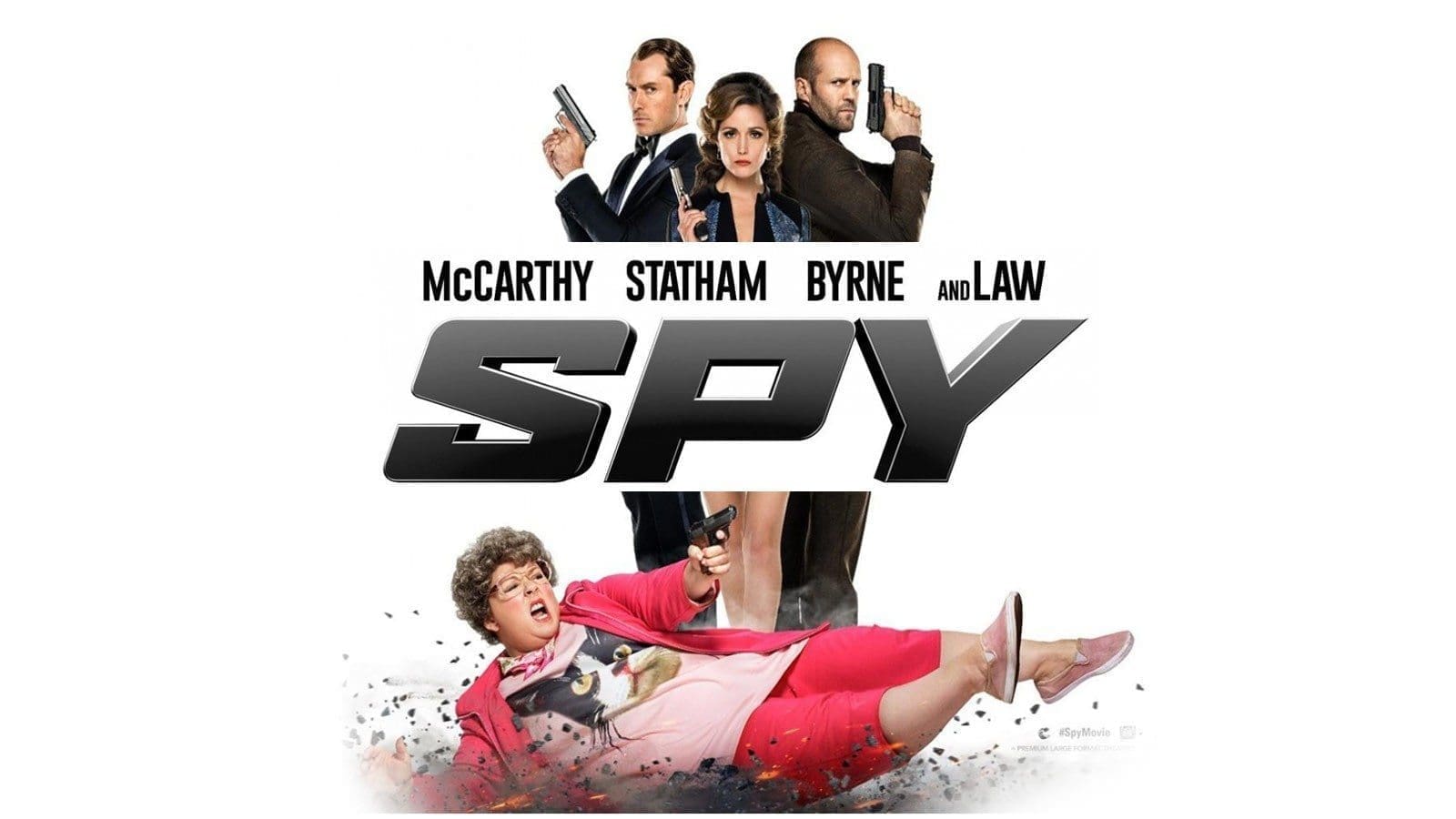
Spy review

Melissa McCarthy stars in Paul Feig’s new action-comedy “Spy” and unbelievably they turn out one of their strongest collaborations yet. I say unbelievable because McCarthy’s post “Bridesmaids” career has been a bit hit or miss with successes like Feig’s cop-comedy follow-up “The Heat” and commercial and critical flops like last year’s “Tammy,” an awkwardly pitched passion project co-written by the actress and her husband.  But what makes “Spy” mostly work is that it knows that McCarthy is an actor’s booster-pack. Having worked for years on television’s “Gilmore Girls” she understands scene dynamics and how to play off of her costars in a way that makes her look good and them look better.

McCarthy plays Susan Cooper, the eyes and ears of a suave CIA operative named Bradley Fine (Jude Law). While he’s sneaking around undercover, Susan, who secretly carries a school-girl crush on the agent, tells him how to get in and out of sticky situations via headphone microphone on her computer screen, miles away in a safe rodent-infested office. After Fine is taken out of commission and it is revealed that his killer Rayna Boyanov (Rose Byrne) is hunting other known operatives, Susan’s inconspicuous demeanor and her lack of field experiences makes her the ideal candidate to track down the whereabouts of a dangerous arms dealer named Sergio De Luca (Bobby Cannavalle).

Though McCarthy is the only actor featured on all the posters and the marketing materials mostly show her undercover as an elderly woman in a curly wig and giant glasses, this is not a “Big Mamas House” styled, lazy, costume-comedy. The scenes of her in frump-drag are minimal and the comedy generally comes from the conversational, matter-of-fact riffing performed by the eclectic cast. Jason Statham does his best work in years playing against his own stereotype as a hard-ass killer, delivering some of the strongest and funniest dialogue in the movie. Likewise, the catty exchanges between McCarthy and Byrne are bound to become meme-ready in the coming months, with a crop of shareable Youtube clips.  Allison Janney is reliable as ever as their stone-faced superior and British actress Miranda Hart is entertaining in small doses, until they begins to overuse her.

The film is quite funny, and it knows that it is, and sometimes the problem with self-referential comedies is that they can become too enamored by their own appeal. Unfortunately “Spy” sometimes suffers from the over-exploiting its best jokes. Peter Serafinowicz' horny Italian spy character who can’t keep his hands off of the annoyed protagonist is a cheap gag that never works and almost never ends as soon as it’s introduced.

Sometimes the film can’t decide when to make McCarthy the strong, capable action hero or the bumbling, flakey butt of the joke. McCarthy is game to do either to the best of her abilities, but nobody behind the camera seemed aware that these portrayals clang against each other in the context of the story.  After we’ve seen her help Jude Law through very difficult situations, later in the film there are other moments where she makes the most bone-headed choices for no discernible reason other than to activate a joke.

Nevertheless, even though “Spy” stumbles occasionally, it always managed to surprise me with sharp dialogue, great performances and a real commitment to its filmic references.


Grade: B-

Originally Published in the Idaho State Journal/June-2015

Tomorrowland review

Disney’s “Tomorrowland” is the type of failure of a movie that leaves me more disappointed than angry. The potential was there; great cast, great director, and a fairly interesting set-up, but the screenplay by “Prometheus” scribe Damon Lindelof is so disoriented and terribly organized that it often blocked the narrative flow with a series of long, ponderous scenes that have almost no impact on the story that director Brad Bird is struggling to move along. That said, Lindelof cannot take the soul blame, despite being a multiple offender on this account.

Having established his name in animation with “The Iron Giant” and Pixar favorites like “Ratatouille” and “The Incredibles,”and having proven that he can transfer his visual storytelling skills to live action with the surprisingly entertaining “Mission Impossible: Ghost Protocol,” Brad Bird’s staggering ineptitude to keep this story on its tracks is depressing, even when there’s occasional fun to be had along the way.

The movie begins in the past and the future simultaneously, as George Clooney’s character Frank Walker introduces his bright-eyed childhood self; a would-be inventor who’s trying to get his homemade rocket pack into an exhibit at the World’s Fair. This is where Bird introduces us to the magic world of “Tomorrowland,” as little Frank stows away into a secret portal within Disney’s It’s a Small World ride. We then flash forward to the present day, where our world is rife with war, hunger, political stress, global-warming and other depressing realities, but Casey Newton (Britt Robertson)  is a high-school tech nerd who’s trying to stay positive even as her own father—a NASA engineer—is struggling to keep his job. After being let out of jail for tampering with a government rocket launch, she’s invited by the mysterious elite to visit “Tomorrowland” via a magic pin. Casey must find the now-disgruntled and paranoid Frank Walker to get there and to convince him that the world is worth saving.

We get a glimpse of the utopian tech universe of “Tomorrowland” through flashes and flash-back, but it takes nearly 90 minutes to get there with our characters. Lindelof spends so much time front-loading the script with exposition and backstory that the plot becomes lop-sided, saving the most valuable information for the end of the movie, after things have already shifted into auto-pilot for a special-effects climax.  The production design and the architecture of the action sequences speaks to the raw talent Bird has to keep things alive and full of wonder, but when the story breaks to a near halt every twenty minutes to explain a piece of technology or to deviate into strange asides about Clooney’s prickly relationship with an android girl named Athena (Raffey Cassidy), the direction of the narrative becomes encumbered with needless obstructions.

Despite sporadic moments of exuberance and creativity, the movie is undercut by the fast-slow-fast pacing and the multiple time-line editing. It has some interesting things to say about humanity’s cognitive dissonance when it comes to our unbelievable technological achievements and our absolute ignorance when it comes to maintaining our planet, but the themes drive the story in a way that feels preachy and reductive. Clooney and Robertson have good chemistry and in theory a road movie between the two should have been a lot of fun; it’s only a shame that “Tomorrowland” neither commits to the purposeful episodic structure of a yellow-brick-road narrative or at least something streamlined enough to keep my attention.


Grade: C-

Originally Published in the Idaho State Journal/May-2015

Sunday, May 24, 2015

Mad Max: Fury Road review

             George Miller’s “Mad Max: Fury Road” is a carnival of choreographed chaos, a celebration of blackly humorous ultra-violence, and an unbridled release of frenzied fetishism. It’s a movie that isn’t holding anything back or practicing any form of restraint, yet somehow manages to fit in a story that flows effortlessly from one freak-show set-piece to another. Even more astounding is the tonal balance displayed between the film’s cartoonish, hard-R viciousness and an operatic whimsy that almost seems childlike and gleeful in all its bright-eyed mania.

           Writer/Director Miller returns to the mythology that launched his career from being an ozploitation cult curiosity to a reliable Hollywood mainstay. After introducing the world to the desolate wastelands of the post-apocalypse in 1979’s “Mad Max,” 1981’s “Mad Max 2: Road Warrior,” and 1985’s “Mad Max: Beyond Thunderdome” Miller went on to defy his cinematic first impressions with mid-level dramas like “Lorenzo’s Oil” and family movies like “Happy Feet.”  Now, after 30 years away from the franchise that propelled him and actor Mel Gibson, he has comes back to the Mad Max world as an accomplished technical filmmaker with new vigor for visual storytelling.

           The ruggedly handsome Max, played previously by a much-younger Gibson, has now been replaced by a gruffer, more wild-eyed version of the lone wanderer, played by English actor Tom Hardy. Here Max rambles into the wrong situation again, as he finds himself amongst a devious cult-leader/dictatorial sultan named Immortan Joe (Hugh Keays-Burn). The disfigured king rules an army of bald, suicidal soldiers who are begging for the chance to give their lives in glorious destruction, as they race their rusted, modified death machines across the desert landscape.  Max is then taken hostage and chained to front of a car manned by an eager try-hard named Nux (Nicholas Hoult. They’re connected by chains threaded with a long intravenous tube allowing the two to share blood as Nux eventually loses control of his vehicle amidst all of the destruction and ends up tagging along even as our hero manages to escape the relentless death-ride.

           Max’s hapless journey leads him to Furiosa (Charlize Theron), a selfless warrior-woman transporting a truck full of abused sex slaves who were forced to breed with the evil ruler. The hero begrudgingly decide to join their cause if it means using their vehicle to find a sliver of earth unfazed by the blight of nuclear devastation. Not unlike “Road Warrior,” this act of defiance causes a horde of pursuers to charge the truck in hopes to stop the rescue mission before the desperate party can reach their destination.

          The movie is dominated by a series of extended chase scenes involving the complicated blocking of several stunt vehicles, racing along at unknown speeds. There are only a few moments where the movie slows down to explain things and in between those moments we are treated to a three-ring circus of high-octane shoot-outs, people pole-vaulting from one moving vehicle to the next, and a hostile environment that seems to glisten everyone in visible, sun-scorched agony. 
  
         Interestingly enough, this installment seems to be less influenced by the tone and style of the previous films within the franchise and more inspired by the many movies that shamelessly aped the genre tropes they established. The brutality of Neil Marshall’s 2008 end of the world pastiche “Doomsday” echoes in the background. Likewise, in his Post-Modern western “The Good, The Bad, The Weird,” Kim Jee-Woon’s restaging of the climactic vehicle pursuit sequence from Miller’s own “Road Warrior” informs the amped up, hyper-edited language of the chase scenes in “Fury Road.” The snake is eating its own tail maybe, but done with surprising effect.

          Even well-meaning pulpy schlock such as Kevin Costner’s “Waterworld” and the Vin Diesel’s Riddick movies seem present in the mythological make-up of this long-awaited sequel. Yet unlike Disney’s tedious “John Carter” film, which suffered from too many better movies having the privilege ripping-off its original source material first, “Fury Road” took the relevant notes from its cinematic offspring to reinforce its sturdy framework. 

         It’s easy to speak of “Fury Road” in hyperbole because it’s made with the kind of bravura that baits a loud response.  It’s also made really, really well, despite being filled with the type of non-stop action pornography that normally disengages the critical mind—ala the headache inducing “Transformers” saga or Gore Verbinski’s messy and over-long “The Lone Ranger.” Instead of padding a lazy screenplay with a joyless gauze of carelessly edited cacophony, Miller adds a musicality and lyricism to his destruction that feels inspired and joyful at the visual possibilities of kinetic action. What’s more, the detail and attention paid to the film’s production design and world-building is so specific that your eye is always given something to focus in on and dissect.

         Fans should enjoy the bizarre inventiveness exemplified in the movie’s grotesque makeup and the junk-punk aesthetic of the weaponized cars and motorcycles. There are other, stranger inclusions such as a character’s spraying their mouths with silver paint, and a ghoulish slave known only as The Doof Warrior, who, while chained to the back of a truck lined with a wall of amplifiers, plays the movie’s score with a double-necked electric guitar/flame thrower. Even as the movie barrels along there is also something briefly exhibited and never explained that implies a rich science-fiction tapestry and history. The world of “Fury Road” is one that is lived in and tangible. Unlike most modern actioners that are swooned too easily by the convenience of computer generated spectacle, and whose worlds feel so produced and overdesigned that they exhaust the audience’s capacity for imagination, Miller integrates his graphics with weighty, practical effects. Even a massive sand-storm—the film’s one CGI money-shot—only takes over the frame after a long build-up that sufficiently earns its inclusion.

          Much of the movie’s overwhelming look comes from the stunning cinematography by John Seale. The desert wasteland becomes a full-fledged character and perhaps the film’s most severe antagonist. Like “Dune” and “Star Wars” and the Technicolor westerns they drew their inspiration from, Seal’s wastelands are bathed in brilliant lighting, sometimes shimmering like a vast ocean and other times shot with an air of desolation, where even a tumbleweed couldn’t survive. The landscape’s effecting mood is only enhanced by artful color-correction that fills the frame with lavish splashes of red and orange. The film’s small batch of night scenes also contrast nicely with the warmer tones of the action sequences that dominate the run-time.

          Like all good science fiction, audiences will project whatever political point of view feels most evident to them at the time.  Some of that comes from intentionality by the filmmakers and some of that will come from the context a viewer brings with them into the theater. “Fury Road” is a pure, and relatively simple action movie that has enough political suggestions to pull at that a person extrapolate something deeper than what is plainly stated in the text. Some might see a gang of suicide driven murderers who recklessly end their own lives in collateral destruction so that they might realize a warrior afterlife and see a middle-east allegory in all of this. Others might see this as a post-occupy movie, as Immortan Joe hordes his kingdom’s  precious water supply from the peasants who are grateful for whatever generosity he might feel willing to exhibit.

         A lot has been written about the feminist subtext of the film and I’m not going deny that gender sociology plays a big part in the narrative, but I’m also reluctant to call this an overtly political movie, as the plot really only serves to function its technicality as a thrill-ride. There’s been a long tradition in pulp literature regarding strong Amazonian tribal women, and wild matriarchies, and I think Miller’s story, while perhaps subverting some of those tropes within a neo-liberal context, is more interested in exploring those fictional avenues. That said, this film helps to remind us that there’s nothing wrong with a mindless ride, so long as it’s as fun and creative as this.

         While “Mad Max: Fury Road” may have more in common with the extreme, post-911 cinema of the last decade than it does the comparatively quieter, Akira Kurosawa inflected “Road Warrior” of the 1980s, the spirit of the franchise has been fully revived with a blast of uncompromised adrenaline. This, without a doubt, is an excessive and indulgent film, but it’s also just weird and deranged enough to suggest that Miller wasn’t worried about alienating the uninitiated. And it’s that kind of audacity that saves the film from blockbuster cynicism

Grade: B+

Originally Published (in part) in the Idaho State Journal/May-2015