Sunday, May 24, 2015

Mad Max: Fury Road review

             George Miller’s “Mad Max: Fury Road” is a carnival of choreographed chaos, a celebration of blackly humorous ultra-violence, and an unbridled release of frenzied fetishism. It’s a movie that isn’t holding anything back or practicing any form of restraint, yet somehow manages to fit in a story that flows effortlessly from one freak-show set-piece to another. Even more astounding is the tonal balance displayed between the film’s cartoonish, hard-R viciousness and an operatic whimsy that almost seems childlike and gleeful in all its bright-eyed mania.

           Writer/Director Miller returns to the mythology that launched his career from being an ozploitation cult curiosity to a reliable Hollywood mainstay. After introducing the world to the desolate wastelands of the post-apocalypse in 1979’s “Mad Max,” 1981’s “Mad Max 2: Road Warrior,” and 1985’s “Mad Max: Beyond Thunderdome” Miller went on to defy his cinematic first impressions with mid-level dramas like “Lorenzo’s Oil” and family movies like “Happy Feet.”  Now, after 30 years away from the franchise that propelled him and actor Mel Gibson, he has comes back to the Mad Max world as an accomplished technical filmmaker with new vigor for visual storytelling.

           The ruggedly handsome Max, played previously by a much-younger Gibson, has now been replaced by a gruffer, more wild-eyed version of the lone wanderer, played by English actor Tom Hardy. Here Max rambles into the wrong situation again, as he finds himself amongst a devious cult-leader/dictatorial sultan named Immortan Joe (Hugh Keays-Burn). The disfigured king rules an army of bald, suicidal soldiers who are begging for the chance to give their lives in glorious destruction, as they race their rusted, modified death machines across the desert landscape.  Max is then taken hostage and chained to front of a car manned by an eager try-hard named Nux (Nicholas Hoult. They’re connected by chains threaded with a long intravenous tube allowing the two to share blood as Nux eventually loses control of his vehicle amidst all of the destruction and ends up tagging along even as our hero manages to escape the relentless death-ride.

           Max’s hapless journey leads him to Furiosa (Charlize Theron), a selfless warrior-woman transporting a truck full of abused sex slaves who were forced to breed with the evil ruler. The hero begrudgingly decide to join their cause if it means using their vehicle to find a sliver of earth unfazed by the blight of nuclear devastation. Not unlike “Road Warrior,” this act of defiance causes a horde of pursuers to charge the truck in hopes to stop the rescue mission before the desperate party can reach their destination.

          The movie is dominated by a series of extended chase scenes involving the complicated blocking of several stunt vehicles, racing along at unknown speeds. There are only a few moments where the movie slows down to explain things and in between those moments we are treated to a three-ring circus of high-octane shoot-outs, people pole-vaulting from one moving vehicle to the next, and a hostile environment that seems to glisten everyone in visible, sun-scorched agony. 
  
         Interestingly enough, this installment seems to be less influenced by the tone and style of the previous films within the franchise and more inspired by the many movies that shamelessly aped the genre tropes they established. The brutality of Neil Marshall’s 2008 end of the world pastiche “Doomsday” echoes in the background. Likewise, in his Post-Modern western “The Good, The Bad, The Weird,” Kim Jee-Woon’s restaging of the climactic vehicle pursuit sequence from Miller’s own “Road Warrior” informs the amped up, hyper-edited language of the chase scenes in “Fury Road.” The snake is eating its own tail maybe, but done with surprising effect.

          Even well-meaning pulpy schlock such as Kevin Costner’s “Waterworld” and the Vin Diesel’s Riddick movies seem present in the mythological make-up of this long-awaited sequel. Yet unlike Disney’s tedious “John Carter” film, which suffered from too many better movies having the privilege ripping-off its original source material first, “Fury Road” took the relevant notes from its cinematic offspring to reinforce its sturdy framework. 

         It’s easy to speak of “Fury Road” in hyperbole because it’s made with the kind of bravura that baits a loud response.  It’s also made really, really well, despite being filled with the type of non-stop action pornography that normally disengages the critical mind—ala the headache inducing “Transformers” saga or Gore Verbinski’s messy and over-long “The Lone Ranger.” Instead of padding a lazy screenplay with a joyless gauze of carelessly edited cacophony, Miller adds a musicality and lyricism to his destruction that feels inspired and joyful at the visual possibilities of kinetic action. What’s more, the detail and attention paid to the film’s production design and world-building is so specific that your eye is always given something to focus in on and dissect.

         Fans should enjoy the bizarre inventiveness exemplified in the movie’s grotesque makeup and the junk-punk aesthetic of the weaponized cars and motorcycles. There are other, stranger inclusions such as a character’s spraying their mouths with silver paint, and a ghoulish slave known only as The Doof Warrior, who, while chained to the back of a truck lined with a wall of amplifiers, plays the movie’s score with a double-necked electric guitar/flame thrower. Even as the movie barrels along there is also something briefly exhibited and never explained that implies a rich science-fiction tapestry and history. The world of “Fury Road” is one that is lived in and tangible. Unlike most modern actioners that are swooned too easily by the convenience of computer generated spectacle, and whose worlds feel so produced and overdesigned that they exhaust the audience’s capacity for imagination, Miller integrates his graphics with weighty, practical effects. Even a massive sand-storm—the film’s one CGI money-shot—only takes over the frame after a long build-up that sufficiently earns its inclusion.

          Much of the movie’s overwhelming look comes from the stunning cinematography by John Seale. The desert wasteland becomes a full-fledged character and perhaps the film’s most severe antagonist. Like “Dune” and “Star Wars” and the Technicolor westerns they drew their inspiration from, Seal’s wastelands are bathed in brilliant lighting, sometimes shimmering like a vast ocean and other times shot with an air of desolation, where even a tumbleweed couldn’t survive. The landscape’s effecting mood is only enhanced by artful color-correction that fills the frame with lavish splashes of red and orange. The film’s small batch of night scenes also contrast nicely with the warmer tones of the action sequences that dominate the run-time.

          Like all good science fiction, audiences will project whatever political point of view feels most evident to them at the time.  Some of that comes from intentionality by the filmmakers and some of that will come from the context a viewer brings with them into the theater. “Fury Road” is a pure, and relatively simple action movie that has enough political suggestions to pull at that a person extrapolate something deeper than what is plainly stated in the text. Some might see a gang of suicide driven murderers who recklessly end their own lives in collateral destruction so that they might realize a warrior afterlife and see a middle-east allegory in all of this. Others might see this as a post-occupy movie, as Immortan Joe hordes his kingdom’s  precious water supply from the peasants who are grateful for whatever generosity he might feel willing to exhibit.

         A lot has been written about the feminist subtext of the film and I’m not going deny that gender sociology plays a big part in the narrative, but I’m also reluctant to call this an overtly political movie, as the plot really only serves to function its technicality as a thrill-ride. There’s been a long tradition in pulp literature regarding strong Amazonian tribal women, and wild matriarchies, and I think Miller’s story, while perhaps subverting some of those tropes within a neo-liberal context, is more interested in exploring those fictional avenues. That said, this film helps to remind us that there’s nothing wrong with a mindless ride, so long as it’s as fun and creative as this.

         While “Mad Max: Fury Road” may have more in common with the extreme, post-911 cinema of the last decade than it does the comparatively quieter, Akira Kurosawa inflected “Road Warrior” of the 1980s, the spirit of the franchise has been fully revived with a blast of uncompromised adrenaline. This, without a doubt, is an excessive and indulgent film, but it’s also just weird and deranged enough to suggest that Miller wasn’t worried about alienating the uninitiated. And it’s that kind of audacity that saves the film from blockbuster cynicism

Grade: B+

Originally Published (in part) in the Idaho State Journal/May-2015

Sunday, May 10, 2015

Avengers: Age of Ultron review

              Joss Whedon returns with Disney/Marvel’s much-anticipated “Avengers: Age of Ultron”; a bigger, longer, louder sequel to 2012’s successful superhero team-up, “The Avengers.” In what was once seen as the impossible task to bring together five separate movie franchises and support each protagonist under one umbrella universe, this idea is quickly becoming the new normal. With “Terminator,” “Star Wars” and Warner Brothers’ DC Comics properties setting up multiple films and side stories, the term ‘cinematic universe’ has become the new Hollywood buzz-phrase. Rather than waiting every two years for a single sequel to rake in the dough, now studios can expand the universe of an intellectual property and have many characters and plot ideas producing multiple movies at once.
            Of course this has been happening in the world of comic books forever, but the cost to mass produce and sell a 20 page superhero magazine is nothing compared to fortune it takes to pull off something as massive as their cinematic counterparts. Strangely enough, though the risk is higher and the economic stakes are raised to create these movies, their stories sometimes reward less than those provided by pulp they were modeled after.
           Iron Man (Robert Downy Jr.), Thor (Chris Hemsworth), Captain America (Chris Evans), Black Widow (Scarlett Johansson), Hawk Eye (Jeremy Renner) and The Incredible Hulk (Mark Ruffalo) return to save the world yet again, and this time the threat is of their own creation—an impossibly smart robot intelligence named Ultron, voiced by James Spader.  After breaking into a soviet compound looking for…something or other, Tony Stark/Iron Man finds a robot technology that would allow him to update his computer A.I. with the ability to make his Iron-Dones smart enough and powerful enough to allow the team to retire. Quickly it grows too smart and develops its own reasons to kill the heroes. Newcomers Quicksilver (Aaron Taylor-Johnson) and Scarlet Witch (Elizabeth Olsen) join the evil robot to avenge their parents and their childhood home, destroyed years ago by Stark’s military weapons.
           The set-up is simple enough, yet somehow the movie fractures into many whirling plot points and set-pieces that never quite harmonize, creating an out-of-breath, jumble of action-spectacle. Whedon is a smart writer and his knack for dialogue and characterization is still intact, but his work as a storyteller seems stifled by Marvel’s bottom-line to set up even more potential properties within their ever-expanding multi-verse. Midway through the film, the threat of Ulron, who’s marvelously introduced with a genuine sense of menace, is diluted by competing plots regarding mystical prophecies about magic gems and otherworldly cosmic dangers. By the end, the movie’s climax is strained to decide which story element needs to pay off. Allegiances change, more new characters are introduced, romances are fulfilled and further franchises are hinted at, at which point Stark’s self-destructive hubris is the thing we’re thinking the least about.
          Joss Whedon’s work as a television show-runner (“Buffy: The Vampire Slayer”, “Firefly”) has earned him a lot of goodwill over the years, but with “Avengers: Age of Ultron” it seems like his talent for telling extended, episodic stories is forcibly compressed into a confused and frustrating mess of a narrative. Some of the action is well-staged and entertaining—the fight between “Iron Man” and “The Hulk” is pretty neat—but most of it, while expensively produced, is ineffectual and weightless.
        The dialogue is quick and funny and these actors are now so comfortable in there theme-park personalities that even the most mindless scenes float along well- enough, but they’re supported by a plot that’s so over-stuffed with things to do, placed to be, and sequels to sell that it tears itself apart before it can naturally develop. 


Grade: C-

Originally published in the Idaho State Journal/May-2015

Sunday, May 3, 2015

Ex Machina review

              Alex Garland began as a novelist as whose jacked-up, modernized brand of genre pulp caught the eye of British director Danny Boyle. After Boyle had screenwriter and long-time collaborator John Hodge adapt Garland’s book “The Beach” into a script, he began to work with Garland exclusively.   This would define the director’s pivotal second wind of his career—elevating and reinventing geeky filmic traditions such as the zombie horror “28 Days Later” and the space-travel thriller “Sunshine.” In his new sci-fi psychodrama “Ex Machina,” Garland is set on his own for the first time as both writer and director.  It’s evident that his obsession with subverting tired genres while reveling in fan-bait fetishism is very much still intact, but what’s surprising is his comfort and confidence behind the camera.
             Somewhere in the not-too-distant future internet coder Caleb (Domhnall Gleeson) wins a lottery to spend a week with the creator of the world’s most widely used search engine; a deceptively casual, hard-drinking engineer named Nathan (Oscar Isaac). Upon arrival Nathan informs Caleb that as a temporary guest he will only be given access to a limited number of rooms in his remotely located superlab/stylishly modern stainless steel bachelor pad. To his surprise he finds out that his purpose isn’t to analyze things as a computer engineer or as a code theorist, but to rationalize data as a living, breathing, emotional human being. Turns out, Nathan has created a form of sentient artificial intelligence in the form of Eva (Alicia Vikander), and needs the shy programmer to test the believability of her independent thought with a series of personalized interviews.
            Garland sets up the story by winding the key on the back of the jack in the box and letting it play out in slow, simmering anticipation. By having only three principal characters, in which they rarely share a scene together, there’s a stripped-down minimalism expressed that recalls the icy chill of Kubrickian isolation. Cinematographer Rob Hardy shoots much of the film in long, centered wide shots and the movie’s sparse sound design and set decoration brings to mind the tense atmosphere’s of films like “2001: A Space Odyssey” and “The Shining.” That said, given the movie’s sterile visual approach, Garland’s screenplay allows for a number of cleverly-written passages where the two male leads converse in long dialogues that inform their characters, delivers necessary exposition, while simultaneously complimenting the atmospheric tension with naturalistic humor.
            Oscar Isaac’s matter-of-fact line-delivery effectively conveys a tragic King Midas who uses a false sense of charisma to conceal his character’s profound loneliness and antisocial perversities.  But even with his flaws transparent, Isaac infuses the performance with unpredictable electricity. As the softly feminine android Eva Vikander has the most difficult and most thankless job in the movie. Here she has to subtly play a curious but intense intelligence that’s learning every day, computing her bourgeoning emotional truth, without revealing too much about her knowledge and still remaining vulnerable and submissive to her creator.
            Much of the film deals in complicated gender dynamics. In one of the movie’s best scenes, Caleb and Nathan discuss the purpose of installing a gender and sexuality within Eva, and how those same binaries are either installed or indoctrinated into naturally bred humans. Therefore, as a test-model Eva’s ability to pass Caleb’s Turing tests reflects not only on her success at humanity but also her femininity. The fact that two men are deciding what it is to be a convincing woman raises a lot of interesting philosophic and sociological points about systemic patriarchy, especially as the film concludes.
           If I knock “Ex Machina” for anything it’s that the impact of the film’s many reveals is softened if you have any familiarity with this style of Phillip K. Dick influenced science fiction. “Blade Runner” looms large over this story and the questions of what makes a person human isn’t much further developed past Riddley Scott’s take on the subject in 1982. This, however, does not take away from the sheer filmmaking competence and the moody brilliance on display, and even if I had a good idea where things were headed I still had great time getting there.

Grade: A

Originally Published in the Idaho State Journal/May-2015

Sunday, April 26, 2015

Unfriended review

          One of the reasons I am continually interested in horror films, despite its poorly skewed attempt-to-success ratio, is that it’s a genre that's always encouraged to experiment and can do so in way that is fun and poppy. Sixteen years ago mainstream audiences were caught off guard by “The Blair Witch Project” because of its rough production and the then-untitled ‘found footage’ conceit. Today--five "Paranormal Activities" later--what was once considered risky and forward thinking now feels pretty standard and taken for granted. With“Unfriended,” director Levan Gabriadze takes an even more minimal approach in making a feature film that plays in real-time, entirely on an active computer screen.
        The majority of the movie is from the perspective of teenager Blair Lily (Shelley Hennig). As she clicks through her multiple browsers and computer aps, she soon joins a group Skype call with her high school boyfriend Mitch (Moses Storm) and a handful of other classmates (Matthew Bohrer, Courtney Halverson, Will Peltz, Jacob Wysocki, Renee Olstead). They spend the first few minutes of their digital hangout discussing regular teenage gossip until a mysterious source, claiming to be an old friend of theirs named Laura who videoed her own suicide the year before. This source then begins to post embarrassing pictures to Facebook accounts, airing-out group secrets and systematically persuading the friends to casually off themselves.
       The set-up of a betrayed friend from the past coming back to haunt a group of narcissistic teenagers is nothing new to the genre but it's also something that doesn't have to feel old. In the internet age, where the past is literally never forgotten, now that everything always digitally documented, the film’s symbolism about old decisions coming back to haunt you later is undoubtedly relevant. Unfortunately these ideas play more incidentally than intentional and are never fully explored or mined in way that’s particularly scary.
       The idea to confine the entire film to the visible actions of a computer screen, never allowing for a cut-away or any other kind of cheat to open up the scene, is a lofty experimental goal and I commend Gabriadze for sticking to his guns and staying committed to the gimmick all the way through. To the film's credit, it’s surprising how much character definition we are able to access by viewing the way our protagonist frantically googles, fact-checks or chats, but this minimal POV also keeps us from really learning anything useful about the other characters that we're only seeing through the tiny windows of the movie's open Skype call. The performances by the mostly-unknown young cast are convincing enough but are these actors are given almost no breathing room to develop their characters beyond the base-reactions they have to sell to punctuate each plot point. What results is an 83 minute viewing experience that feels a lot longer than it is. 
                 As a horror movie it's not scary enough and every jump-scare is lazily provided by a sudden shriek or thud. Visually the movie fails to work as basic cinema. In fact, I’m not even sure if we can really call “Unfriended” a movie, in the most technical sense of the word. I suppose it uses a video element to tell a narrative but there’s no actual film language to speak of. A part of me appreciates this anti-aesthetic as something potentially interesting and modern, while another part of me thinks it’s reductive the point of formal disintegration. Regardless, the movie, if that’s what we choose to call it, isn't very good and its idiosyncratic presentation both overwhelms and undersells the story.

Grade: D+

Originally Published in the Idaho State Journal/April-2015

Sunday, April 12, 2015

Furious 7 review

                 Longtime collaborator, Justin Lin, who has been directing the “Fast and the Furious” films since cult-favorite “Tokyo Drift” back in 2006, has stepped aside to let “The Conjuring” and “Insidious” director James Wan take the wheel, and what’s both impressive and disappointing about this sequel is that, given the tonal disparity between these directors, the transition is pretty seamless.  Considering Lin’s success in reviving this once dwindling franchise, Wan locks in-step with Lin’s previous vision and continues to up the visual and conceptual ante.
                 If you stuck around after the credits of “Fast & Furious 6” you would have known that action-schlock extraordinaire Jason Statham would play heavily in this installment. Remember the villain of the last film, or maybe the one before that? It’s okay, nobody does. All you need to know is that Jason Statham plays his brother Deckard Shaw, and he’s pissed. After hospitalizing detective Hobbs (Dwayne Johnson) he then goes after Dominic Toretto (Vin Diesel) and his crew (Paul Walker, Tyrese Gibson, Ludacris). In the middle of this personal battle, the FBI, headed by a smarmy Kurt Russell, drops in to make sure Shaw doesn’t access a super-Snowden NSA chip called the Gods-eye. Also, Toretto’s gal Letty (Michelle Rodriguez) is having some existential issues, having once been brainwashed and memory wiped through at least two sequels.
                These movies have become so dumb and so transparently disinterested in emotional or physical reality that they have now transcended middling action-camp and settled into post-ironic sincere spectacle. Besides some distracting product placement, there isn’t an overwhelming sense of cynicism or muffled shame in doing exactly what it advertises to do, which is execute extended and elaborate set-pieces that could never take place in any universe we live in by actual human beings. Thank god cinema exists so that I can see a scene where cars are dropped from airplanes and parachuted directly into a high-speed vehicular shootout. “Furious 7” also blesses us with a scene where Vin Diesel crashes through the windows of the three separate Eithad Towers in Abu Dhabi, catching roughly two hundred feet of air between them.
                The problem with throwing out naturalism and the laws of physics completely is that the stakes are lowered to the point of near-disinterest. When characters can jump out of twelve story buildings and land face up on the top of a car or drive off of and roll down jagged cliffs and walk away alive, the threshold for suspense is extended. Every character in this film should have died at least three times each and even as they tirelessly wale on each other, when brutally fist fighting, it doesn't seem to matter how hard they hit or where they on the body they take a shot.
                However, after all the exploding is done, the most human moment of the film comes in the last five minutes, when the cast gives Paul Walker, who died tragically during the filming of this production, a loving tribute and farewell to his character Brian O’Connor. Of course it was necessary to write him out in order continue the series without him, but it was also done from a place of real grief and warmth. I can’t say that outside of the knowledge of Walker’s real death this moment is entirely earned, but it’s touching nonetheless.

                Never mind how stupid or inane the ‘plot’ might be or how cheesy the dialogue is or how lazy some of these camera-winking performances occasionally are, these movies celebrate the pure joy cinema as a showcase for action mechanics. In a time where Comic Con culture seems rules the genre, it’s refreshing to see a franchise that recalls the testosterone driven films of 80s and 90s, now with a large, multi-ethnic cast, even as these films are becoming increasingly interchangeable.

Grade: C+

Originally published in the Idaho State Journal/April-2015

Sunday, April 5, 2015

It Follows review

               David Robert Mitchell’s supernatural stalker film “It Follows” evokes the tropes and trappings of many culturally recognizable horror movies, but does so in a way that showcases his unique filmic point of view and pays homage without succumbing to lazy fanboy pastiche. Not unlike recent independent horror films such as Ti West’s “House of the Devil” or Adam Winegard’s “You’re Next,” viewers of a certain age will be reminded of the babysitter slashers of the late 70s and early 80s--particularly John Carpenter’s genre-defining “Halloween”—but here, the message about teenage sexuality is treated with more complexity and compassion than the Reagan-era morality massacres.
               Jay Height (Maika Monrow) is a high-school girl secretly dating an older guy (Jake Weary), who after rushing them out of a movie theater seduces her into a passionate parked car encounter.  Their bliss quickly turns to dread once he informs her that their union will enact a curse in the form of a shapeshifting, immortal entity that will follow her until she either dies or passes it on to someone else. After the two making a run for it, Jay’s dropped off back home, still stunned from a complete sense of bodily betrayal and with the new emotional and psychological burden of convincing her younger sister (Lili Sepe) and her friends (Keir Gilchrest, Olivia Luccardi) of the ghostly presence that’s on its way to kill her.
                Clearly this movie wants us to think about the consequences of hasty hanky-panky, but to call it a simple condemnation or cautionary tale would also be underplaying the greater depth of this discussion. Jay as a young female protagonist is faced with a sexual reality that follows her after an encounter she was tricked into participating. The trauma of this event is so impossible to describe that she is left without many she can comfortably confide in besides her peer’s, two of whom volunteer themselves to relieve her of the curse. Once her body becomes a plot point her relation to every male character is loaded with difficult consequences and choices to make.  Many will probably read an STD metaphor in all of this and that’s a valid enough interpretation, but we should also consider the drastic differences in sexual power and vulnerability expressed in the gender dynamics of these teenage characters, especially given the noticeable and purposeful lack of parental or adult representation in the film.
                Beyond the layers of interesting subtext to sift through, this film also delivers the goods as an effective horror thriller. Mitchell manipulates the audience with lingering establishing shots and subverts the use of subjective camera with Hitchcockian delight. The artful lighting and blocking of each scene also keeps things stylish and moody without divorcing the film from a realistic and tangible atmosphere, but it isn’t so tethered to reality that it forgets to enjoy being a movie. This is best expressed in the synthy score by electronic artist Disasterpeice, who soaks each creeping build-up in horror movie nostalgia, bringing to mind the Casio background music of John Carpenter and the dreamy scores of Italian director Dario Argento’s band The Goblins.
                Occasionally, Mitchell feels the need to pay off the mystery and defuse the building tension with clumsy attack scenes. Minor special-effect moments don’t work quite as well as the film deserves and somewhat demystifies the overall ambiance. The potential for more disorientation and deeper scares are available but these elements are diluted by more character interactions and metaphorical allusions—a respectable, if somewhat lamentable creative choice.
              “It Follows” celebrates its throwback appeal to the teen-driven drive-in classics, but it also has something to say about its characters and its target demographic: Sex isn’t simple for anyone, especially teenagers, and it can’t be treated as a curse to hide from everyone or a game to play with just anyone. David Robert Mitchell does a wonderful job exploring the lasting effects our formative experiences have on the rest of our lives.


Grade: A-

Originally Published in the Idaho State Journal/April-2015

Sunday, March 29, 2015

Cinderella review

                The live-action “Cinderella” is further evidence of the lengths major studios are willing to go to avoid coming up with new ideas and to see how much they can recycle their past before completely losing the good will of the audience. Director Kenneth Branagh, who was once known for his dynamic Shakespeare film adaptions, first collaborated with Disney with their successful adaptation of Marvel’s “Thor,” and when you think about it, Disney’s fairytale princesses relate closely to the iconicism and comfortable familiarity of the comic book superhero genre. With that in mind, and with the relative success of this functional remake, we can expect more of these to come.
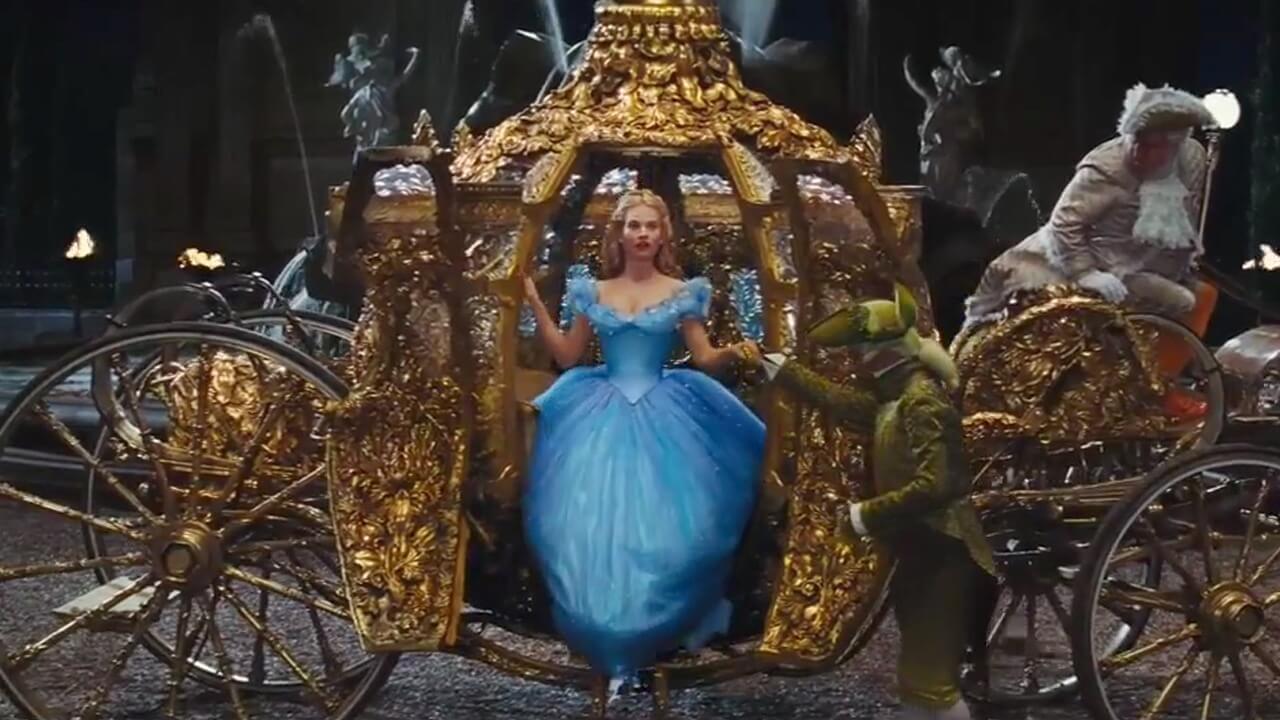
               The story here follows most of the beats laid out in the 1950 animated classic. Ella (Lily James) is the warm and forgiving daughter of a wealthy aristocrat and who then is tragically left without a mother and father and forced to live as the servant of her evil stepmother (Cate Blanchett) and her obnoxious and self-absorbed stepsisters (Sophie McShera and Holliday Grainger). What comes after? You guessed it; a prince, a ball, a fairy godmother, glass slippers and a pumpkin-shaped stagecoach.
             Chris Weitz’s screenplay front-loads the original fairytale with the backstory of Cinderella’s biological mother and father, their tragic passing and the deteriorating relationship between her and her lawful step-family. Some of this is mildly interesting—one might wonder why Cinderella’s father would ever end up with an evil stepmother in the first place, and Blanchett is given a great screen entrance as the bloodless vamp—but much of this narrative padding is tedious, plot-stalling and treated with too much gauzy romanticism to register as effective tragedy.
                Branagh’s strengths as a storyteller are compromised by the prime objective of this adaptation, as it only exists to conjure the nostalgia of Disney’s once-relevant legacy in animation, and, ironically enough, this film expounds the very reasons why animation is given tonal allowances that simply don’t work in live action. The first problem here is that Cinderella is inherently a boring character and Lily James doesn't do much with the paper-thin persona as written to bring her to life. With catchy songs, talking mice and an exaggerated environment an animated feature can skate by on iconography alone, but once you throw in real actors and close-ups and throw out the musical sequences, the film is forced to create a believable emotional space, and this version of “Cinderella” does not.

                Blanchett eats up the scenery around her and leans into the film’s camp value like a professional, but the romantic scenes between Cinderella and the Prince (Richard Madden) are painfully unsupported and the inclusion of CGI birds and mice distract more than they endear. Occasionally, when Branagh is allowed focus in on a scene without pandering to fan-service and gives his actors some intimacy to express themselves, a hint of depth appears, but these rare moments are squandered on obtrusive special effects and an aesthetic slickness that makes the majority of the film look like an overproduced Tide commercial.
               Young girls are going to enjoy this and no review will stop the monolithic cynicism of these kinds of uninspired remakes.  Unlike Tim Burton’s misbegotten “Alice in Wonderland” or the mish-mash mythology of “Snow White and the Huntsman,” this fairytale retelling refuses to risk alienating audiences with a lofty post-modern interpretation. It’s not a particularly memorable or creative venture but it isn't offensive or challenging either, but what is frustrating is its defiant dedication to triviality. 

Grade: D+

Originally Published in the Idaho State Journal/March-2015