Sunday, June 18, 2017

It Comes At Night review

Trey Edward Shults’ meditation on paranoia “It Comes at Night” is a creeping thriller, about a family held together by fear.  Many filmmakers and storytellers have mined numerous post-apocalyptic scenarios to further explore the darkest corners of the human experience, and in that regard this picture prides itself in starring deeply into the abyss without blinking.

The film centers on a small family played by Joel Edgerton and Carmen Ejogo as the parents Paul and Sarah and Kelvin Harrison Jr. as their 17 year old son Travis. Only a few days after having to quarantine Sarah’s elderly father from the house,  later killing him and burning his body in the backwoods to insure that the deadly disease he contracted can’t be further spread, a stranger from a few miles away named Will (Christopher Abbott) begs the family for food and refuge for himself and wife and toddler. After arguing with his hopeful wife and sternly vetting the newcomer, Paul decides to aid in this rescue effort. Will and his young wife Kim (Riley Keough) are grateful for the food and sanctuary but the specter of tribalism and tragedy looms large over this stressful new dynamic.

Shults does a good job at establishing the emotional stakes of this story early on so that when even the smallest disturbances are breached, we are made as hyper cautious as our worried protagonists. Like John Carpenter’s 1982 meditation on paranoia “The Thing,” this film puts the characters in a position where common decency is not the rational choice in close quarters. The overarching themes about stubborn masculinity and loss of humanity in the face of panic are not new to this socially conscious sci-fi sub-genre, but it’s the directorial precision and complicated performances that set this film apart from the mountains of forgettable virus/zombie movies that precede it.

Some have complained that the film’s marketing campaign by distributor A24 has been misleading. The titl, as well as the jumpy trailer that focuses more on the viscera and eerie imagery  than it does the movie’s core family drama, have lead some disappointed viewers to believe that this was supposed to be more conventional horror film. While this experience is thoroughly entrenched in bleak tragedy and the implications of the plot are fairly horrific, the movie doesn’t ramp up every scene towards a jump scare and there aren’t any monsters or cannibals scratching on the outside doors of the protagonists secluded home. What that said, there is a strange omniscient point of view that hangs over the drama as it unfolds and it sometimes feels like a demonic hex that’s been put upon this sensitive circumstance.

“It Comes at Night” may not be the traditional horror programmer that people thought they were getting but it is a very dark film that’s meant to challenge our views on human empathy and familial loyalties. Cinematographer Drew Daniels uses minimal lighting schemes to sculpt his subjects out of ink-black darkness, and his slow push-ins on red doors and elongated hallways recalls the nightmarish imagination of David Lynch and monumental intimidation of Stanley Kubrick.  I can’t say that the sci-fi subject matter presented here is all together new or innovative and as a thriller the movie’s reveals are somewhat predicted, but the filmic craft exemplified and the actor’s dedication to their character’s emotional motivations elevate the stock premise into being a taught exercise in suspicion.

Grade: B+

Originally Published in the Idaho State Journal/Jun-2017 

Listen to this week's episode of Jabber and the Drone to hear more conversation about "It Comes At Night." 

Captain Underpants: The First Epic Movie review

Children’s entertainment is often overlooked for its significant in the development of our creative minds. Kid’s media is what ultimately teaches us how to absorb information as adults. When it comes to film, kid-vid teaches us about genre, comedic /dramatic editing choices, as well as important cultural reference points. Children’s literature is equally significant in our developing minds, so when films are adapted from our grade schools’ book-fair catalog it’s worth noting how the translation from one media to another informs how the property is now being marketed to a newer generation. In the case of “Captain Underpants: The First Epic Movie” we can see a direct influence from the source material mixed in with the modern comedic sensibilities of the voice talent and screenwriter Nicholas Stoller (“Get Him to The Greek," “The Muppets”).

Kevin Hart and Thomas Middleditch voice George and Harold, two grade-school pranksters who spend more time in school hatching plans to humiliate their grumpy Principle Mr. Krupp (Ed Helms) than they do studying. After school, they hang out in their tricked out tree-house drawing comic book adventures of their superhero creation Captain Underpants. Later, when a prank goes wrong with a cereal-box hypno-ring, Principle Krupp is put into a deep trance where he then behaves as their beloved hero. This is all fun and games for the duo until a real-life mad scientist super-villain named Professor Poopypants (Nick Kroll) is hired to teach at the school, where he plans to implement his devious schemes. It is then up to Harold and George to convince their dazed and deluded Captain Underpants to save the day.

Obviously, all of this is very silly and the movie revels in the source’s juvenile sensibilities. Stoller and company might have internalized the text as a celebration of the class-clown. In this world, science is boring, nerds and teachers and humorless and school assignments get in the way of creativity.  At one point we see that Krupp has even cancelled the school’s arts programs. For me there’s mixed messaging here, both emphasizing the importance of imagination and self-assurance and celebrating crass anti-intellectualism. The worlds of the creative arts and the worlds of academics don’t have to be mutual exclusive, but “Captain Underpants” curiously pits them against one another.

If I’m not analyzing the content as closely, as an animated comedy, the movie’s funny enough. Jokes about underpants, poopy pants and farting orchestras don’t really resonate so much with me anymore, but Stoller peppers the dialogue with occasional clever references and humorous turns of phrase, and the film contains a live-action sock-puppet aside that makes you wish the whole movie had committed to its low-tech charm.

“Captain Underpants” skews fairly young and a lot of its base humor left me cold, but there’s an appeal and whimsy about the world created here that makes it difficult not to fall in line with the movie’s mischievous irreverence.  The voice-actors bring allot specificity to their characters and the textured and stylized animation is easy enough on the eyes to allow for quick cuts, jumpy asides and rapid zooms. I can’t say that this will be a family movie standard in the coming years, but I can that it made me laugh and held my attention better than most films intended for the same audience.

Grade: C+

Originally Published in the Idaho State Journal/Jun-2017


Listen to this week's episode of Jabber and the Drone to hear more conversation about "Captain Underpants: The First Epic Movie."

Sunday, June 4, 2017

Wonder Woman review

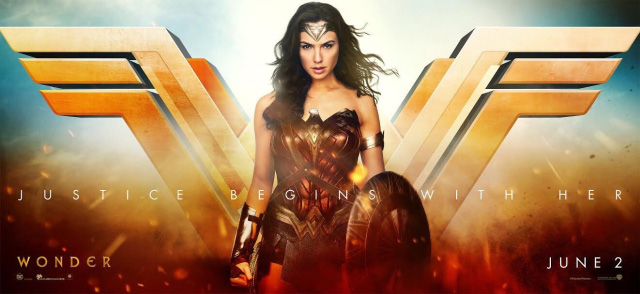
Both critics and geeks have been justifiably nervous that the first female-fronted superhero film of our modern-day fanboy renaissance is being brought to us by Zach Snyder and Warner Bros’ DC Comics cinematic universe; the same universe that’s brought such us large-scale disappointments as “Man of Steel,” as well as last year’s “Batman v Superman: Dawn of Justice” and “Suicide Squad.” For many years, Marvel producer Kevin Feige was curiously noncommittal about the possibility of funding a female-driven entry into his web of interconnected action films, but in a rush to catch up with the successful Disney entity, Warners has released a “Wonder Woman” film that breaks the tradition of  their current output by being surprisingly good.

We were first introduced to Gal Gadot’s sword and shield wielding Amazonian as a peripheral character in “Batman v Superman,” but here director Patty Jenkins and screenwriter Allen Heinberg focuses in on her origin and gives us the emotional and philosophic context we need to truly care about the admittedly cheesy character. This time we meet Princess Diana as a trained warrior of the all-female demigod tribe created by Zeus to protect the human race. After the tribe has spent years hiding and training in their magically hidden island of Themyscira, awaiting for the day the Greek god Aries returns to finish them off, Diana discovers a human WWI spy named Steve Trevor (Chris Pine) who crash lands in their ocean. When he tells her of the devastations and atrocities he’s fighting in his home-world, Diana travels back with him to find and kill a German military leader named Erich Ludendorff (Danny Huston), who she suspects is a disguised Aires orchestrating the stage for human destruction.

Jenkins, who was previously attached to direct Marvel’s “Thor: The Dark World” before leaving the project over disagreements with the studio, has a firm hand on the pulpy tone of the source material. The first third of the film plays like a large-scale episode of “Zena: Warrior Princess” while the rest resembles the popcorn-flavored fantasy of adventure flicks like “Raiders of the Lost Arc” and “The Rocketeer.” These worlds are joined more seamlessly than one might think and the Jenkins’ focus on Diana/Wonder Woman as a sturdy center of consciousness allows us to accept and even admire her idealistic world-view when it comes to altruistic justice.

Gadot and Pine also bring a lot of life and pathos to their characters and unlike the DC’s recent cinematic output, this film allows for scenes to breathe and build to moments of action and suspense instead of always rushing to the next big set-piece. Much like Kenneth Branagh’s first “Thor” movie, “Wonder Woman” also includes fish-out-of-water humor as the warrior princess tries to wrap her head around the peculiarities of turn of the century Europe. 

Given that so much of this movie is entertaining and easy to invest in, it’s unfortunate that Patty Jenkins attended Zach Snyder‘s school of hyper-stylized action direction.  The battle sequences are filmed using his signature slow-mo-speed-up technique, occasionally pausing the action to frame corny, self-satisfied, music-video glory shots. The final battle between Wonder Woman and Aries separates Diana from the emotionally-driven war sequences, only so that the film can pay off the genre fans with an overpowered comic-book boss-battle, wherein the foes are shooting lightning out of their hands and trucks and building are flung back and forth. With that noted, it’s a common mistake for these kinds of movies to over-climax and I can’t fault Jenkins, who’s never directed a film on this budget, for sliding into an easy aesthetic trope.

“Wonder Woman” knows what works in the superhero origin drama and it plays its cards carefully. Unlike the previous entries in the misbegotten DCU, it doesn’t try to cram in loads of exposition and tangential DC Comics world-building for the sole purpose of setting up future sequels, remembering to succeed on its own as a standalone adventure. Many will write about the gender politics of the film and it is significant that this movie exists as it does for young girls to root for a hero of their own, though Pine and Gadot’s awkwardly suggestive banter sometimes undercuts the strong feminist themes. The film is a hair too long and slips into headache-inducing destruction by its end, but too much of it works too well for me to criticize the picture for simply leaning into familiar genre tropes.

Grade: B+

Originally Published in the Idaho State Journal/Jun-2017
Listen to this week's episode of Jabber and the Drone to hear more conversation about "Wonder Woman."

Sunday, May 28, 2017

Alien Covenant review


Ridley Scott returned to the “Alien” franchise with his 2012 prequel “Prometheus,”  showing  that the veteran Hollywood director still had a love for monumental science fiction storytelling and an eye for evocative imagery. Yet the viewers who were waiting decades to know more about the origins of 1979’s “Alien” were left with a handsome production undercut by a messy screenplay by writer Damon Lindelof that only teased an explanation, while leaving more questions to be answered.  Hopes that this year’s “Alien Covenant” would finally tie the narrative threads together are hopes to be had in vain, as this latest installment ventures down another lateral tangent that further broadens the mythology.

Much like the first third of the original “Alien,” “Covenant” sends another crew of explorers to an uncharted planet after receiving a fuzzed-out message by Elizabeth Shaw (Noomi Rapace), the lost survivor of the Prometheus ship. This traveling colony, having recently suffered from an electrical storm that killed many of their inhabitants in hyper-sleep, decides to change course to see if this mysterious planet can support human life. Aboard the vessel is their self-doubting, proudly religious Captain Oram (Billy Crudup), who’s insisting they take the risk to save time, while second-in-command officer Daniels (Katherine Waterston) has just lost her husband in the devastating accident and wants the Covenant to stay on course.  Once a pod of explorers is sent down to investigate the earth-like sphere, the crew discovers a biological terror they weren’t prepared to deal with.

Rounding out the cast is Danny McBride as red-neck pilot Tennessee, Amy Seimets as his wife Faris, Damian Birchir as Lope, and Michael Fassbender as the group’s resident android Walter.  They’re many other smaller performances in the picture and characters to be named, including an oddly short James Franco cameo, but John Logan and Dante Harper’s screenplay relegates most of these roles to serving the story as faceless creature-feature fodder and these extra crew members barely peak out of the movie’s larger obsession with awkwardly-paced, talky scenes of needless exposition.

While the initial introduction to this crew in mourning is an interesting place to begin a darker more sorrowful tone, the movie ultimately lacks the humanity and soul it needs to inform this choice. Instead, the film abandons this set-up and moves on to other concerns. The final moments of “Alien Covenant” contains a traditional attack sequence that feels tired and familiar by the time we get there and superfluous after an hour and forty minutes of exhausting scenes of cave-dwelling, interspersed with mindless attempts at shock

Longtime fans that are curious to see how Scott expands the Alien mythos will likely be divided on the Covenant’s retroactive continuity, as it seems to disregard a lot of speciation rules from the previous installments that followed writer Dan O’Bannon’s original “Alien.” In its place, we are introduced to various forms of alien spores, white monkey-looking creatures that burst out of people’s backs and early forms of the classic eggs and face-huggers. People new to the franchise will and should be totally lost in this minutia and those trying to follow along may need to create a complicated flow-chart to connect all the disparate creatures into one lineage. Whereas the original alien-lifecycle was once elegant and believable, O’Bannon’s simple mythology has now been muddied by two prequels that let the overarching thematic concerns and a handful of bad ideas overtake the storytelling.  This installment in particular is somehow both overreaching and lazy in its execution.

Like “Prometheus,” Michael Fassbender’s duel performance as the androids Walter and David steal the show; though within these scenes, the film’s divergence into highfalutin discussions about life, grief, religion, creation, obsession and flute playing loosens the necessary narrative tension for the movie to work as an effective thriller. Most of the monster attack scenes are only sprinkled in to remind us that this pre-sequel is still related to the known franchise, but the overall structure of the picture is compromised by wasted performances by otherwise good actors, under-rendered CGI, moments of ponderous meditation on themes that are never fully realized and rushed sequences of unearned gore.  

Grade: D+

Originally Published in the Idaho State Journal/May-2017\

Listen to this week's episode of Jabber and the Drone to hear more conversation about "Alien Covenant"

Sunday, May 14, 2017

Guardians of the Galaxy Vol: 2 review

How does Marvel Studios and writer/director James Gunn follow up their idiosyncratic space-opera send up, “Guardians of the Galaxy?” Despite its undeniable success, the pressure to live up the ever-growing reputation of their 2014 blockbuster had be daunting, considering the specific tone and aesthetic approach these creators allowed for the project.  I am happy to say that while “Guardians of the Galaxy Vol: 2” doesn’t capture the same lightning in a bottle, I-can’t-believe-they’re-getting-away-with-this quality of its predecessor, Gunn still brings his subversive sensibilities to the table with enthusiasm.

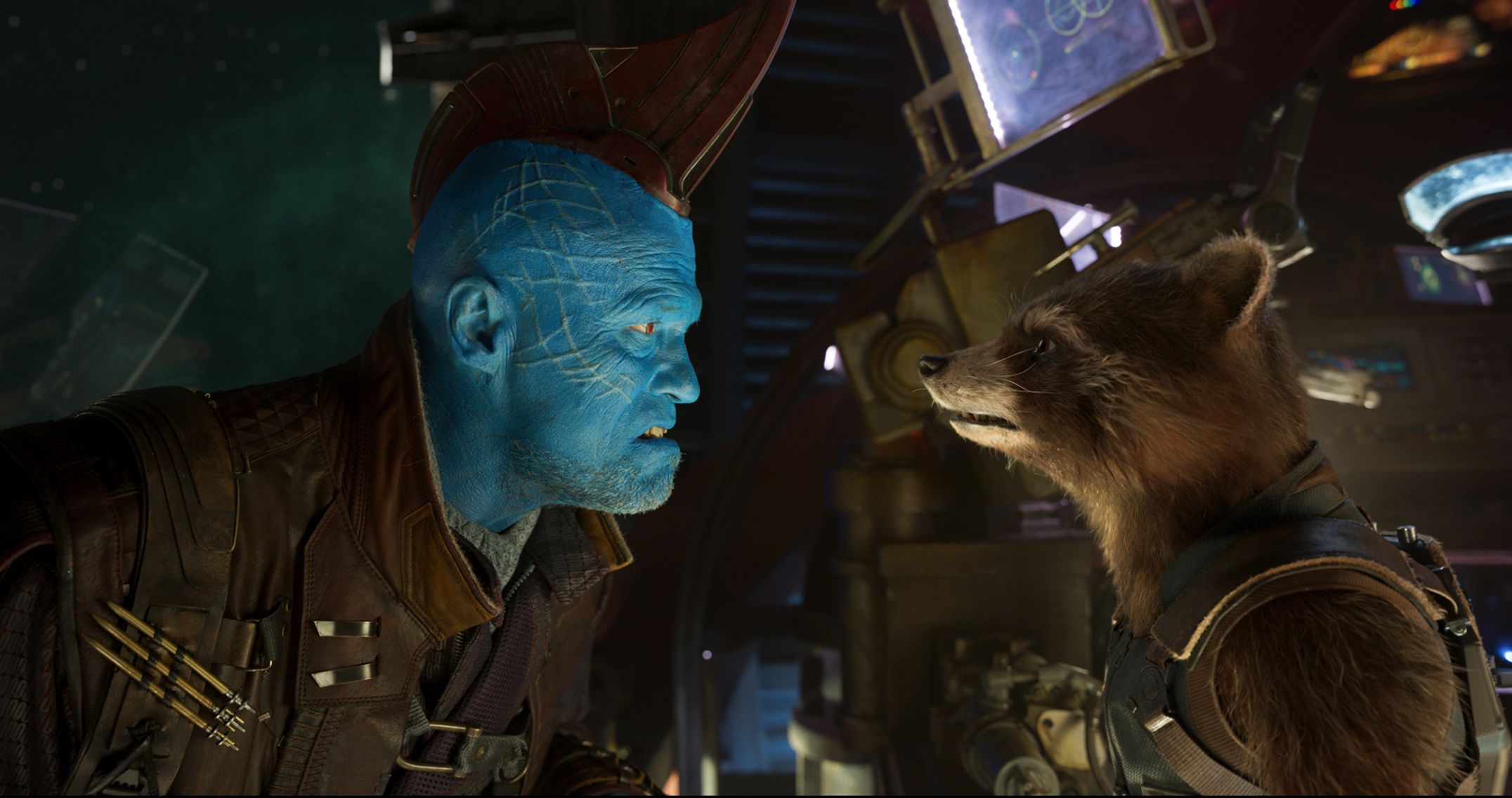
After botching a trade deal with a race of golden, elitist aliens called The Sovereign, the Guardians hightail it to the other side of the galaxy to find safety. Peter Quill/Starlord (Chris Pratt), Drax the Destroyer (Dave Bautista) and Gamora (Zoe Saldana) find refuge on a heavenly planet manned by a glowing, bearded celestial named Ego (Kurt Russell) who’s claiming to be Peter’s father.  Separated from the group, Rocket Raccoon (voiced by Bradley Cooper) and the baby tree elemental Groot (voiced by Vin Diesel) are crash landed on a forest planet with Gamora’s violent sister Nebula (Karen Gillan), hiding from Peter’s old clan of space pirates led by the vengeful Yandu (Michael Rooker).  Making things all the more complicated, the pirates are staging a mutiny, believing that Yandu himself has been too soft on Peter’s betrayal.

Gunn’s love for the character’s is evident throughout the plot, which, unlike a lot of Marvel’s on-screen adaptations, is rooted in pathos. Every scene and set-piece advances a character’s role in the story and has a overall goal towards supporting the theme of outsiders looking to form new families. While there are plenty of expensive special effects to gawk at and many visual gags and quips in the dialog to laugh at, the whole thing is held together by Gunn’s strength in character-driven, emotional storytelling. That said, the special effects are at times overwhelmingly glossy, sometimes losing a true sense of tactility, and the humor occasionally slips into try-hard territory.

While the previous film found it’s humor in the on-screen interactions and the outlandish circumstances of the plot, along with moments of sarcastic dialogue, this script feels a more punched-up with a joke-per-page quota that has to be met. This expectation for comedy leaves some quips and gags falling flat while other jokes and setups feel more naturally integrated. Overall, the storytelling and the conviction of the actors in their roles supports even the film’s weaker attempts at humor.

“Guardians of the Galaxy Vol:2” can’t surprise us like it did the first time around and one can find faults in its minutia but the takeaway is still the same—this is a fun group of weirdos to follow and even if you don’t know where things are going in the plot, you’re always invested in their colorful antics. Gunn’s themes about fatherhood and legacy ring true, even as they are heavily dressed in neon, arcade-game production design and delivered through jokey dialogue. Marvel fans and movie fans alike should treasure this weird little niche that Gunn and his cohorts have carved out for themselves.

Grade: B+

Originally Published in the Idaho State Journal/May-2017

Listen to this week's episode of Jabber and the Drone to hear more conversation about "Guardians of the Galaxy Vol:2"

Wednesday, May 3, 2017

Colossal review

The Anne Hathaway starring hybrid film “Colossal” solves the problems of both blockbuster spectacles and formulaic romantic comedies. Rom-coms often suffer from a lack of tension in the drama, leading to forced conflict that undermines the characters, and blockbusters often overlook their characters in favor of eye-popping visuals and ratcheting the stakes in the plot. Like the designer-dog puggle breed, that stops a pug’s snorting and stops a beagle’s howling, Nacho Vigalondo’s first English-language feature blends the two Hollywood traditions in a mutually beneficial way.

Anne Hathaway returns to her “Rachel Getting Married” acting toolbox, playing another mess who’s looking for redemption and respect at the same time. Her character Gloria returns to her small town after getting kicked out of her boyfriend’s (Dan Stevens) swanky New York apartment.  While sulking in the streets of her hometown, she runs into an old high school friend named Oscar (Jason Sudeikis) who’s been recently divorced and trying to keep his father’s bar alive.  Figuring that she might need a leg up, he offers Gloria a part-time job, unaware of her history with alcoholism.

Meanwhile, in Seoul South Korea a giant monster appears roughly the same time every night, seemingly unaware of its surroundings and stumbling into buildings before mysteriously disappearing into thin air. After watching the TV footage of this phenomena, Gloria and Oscar realize that the monster only appears across the globe whenever she visits the a grade-school park after a long night of drinking.  When Gloria has some conflicts at work and her ex decides to come back to visit her, this heightened sense of personal responsibility is challenged further.

Vigalondo’s film works on a number of allegorical levels.  Obviously there’s the commentary about alcoholism and its relationship to our past traumas and the many damages it can cause by accident. Hathaway’s interaction with fragile masculinity as an active female character is also fascinating to observe. Again, by flipping the romantic comedy love-triangle trope on its head, this story explores the inherent misogyny bred into that stock fantasy. 

The movie also discusses how the media treats disasters and wars abroad as a form of endless news cycle-entertainment. Having been released between two fresh bombings performed overseas by our government, and having watched certain news commentators wax poetic about the aesthetic beauty of our missile launches, the film's depictions of American's glued to the televised destruction seems all the more prescient.

Despite some undercooked narrative vagueness surrounding a couple short flashbacks and some truncated special effect sequences that gives away movie’s limited budget, “Colossal” executes it’s quirky goals fantastically. Sudeikis and Hathaway are great at shifting back and forth from comedic amiability to dramatically tense, and their arc is always reinforced by the movie’s larger ambitions as a commentary on genre cinema. Given that audiences are inundated by many movies per year about giant robots vs. giant monsters (“Power Rangers,” “Transformers,” “Pacific Rim”), it’s nice to finally see one with a core concern for relatable human experiences.

Grade: B+

Originally published in the Idaho State Journal/Apr-2017

Listen to this week's episode of Jabber and the Drone to hear more conversation about "Colossal"

Monday, March 6, 2017

Get Out review

Keagan Michael Key and Jordan Peele rose to prominence by using their comedic platform to discuss issues of race, sociology and identity, but Peele’s treatment of these topics as the basis of a mostly-serious horror film has added an urgency and anger that wasn’t always present in their Comedy Central show. With the election coming fresh off the outrage surrounding the Black Lives Matter movement and having recently seen many young black men killed by the authorities, churches burned down and minority voting rights being compromised, this retrograde of civil rights has had an emotional and psychological impact on many non-white communities. 

“Get Out” takes the basic structure of the 1967 Sidney Poitier film “Guess Who’s Coming to Dinner” and subverts it with the sci-fi-horror paranoia of classics such as “Rosemary’s Baby,” “The Stepford Wives” and “Invasion of the Body Snatchers.” 

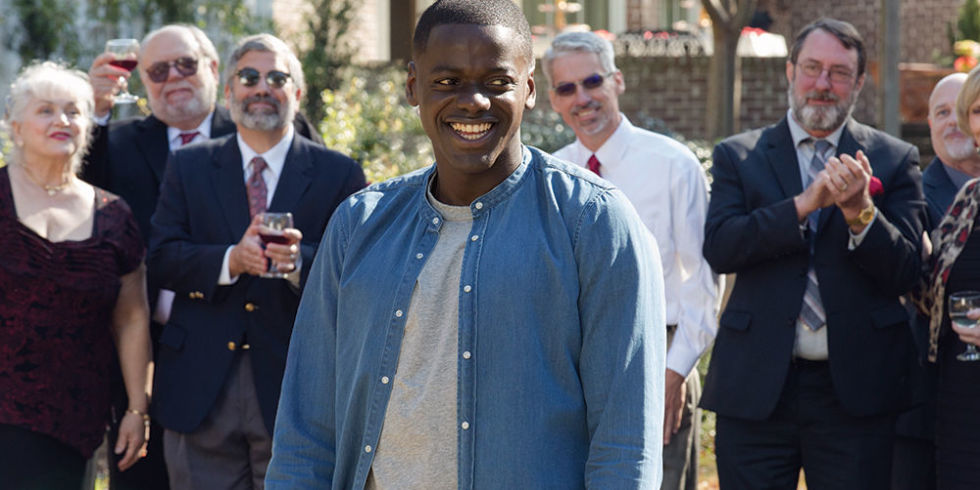
Daniel Kaluuya plays Chris Washington, the young African American boyfriend of Rose Armitage, played “Girls” star Allison Williams. They’ve been dating for five months and Chris has decided travel with his gal to upstate New York to meet her white, affluent, town-and-country family for the first time. While nervous about the encounter, everything seems to be relatively normal. Rose’s neurosurgeon dad (Bradley Whitford) clumsily tries to code-switch, speaking in what he thinks of as ‘street’ lingo, and is perhaps too quick to assure Chris that if he could have voted for Obama for a third term, he would have.  And while Rose’s hypnotherapist mother (Catherine Keener) is a little too insistent on helping Chris shed his smoking habits with a free session, basically, the two parents seem warm and accommodating. On the other hand, Rose’s MMA-obsessed brother (Caleb Landry Jones) displays an intensity that’s a little less predictable.

Things only begin to get especially strange when Chris approaches the family’s African American hired help, Walter and Georgina (Marcus Henderson, Betty Gabriel). They’re awake and active at weird hours of the night, they walk around dazed and unresponsive and they’re hostile or defensive whenever Chris tries to engage them in conversation. As the story unfolds and plot points are later revealed, Peele’s script continues to take bigger, wilder risks and digs deep into the overt social commentary that permeates the film’s subtext.

It might have been very tempting to portray the devious whites here as post-colonial, traditional conservatives from the south, but the movie instead chooses to tap into a much less obvious stereotype; upper-middle-class, educated neo-liberals. Peele examines the often-parasitic relationship between the races, and how some classes of whites will co-opt the struggle of the black experience for their own political or monetary gain, without ever giving back to the communities they exploit to successfully take power.

The movie brilliantly and thoroughly eases the audience into Chris’s perspective so that we are looking at every white character with as much suspicion as he is. When the privileged guests off the parent’s snooty garden party ask stupid questions like “what’s the African American experience been like for you,” even a white audience can feel the sting of condescension in that moment. Peele’s immersive subjective direction along with Kaluuya’s nuanced performance helps to sell what, stripped away from its political context, could come off as fairly goofy genre material.

“Get Out” is a step further away from the broad sketch comedy of “Key and Peele,” but it also provides many well-earned laughs of its own. LilRey Howery is cleverly placed as Chris’s best friend character Rod, working within the story as the audience’s cipher. Through jokey conversations with the protagonist, this character points out the inherent pulpiness of the plot and reminds us that this director understands and has a sense of humor regarding the horror/thriller traditions he’s working in. Nevertheless, when the rubber needs to hit the road Peele fully commits to his thought provoking thesis and allows his racial allegories to approach their brutal conclusions.

Grade: A 

Originally Published in the Idaho State Journal/March-2017